

Sawdust Charcoal Briquettes: What Determines Consistent Quality?
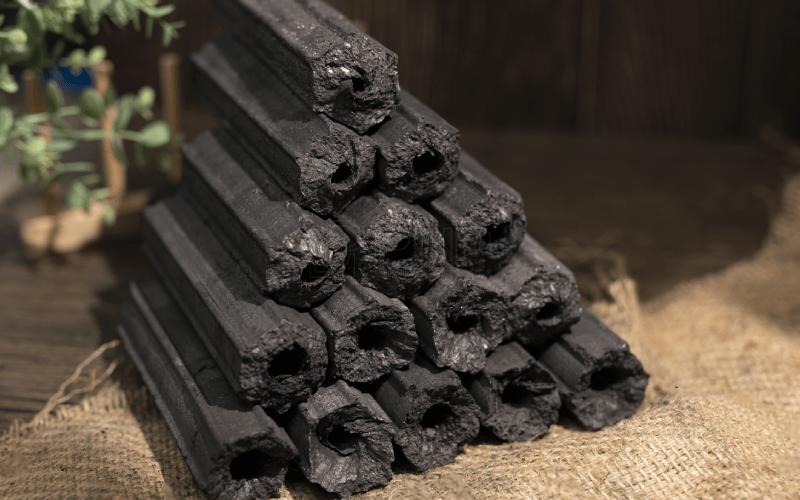
Hexagonal sawdust charcoal briquettes with a hollow center. ALT: Sawdust Charcoal Briquette Quality – hexagonal charcoal product consistency.
Sawdust Charcoal Briquette Quality is an important consideration for international charcoal importers, wholesale distributors and commercial barbecue suppliers. Beyond fixed carbon, ash and moisture content, consistent product quality also depends on density, physical strength, dimensional accuracy and batch-to-batch uniformity.
Sawdust charcoal briquettes are often supplied as hexagonal sticks with a hollow center. However, products with similar appearances may have significantly different technical characteristics.
Understanding Sawdust Charcoal Briquette Specifications and the role of Sawdust Briquette Quality Control helps buyers evaluate charcoal products using measurable evidence rather than photographs or general quality claims.
What Are Sawdust Charcoal Briquettes?
Sawdust charcoal briquettes are carbonized fuel products manufactured from sawdust or related wood residues.
They may be supplied in hexagonal, cylindrical or other manufactured shapes, depending on the production system and target market.
An important distinction exists between sawdust charcoal briquettes and uncarbonized sawdust briquettes.
Uncarbonized briquettes are compressed biomass fuels that have not undergone carbonization. Their chemical composition and combustion characteristics can differ considerably from carbonized charcoal briquettes.
Sawdust Charcoal Briquette Quality is influenced by raw material characteristics, manufacturing consistency, carbonization, storage and final product handling.
Research published in the International Journal of Energy and Environmental Engineering examined sawdust charcoal briquettes using moisture, density, ash content, fixed carbon, volatile matter and calorific value. These different measurements illustrate why no single parameter can establish overall quality.
How Raw Material Consistency Influences Briquette Quality
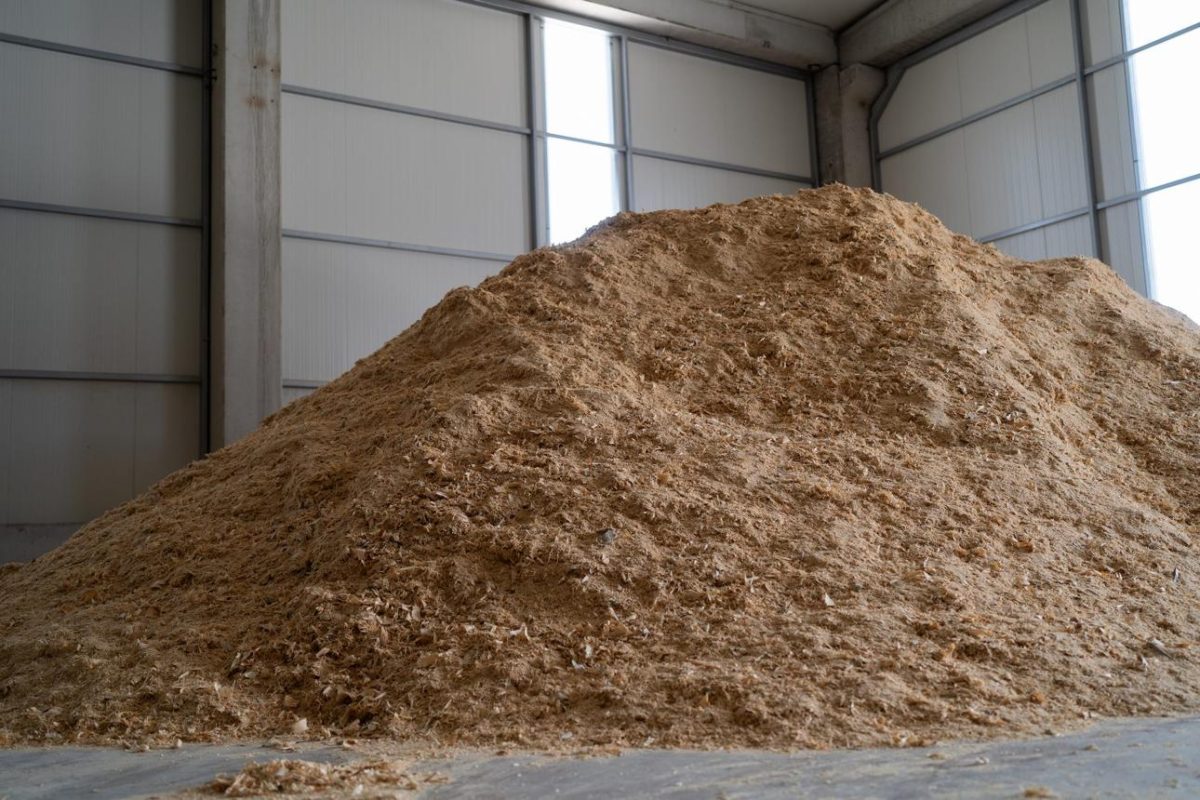
Wood-processing residues used as raw materials for sawdust-based products. ALT: Sawdust Briquette Quality Control – consistent sawdust raw materials.
The properties of the original sawdust can influence the characteristics of the finished charcoal product.
Different wood species may contain varying mineral components and have different physical structures.
Foreign materials introduced during raw material collection, handling or storage may also affect product cleanliness and ash content.
Manufacturing consistency is another important consideration.
Even when briquettes have the same nominal dimensions, individual pieces may differ in density, structural integrity or moisture content.
For this reason, Sawdust Briquette Quality Control should evaluate consistency between production batches rather than appearance alone.
Buyers comparing Sawdust Charcoal Briquette Specifications should also verify whether the stated product characteristics apply to the particular grade being offered.
Sawdust Charcoal Fixed Carbon
Sawdust Charcoal Fixed Carbon is a key chemical parameter used to evaluate the composition of charcoal.
In proximate analysis, fixed carbon is generally calculated by difference after accounting for moisture, volatile matter and ash on a consistent reporting basis.
It provides useful information about charcoal composition and the extent of carbonization.
However, higher fixed carbon does not automatically guarantee better overall performance.
Two briquettes with similar fixed carbon percentages can differ in density, size, mechanical durability and remaining fuel mass.
ASTM D1762-84(2026) covers the determination of moisture, volatile matter and ash in wood charcoal, including lump charcoal and briquettes.
When evaluating Sawdust Charcoal Fixed Carbon, importers should verify whether results are expressed on a dry basis or an as-received basis.
Comparisons between different reporting bases can produce misleading conclusions.
Sawdust Charcoal Ash Content
Sawdust Charcoal Ash Content represents the proportion of inorganic residue measured using an applicable ash determination method.
Ash may originate from natural minerals in the wood or from foreign substances introduced during production and handling.
For BBQ applications, ash content can influence the amount of residue remaining after combustion.
However, acceptable ash levels depend on the intended application and relevant product standard.
EN 1860-2:2023 distinguishes between barbecue charcoal and barbecue charcoal briquettes, including different technical requirements for the two product categories.
Therefore, importers should not automatically apply the ash-content requirements for natural lump barbecue charcoal to every sawdust charcoal briquette product.
For a meaningful comparison of Sawdust Charcoal Ash Content, laboratory values should be reported using compatible testing methods and mass bases.
Sawdust Charcoal Moisture Content
Sawdust Charcoal Moisture Content measures the proportion of water in a charcoal sample at the time of testing.
Moisture can affect shipment weight, storage conditions and the useful energy available from the product on an as-received mass basis.
Products exposed to humid storage conditions may have different moisture characteristics from samples tested immediately after production.
In one published study, sawdust charcoal briquettes had a reported moisture content of 5.7% on a dry basis. This was a result for the tested product, not a universal specification for all sawdust charcoal briquettes.
For buyers evaluating Sawdust Charcoal Briquette Quality, moisture should be considered alongside packaging, storage history and sample traceability.
Sawdust Charcoal Moisture Content should be confirmed using an appropriate analytical method rather than visual inspection alone.
Sawdust Charcoal Briquette Density and Physical Durability
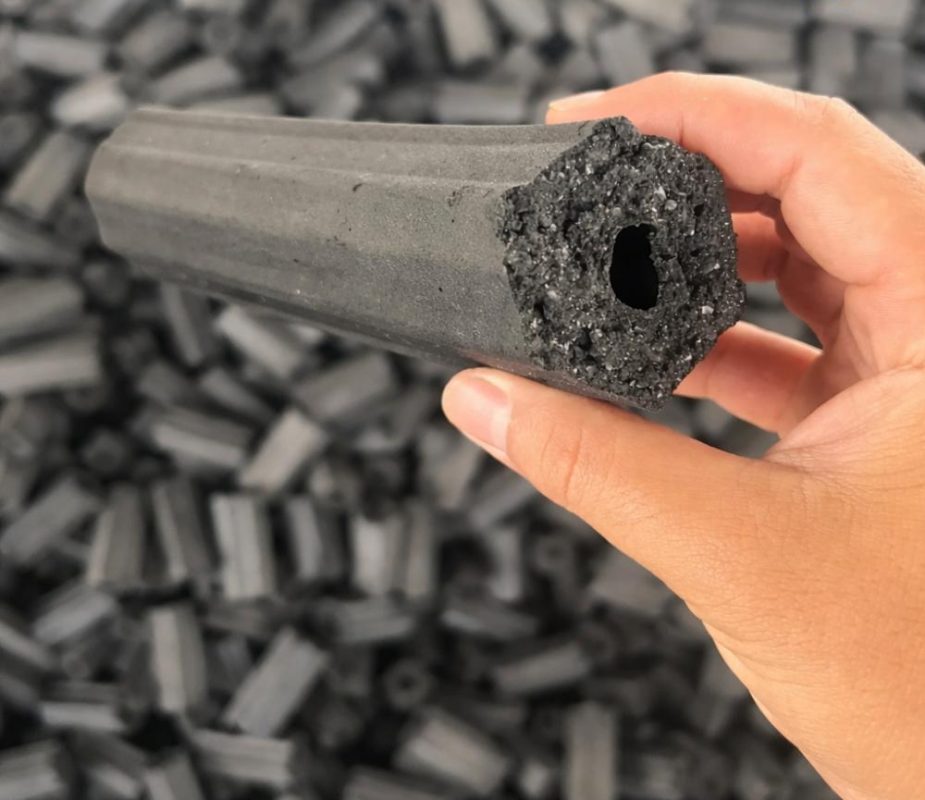
Dimensional inspection of manufactured hexagonal charcoal briquettes. ALT: Sawdust Charcoal Briquette Density – dimensional and physical quality assessment.
Sawdust Charcoal Briquette Density describes the mass of a briquette relative to its volume, commonly expressed in kg/m³ or g/cm³.
For hollow hexagonal briquettes, the method used to determine volume must be clearly specified when comparing density measurements.
Density can influence handling characteristics, durability and combustion behavior.
Research published in the World Journal of Engineering identifies briquette density and mechanical strength as important characteristics in evaluating sawdust-based briquette products.
Another study reported a density of 1.1 g/cm³ for its experimental sawdust charcoal briquettes. However, this figure should not be treated as a universal commercial requirement.
High density alone does not necessarily mean a product is superior.
A briquette may be relatively dense but still exhibit brittleness or excessive breakage during distribution.
Therefore, Sawdust Charcoal Briquette Density should be considered together with dimensions, physical integrity and fines content.
What Determines Sawdust Charcoal Burning Time?
Sawdust Charcoal Burning Time is frequently used as a selling point in the BBQ charcoal market.
However, burning duration varies according to the mass of the fuel, dimensions, density, moisture and the conditions under which the product is evaluated.
A study of sawdust charcoal briquettes also discusses how the hollow-center design can influence airflow during combustion.
Importers should be cautious when comparing burning-time claims that do not include equivalent test conditions.
For example, a burning-time result obtained from one briquette size cannot automatically be compared with a result from a different product under another testing arrangement.
Sawdust Charcoal Burning Time should therefore be interpreted as an application-specific performance measurement rather than a fixed characteristic shared by all hexagonal briquettes.
For commercial buyers, the relevant question is whether the product performs consistently under the conditions required by the intended market.
Understanding Sawdust Charcoal Calorific Value
Sawdust Charcoal Calorific Value refers to the energy released per unit mass of fuel when measured using an appropriate calorimetric method.
Results are commonly expressed in kcal/kg or MJ/kg.
Calorific value is different from the temperature achieved in a particular barbecue grill.
A published study reported a calorific value of approximately 4,820 kcal/kg for its tested sawdust charcoal briquette. This is a sample-specific research result and does not represent a standard value for the entire product category.
When comparing Sawdust Charcoal Calorific Value, buyers should check the measurement method, units, reporting basis and whether the result represents gross or net calorific value.
Moisture content should also be taken into account when evaluating the useful energy available from delivered fuel.
For reliable purchasing decisions, Sawdust Charcoal Calorific Value should be considered together with product density, physical characteristics and actual application requirements.
Which Sawdust Charcoal Quality Standards Matter?
Sawdust Charcoal Quality Standards provide technical methods and requirements for evaluating charcoal products.
Two important references are:
ASTM D1762-84(2026): A standard test method for chemical analysis of wood charcoal, covering moisture, volatile matter and ash.
EN 1860-2:2023: A European standard specifying requirements and testing methods for barbecue charcoal and barbecue charcoal briquettes, including chemical composition, sampling and product characteristics.
The applicable standard depends on the product category and intended market.
Manufactured sawdust charcoal briquettes should not automatically be treated as identical to natural lump barbecue charcoal.
Similarly, a product tested according to an ASTM method is not necessarily formally certified by a third-party certification organization.
When evaluating Sawdust Charcoal Quality Standards, importers should distinguish testing methods, product requirements and independent certification.
Why Sawdust Charcoal Quality Testing Must Cover Actual Shipments
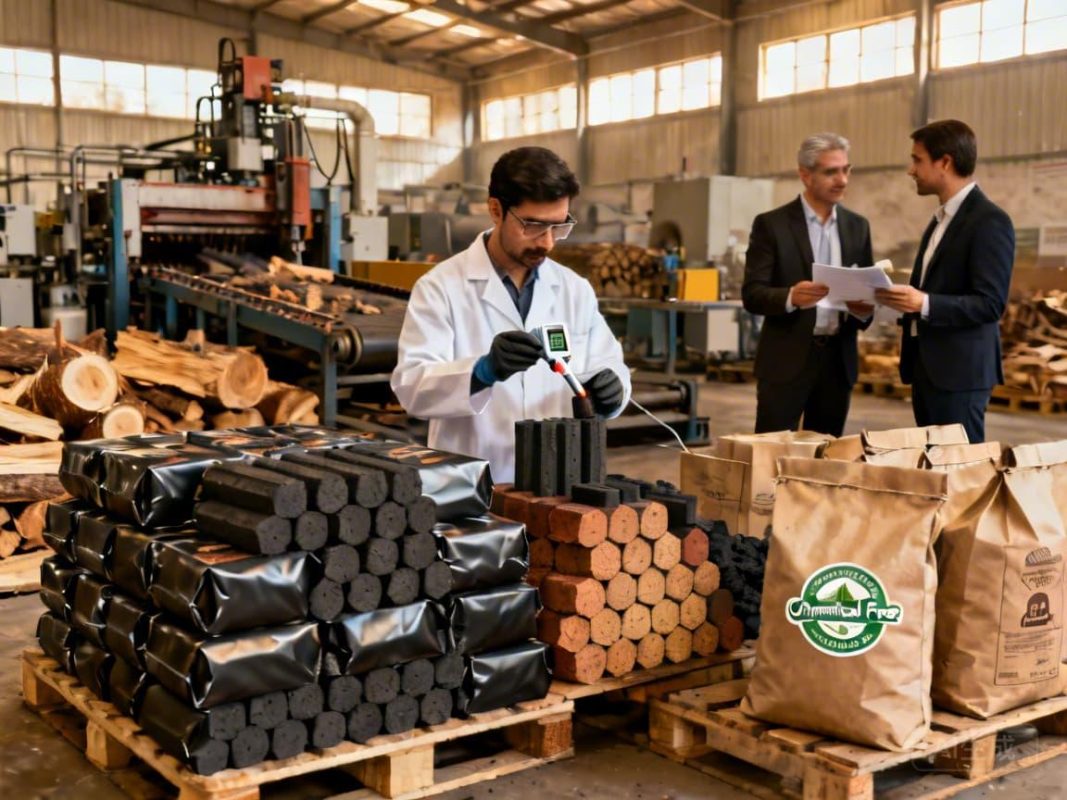
Batch inspection of sawdust charcoal briquettes before commercial shipment. ALT: Sawdust Charcoal Quality Testing – consistency of briquette dimensions and product condition.
Sawdust Charcoal Quality Testing provides technical evidence that helps buyers compare products.
However, an approved sample does not guarantee that future shipments will have identical characteristics.
Changes in raw materials, production batches, handling and storage can affect the condition of delivered products.
Effective Sawdust Briquette Quality Control should therefore consider sample representativeness and shipment-specific product conditions.
Relevant evaluation areas include chemical specifications, physical dimensions, density, breakage, packaging and the relationship between test samples and commercial batches.
A Certificate of Analysis (COA) may provide useful information, but its value depends on the tested material, analytical methods and sample traceability.
For international buyers, Sawdust Charcoal Briquette Specifications should be clearly defined in purchasing agreements, including the basis for accepting or rejecting products.
Why Batch-to-Batch Consistency Matters for Importers
Consistent quality is especially important for businesses managing repeated bulk purchases.
A charcoal shipment may meet its chemical specifications while still differing significantly in dimensions, appearance or physical durability from previous deliveries.
These differences can affect distribution, inventory consistency and customer expectations.
Vietargo operates in Vietnam’s charcoal export sector. As with any charcoal supplier, product assessments should be based on documented specifications, verified testing and actual shipment conditions.
For importers, Sawdust Charcoal Briquette Quality is not simply about achieving favorable test results once.
It is also about maintaining agreed characteristics across commercial shipments.
Conclusion
Sawdust Charcoal Briquette Quality depends on several interconnected factors, including raw material consistency, chemical composition, density, mechanical durability and product uniformity.
Parameters such as Sawdust Charcoal Fixed Carbon, Sawdust Charcoal Ash Content, Sawdust Charcoal Moisture Content, Sawdust Charcoal Briquette Density and Sawdust Charcoal Calorific Value provide different types of technical evidence.
For international buyers, reliable Sawdust Charcoal Quality Testing should be connected to representative samples and clearly defined commercial specifications.
Consistent sawdust charcoal briquette quality means that the agreed technical characteristics are maintained not only in an approved sample but also across the goods actually delivered.
Sources & References
VIETARGO – THE BEST CHARCOAL OF THE WORLD TO YOUR SHELF
Website : https://vietargo.com/
Facebook : Vietargo
địa chỉ : 10 Nguyen Hien Street, 91B Residential Area, Can Tho, Vietnam
☎: 0939364888