

What Affects Charcoal Prices? 6 Factors Every Importer Should Know
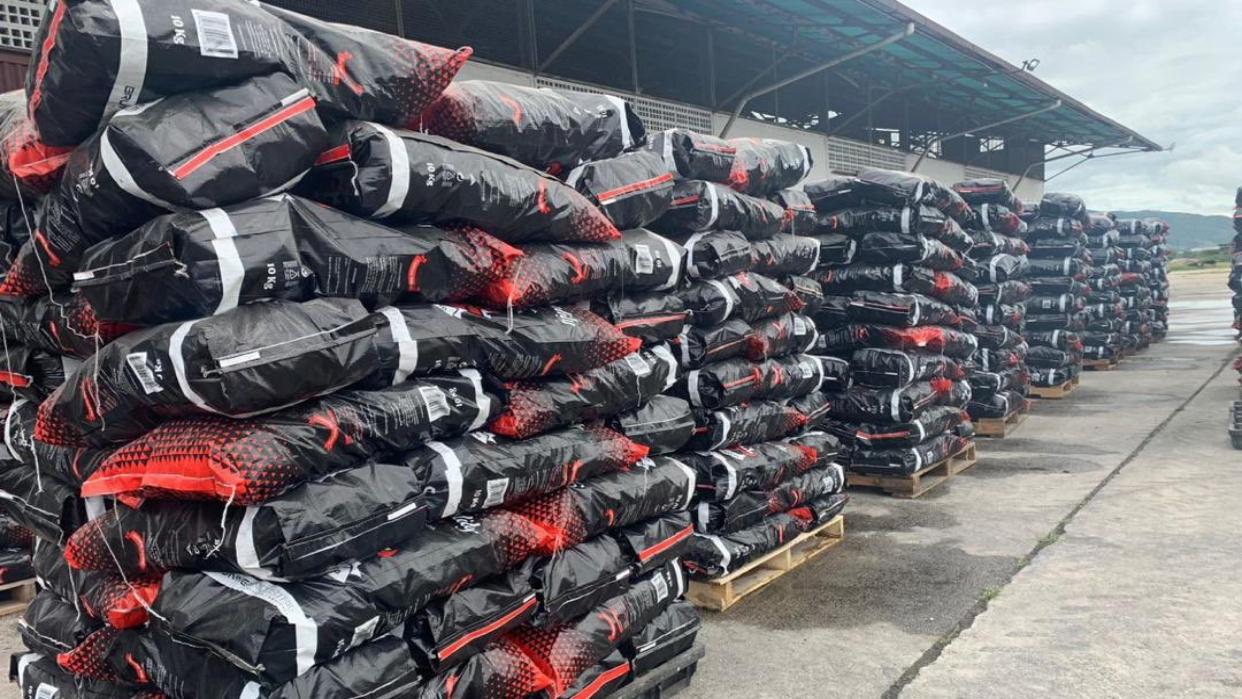
Why can two charcoal suppliers offer noticeably different prices for what appears to be the same product?
One exporter may quote a competitive price per metric ton, while another offers a higher price for charcoal with a similar appearance and packaging size.
At first glance, the difference may seem difficult to justify.
However, the Factors Affecting Charcoal Prices extend far beyond the finished charcoal itself. Raw material availability, production conditions, quality specifications, packaging requirements, purchasing quantities and international shipping arrangements all contribute to the final quotation.
For charcoal importers, understanding these variables is essential when comparing suppliers and calculating purchasing budgets.
A lower quotation may reflect favorable production costs or more efficient distribution. It may also involve different product specifications, packaging materials or delivery responsibilities.
Likewise, a higher price does not automatically guarantee better charcoal.
The Food and Agriculture Organization (FAO) identifies raw materials, labor, investment, transportation and working capital as important components of charcoal production and distribution economics.
For international buyers sourcing from Vietnam, these considerations become particularly relevant when comparing mangrove charcoal, hardwood lump charcoal, sawdust charcoal briquettes and other manufactured products.
This article examines six major Charcoal Price Factors, explains how they influence wholesale quotations and outlines what importers should consider before accepting a commercial offer.
Understanding the Factors Affecting Charcoal Prices
Charcoal prices are not determined by one universal international rate.
Products sold under the broad description of wood charcoal can differ in raw material, shape, dimensions, fuel characteristics and intended application.
For example, natural hardwood lump charcoal and manufactured sawdust briquettes involve different production arrangements.
Even within the same product category, suppliers may offer different quality grades and packaging configurations.
A meaningful comparison therefore requires more than checking the quoted price.
The buyer must also understand what is included in that price.
The FAO recommends analyzing charcoal costs on a consistent unit basis, such as the cost per metric ton delivered, to understand the relative importance of different production and distribution activities.
For importers, this principle is equally valuable.
A quotation should be evaluated against the product’s specifications, the agreed Incoterms rule and the services included in the transaction.
The following six factors explain why prices may differ even when products appear similar.
1. Charcoal Raw Material Costs and Availability

Charcoal Raw Material Costs are among the most important influences on the price of finished charcoal.
Natural wood charcoal requires an adequate supply of suitable wood, while other charcoal products may be manufactured using sawdust, coconut shells or different biomass materials.
These inputs do not necessarily have the same purchasing costs.
Their availability can depend on local supply chains, competition from other industries, transportation requirements and the quality of the material.
A manufacturer located close to a dependable raw material source may face different procurement expenses from one that must transport its input over longer distances.
Raw material characteristics can also affect production economics.
Different types of wood have different densities and physical properties. These characteristics can influence the amount of finished charcoal obtained from a given quantity of input material.
However, buyers should not assume that one raw material always produces a superior finished product.
The World Bank has documented how feedstock properties influence charcoal production, including the relationship between wood density, moisture and charcoal characteristics.
For businesses importing charcoal from Vietnam, the distinction between natural wood charcoal and manufactured briquettes is therefore commercially important.
A price comparison should identify the actual raw material category instead of treating all charcoal products as interchangeable.
Legal sourcing requirements and supporting documentation may also influence procurement arrangements, particularly in markets where buyers require evidence concerning material origin.
The commercial value of a lower raw material price depends on whether the finished product still meets the buyer’s specifications.
2. Charcoal Production Costs and Manufacturing Efficiency
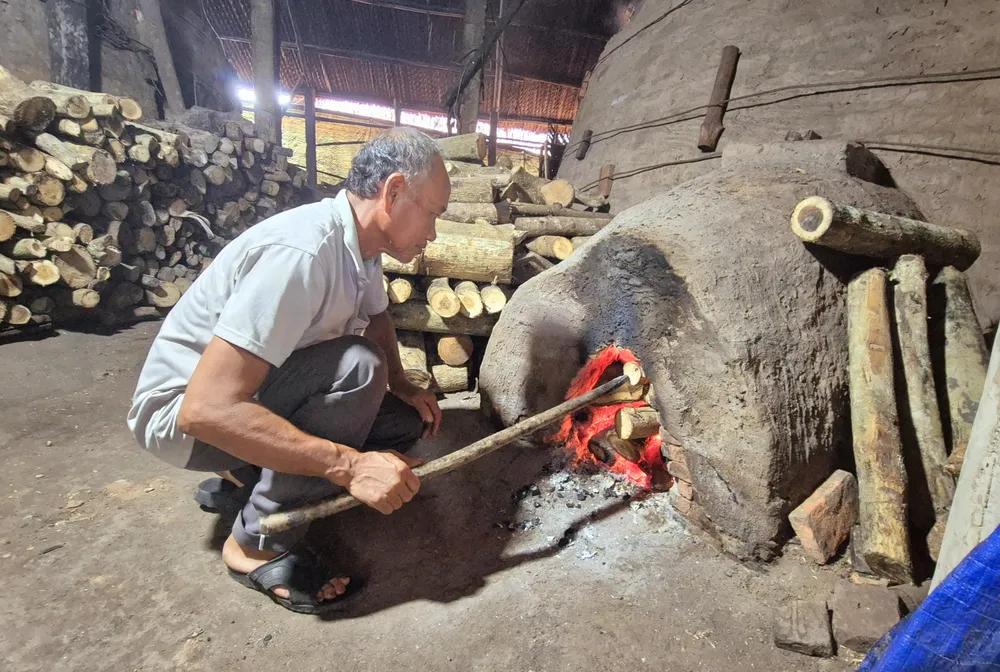
Charcoal Production Costs reflect the resources required to convert raw materials into a commercially acceptable product.
These costs can include labor, production equipment, maintenance, energy, handling and other operational expenses.
Different production systems can have different financial structures.
A small traditional charcoal operation may rely heavily on manual labor and relatively simple equipment.
A larger production facility may use more capital-intensive systems, creating different investment and maintenance requirements.
Production efficiency also matters.
If one operation obtains more saleable charcoal from the same quantity of suitable raw material, its cost per metric ton may differ from that of another operation.
However, higher output alone does not establish better economics.
The manufacturer must also account for the quality of the finished material and any additional processing needed to meet customer specifications.
FAO’s analysis of charcoal production costs identifies labor, capital investment, working capital and transportation as distinct cost components. It also emphasizes the importance of monitoring production results when evaluating costs.
For international buyers, this helps explain why factories using similar inputs may still quote different prices.
One supplier may have a more efficient production process, while another may incur additional costs to meet stricter product or inspection requirements.
The most important commercial question is whether the quoted price corresponds to a verifiable and suitable finished product.
3. Charcoal Quality and Price: Why Specifications Matter
Charcoal Quality and Price are closely related, but higher-priced products are not automatically better.
The commercial value of charcoal depends on whether its characteristics meet the buyer’s intended application.
Important quality parameters may include moisture content, fixed carbon, ash content, volatile matter and physical dimensions.
For natural lump charcoal, buyers may also specify the acceptable proportion of small fragments and fines.
Manufactured briquettes may require additional dimensional and structural specifications.
The FAO explains that charcoal quality is assessed through several separate properties and that quality requirements can differ according to the intended end use.A product suitable for one customer may not be appropriate for another.
For example, a restaurant distributor purchasing larger charcoal pieces may place considerable importance on size distribution.
A different buyer purchasing charcoal for further processing may have other technical priorities.
Stricter sorting requirements can influence costs because the supplier must identify and separate material that does not meet the agreed grade.
Similarly, additional laboratory testing or independent inspection may introduce expenses that need to be reflected in commercial negotiations.
However, buyers should not assume that every quality claim is supported by independent testing.
A supplier describing its charcoal as premium does not automatically establish compliance with a recognized technical standard.
Why the Cheapest Charcoal May Not Offer the Lowest Effective Cost
Consider a hypothetical comparison between two shipments.
Supplier A quotes $560 per metric ton, while Supplier B quotes $600 per metric ton.
If Supplier A delivers 90% contract-conforming material and Supplier B delivers 98%, the effective cost per conforming metric ton would differ.
| Commercial factor | Supplier A | Supplier B |
|---|---|---|
| Hypothetical purchase price | $560/MT | $600/MT |
| Contract-conforming material | 90% | 98% |
| Effective cost per conforming MT | $622.22 | $612.24 |
Illustrative figures only. These are not actual charcoal market prices or Vietargo quotations. The calculation assumes nonconforming material has no recovery value and excludes additional costs.
In this example, the higher-priced product provides the lower effective cost per conforming metric ton.
This does not mean that buyers should always select premium-priced charcoal.
It demonstrates why product specifications, actual inspection results and resale requirements are more useful than nominal price alone.
For wholesale importers, Charcoal Quality and Price should be evaluated together rather than as independent purchasing considerations.
4. Packaging Requirements and Bulk Order Quantities
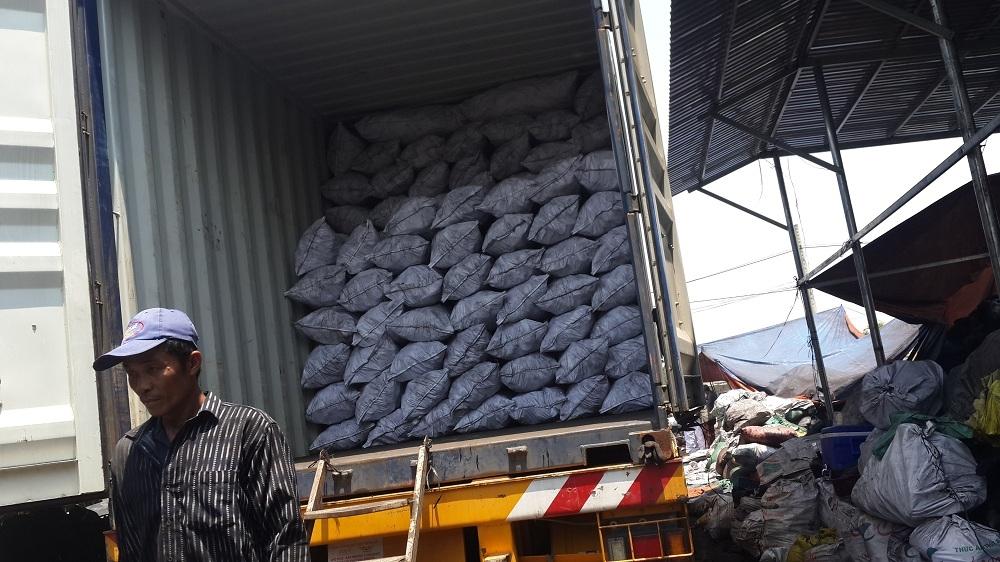
Packaging is another important contributor to Bulk Charcoal Prices.
Charcoal may be supplied in different retail or commercial formats, including paper bags, woven sacks and cartons.
The packaging materials, printing requirements and number of individual units influence the supplier’s cost.
For example, one metric ton packed in 2kg retail bags requires 500 individual packages.
The same net charcoal quantity packed in 10kg bags requires only 100 packages.
These differences can affect material consumption, filling operations, product identification and handling.
However, larger packaging does not automatically provide the lowest total distribution cost.
The final result depends on bag construction, customer requirements and how the goods are transported and sold.
Custom-printed packaging may also involve separate artwork preparation and printing quantities.
For private-label products, the cost of packaging development should be distinguished from the price of the charcoal itself.
Order volume can influence commercial pricing as well.
A larger confirmed purchase may allow certain fixed expenses to be distributed across more units or support a different production arrangement.
Nevertheless, there is no universal discount percentage that applies to every supplier.
A large order may still require additional production capacity, warehousing or specialized packaging.
Importers should therefore request quotations for the quantities they actually intend to purchase.
Comparing a one-container order with a significantly larger contract can produce misleading conclusions if the purchasing conditions differ.
The appropriate Charcoal Price per Ton should reflect the agreed product, packaging and order quantity.
5. Charcoal Shipping Costs and International Logistics
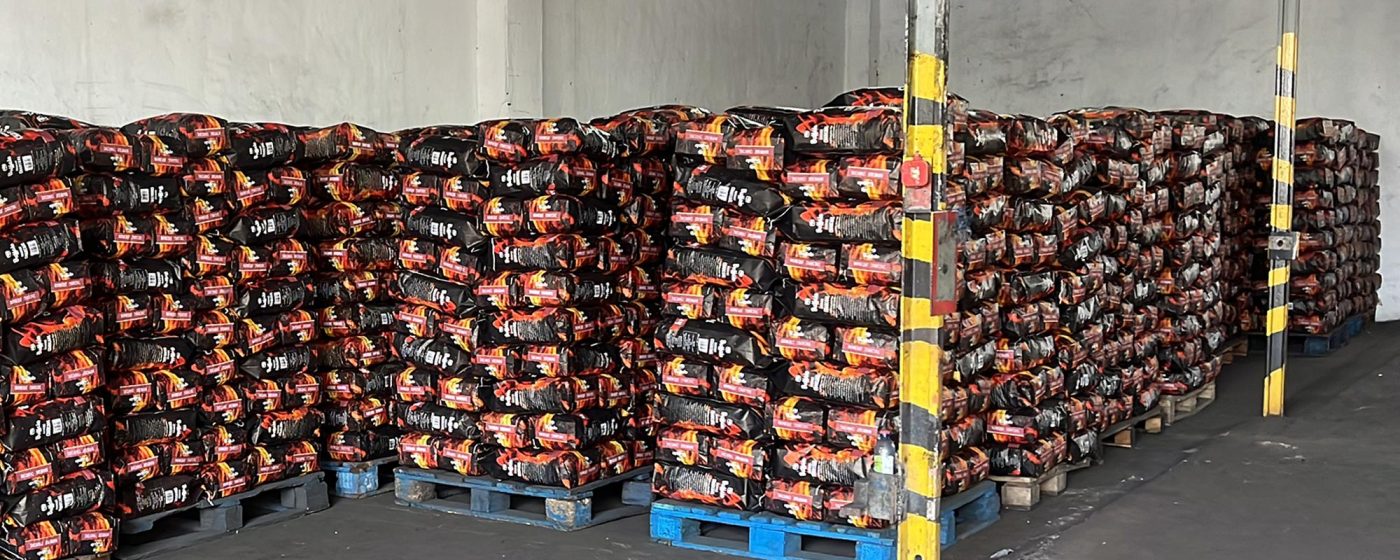
Charcoal Shipping Costs can substantially influence the final amount paid by an international importer.
The relevant expenses may include transportation from the production location to the export port, port handling, ocean freight and services at the destination.
However, the allocation of these expenses depends on the agreed trade term.
Under Incoterms® 2020, FOB and CIF have different main-carriage and insurance obligations.
For FOB, the buyer generally arranges the main ocean carriage after the seller delivers the goods on board the vessel.
Under CIF, the seller contracts and pays for carriage to the named destination port and obtains the required cargo insurance, although transportation risk still normally transfers when goods are delivered on board at origin.
Consequently, a Charcoal FOB Price should not be compared directly with a CIF quotation without accounting for their different cost coverage.
Shipping conditions can also change over time.
Freight availability, port operations, carrier policies and destination-specific charges can influence the total cost of importing charcoal.
Dangerous-Goods Requirements and Shipping Expenses
For charcoal shipments in 2026, dangerous-goods compliance is a particularly important consideration.
IMDG Code Amendment 42-24 became mandatory on January 1, 2026.
Hapag-Lloyd confirms that charcoal covered by UN1361, Class 4.2, must be declared as dangerous goods and comply with the applicable packaging and documentation requirements.
The carrier also published a dangerous-goods premium associated with the updated requirements.
However, that carrier-specific charge should not be treated as a universal freight surcharge applicable to every route or shipping line.
For importers, the practical lesson is that quotations should clearly identify relevant freight, documentation and carrier charges.
A lower charcoal purchase price may not result in lower Charcoal Import Costs when the complete transportation arrangement is considered.
6. Market Demand, Seasonal Orders and Charcoal Price Trends
The final major factor is the relationship between market demand and available supply.
Charcoal Price Trends can reflect changing purchasing activity, particularly in markets where barbecue charcoal sales follow seasonal patterns.
Retail distributors may build inventory before their main outdoor cooking season.
Restaurant suppliers, by contrast, may have more regular purchasing requirements throughout the year.
These differences can influence when buyers place orders and how suppliers allocate available production.
Demand changes do not automatically produce the same price movement in every market.
Prices may also be affected by available inventory, production capacity, raw material costs and transportation conditions.
For example, an increase in advance purchasing may place additional pressure on a supplier with limited immediately available stock.
However, if supply is sufficient, the same demand pattern may have a smaller effect on quoted prices.
Currency movements can also influence international purchasing budgets.
Many importers evaluate quotations in US dollars even when their domestic sales are conducted in another currency.
A change in exchange rates may alter the local-currency cost of a shipment without any change in the supplier’s dollar quotation.
Can Buyers Use Published Charcoal Price Trends?
Trade statistics can provide context, but they should be interpreted carefully.
UN Comtrade publishes standard unit values derived from reported trade values and quantities.
These are statistical indicators rather than binding supplier quotations.
Trade values may also be recorded on different valuation bases.
UN Comtrade explains that international merchandise trade statistics generally recommend FOB-type valuations for exports and CIF-type valuations for imports, although national reporting practices can differ.
Consequently, a country-level average cannot automatically represent the market price of a particular mangrove charcoal grade or sawdust briquette specification.
Importers should use trade statistics for broader market analysis and obtain current, product-specific quotations for actual purchasing decisions.
Charcoal Price per Ton: How Buyers Should Compare Supplier Quotations
The six factors described above show why two suppliers can offer different prices without necessarily supplying equivalent products.
For professional purchasing, the most useful approach is to compare quotations using the same commercial assumptions.
The buyer should identify the charcoal type, technical specifications, net quantity, packaging and intended destination.
The quotation should also specify the relevant trade term, named port, shipment period and price validity.
A Charcoal Price per Ton becomes meaningful only when buyers understand exactly what that price includes.
For example, a quotation based on standard woven bags should not automatically be compared with one including custom-printed retail packaging.
Likewise, charcoal with a defined size distribution should not be compared directly with an unsorted mixed-size product.
Product testing, inspection arrangements and documentation requirements can create further differences.
A purchasing decision should therefore consider the total commercial offer rather than one headline price.
What Should Importers Ask Before Accepting a Charcoal Price?
Before confirming an international charcoal order, buyers should be able to answer several important questions.
Does the quotation identify the precise charcoal category and agreed specifications? Are the packaging requirements and net weight clearly stated? Does the price include the services required under the selected trade term?
Importers should also establish whether additional freight, insurance, customs or inspection costs remain outside the supplier’s quotation.
Where quality matters to the final customer, the purchasing team should consider whether product testing and acceptance requirements have been clearly agreed.
These questions provide a practical way to evaluate Factors Affecting Charcoal Prices without relying on general claims about which supplier offers the best value.
Conclusion
Understanding the Factors Affecting Charcoal Prices helps international buyers make better purchasing decisions.
Raw material availability, production costs, quality specifications, packaging requirements, international logistics and market demand all influence the commercial price of charcoal.
These factors do not operate independently. A change in one area may affect the costs or requirements associated with another.
For importers, the most important consideration is whether the quoted price accurately reflects the product and services being purchased.
A lower nominal price does not necessarily provide the lowest total cost, while a higher price does not automatically guarantee superior quality.
The best charcoal purchasing decision is based on comparable specifications, transparent commercial terms and the total cost of obtaining a product that meets the buyer’s requirements.
Recommended Internal Reading
For additional information on charcoal purchasing and import costs, explore these related Vietargo articles:
-
What Matters Most When Buying Charcoal: Price, Quality or Delivery? — understanding the relationship between purchasing cost and commercial priorities.
-
FOB vs CIF for Charcoal Imports: Responsibilities and Trade Terms — comparing international shipping responsibilities.
-
Fixed Carbon, Ash and Moisture: What Charcoal Test Results Mean — interpreting technical quality specifications.
-
How to Request a Charcoal Quotation: An RFQ Guide for Importers — preparing accurate purchasing enquiries.
VIETARGO – THE BEST CHARCOAL OF THE WORLD TO YOUR SHELF
Website : https://vietargo.com/
Facebook : Vietargo
địa chỉ : 10 Nguyen Hien Street, 91B Residential Area, Can Tho, Vietnam
☎: 0939364888