

What Should You Do If a Charcoal Shipment Arrives Damaged?
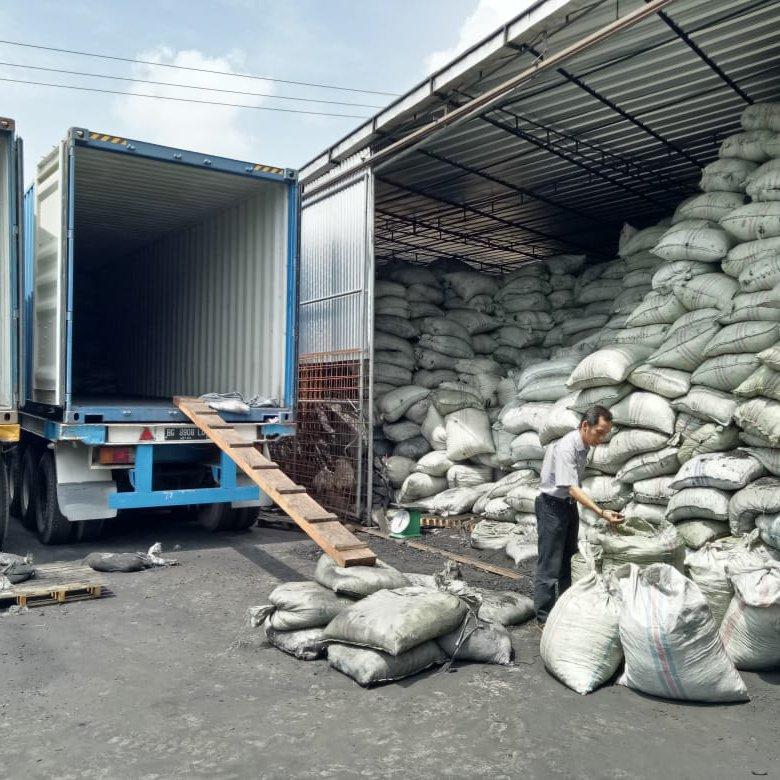
A container of imported charcoal arrives at the destination warehouse. The delivery documents indicate that the shipment has reached its destination, but an initial examination reveals a problem.
Several packages appear damaged. Some charcoal pieces are broken, and the importer is uncertain whether the goods still meet the agreed commercial specifications.
Should the buyer contact the supplier, the shipping company or the insurance provider first?
For international importers, a Damaged Charcoal Shipment can create financial and operational problems beyond the visible condition of the goods. Damaged packaging, excessive broken pieces or cargo affected by moisture may reduce the quantity available for resale and disrupt customer deliveries.
However, discovering damaged goods does not automatically establish who is responsible.
The problem may have originated during production, packaging, transport, terminal handling or another stage of distribution. The buyer must distinguish between the observed damage, its likely cause and the contractual obligations of the parties.
There is also a critical timing issue.
Carriers and insurers may require prompt notification, documentary evidence and independent inspection. Delays in reporting a problem can complicate the claims process.
Maersk’s cargo insurance guidance advises customers to notify the relevant parties immediately when damage or loss is discovered and to support claims with shipping documents and photographic evidence.
This article explains how importers can assess a damaged charcoal delivery, preserve relevant evidence and determine which claims procedures may apply.
Damaged Charcoal Shipment: What Should Importers Check First?
The first priority is to establish the condition of the cargo at the point where the problem is discovered.
Importers should distinguish between external package damage, physical damage to the charcoal itself and discrepancies in the declared shipment quantity.
For example, a torn outer bag does not necessarily mean that its entire contents are commercially unusable.
Likewise, bags that appear intact may contain more broken charcoal than the buyer expected.
The condition of the shipping container may also provide relevant evidence. Visible damage to the container, water marks or discrepancies in container identification can be important to a subsequent investigation.
The importer should arrange for the condition to be documented by appropriately qualified receiving or inspection personnel.
Where possible, the delivery record should accurately describe any visible irregularities rather than recording an unqualified receipt when damage has already been observed.
The U.S. Department of Agriculture’s export transportation guidance emphasizes documenting apparent damage on delivery records and preserving packaging, cargo and transport documents as potential claims evidence.
Importers should also consider safety before arranging further inspection.
Charcoal shipped by sea is subject to dangerous-goods requirements, and suspected heating, smoke or other hazardous conditions require professional handling rather than routine commercial examination.
Understanding the Different Types of Charcoal Shipping Damage
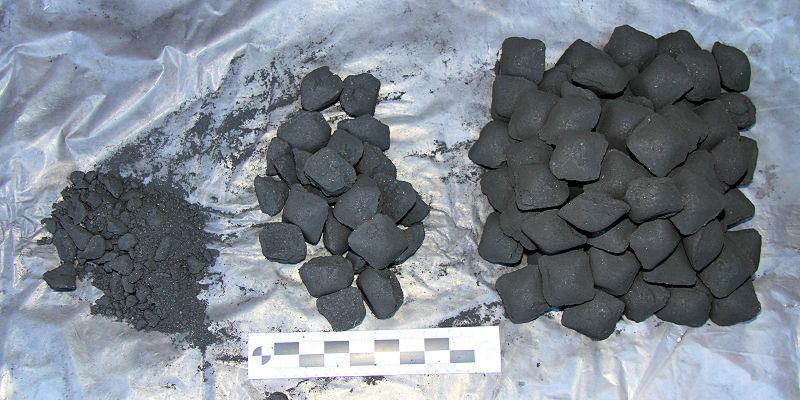
Charcoal Shipping Damage can take several forms, and each requires a different assessment.
Physical breakage is particularly relevant to natural lump charcoal and manufactured briquettes.
The commercial impact depends on the percentage of material falling outside the agreed size or shape requirements.
A shipment may retain its correct net weight while containing an unacceptable proportion of fragments.
Packaging damage is a separate issue.
Torn sacks, damaged cartons or compromised closures can affect product protection and create discrepancies during receiving and distribution.
Moisture-related concerns may involve visible water exposure or laboratory results indicating that the product exceeds its contractual moisture specification.
However, moisture damage should not be concluded from a photograph alone.
The importer may need evidence about the product’s condition, packaging and relevant measurements.
Another concern is missing cargo.
A shipment containing fewer bags than stated on the packing list presents a quantity discrepancy rather than simply a product-quality issue.
These distinctions are important because Charcoal Cargo Damage, contractual nonconformity and cargo shortage may be subject to different evidence and claims procedures.
Charcoal Container Damage: Why Photographs Matter
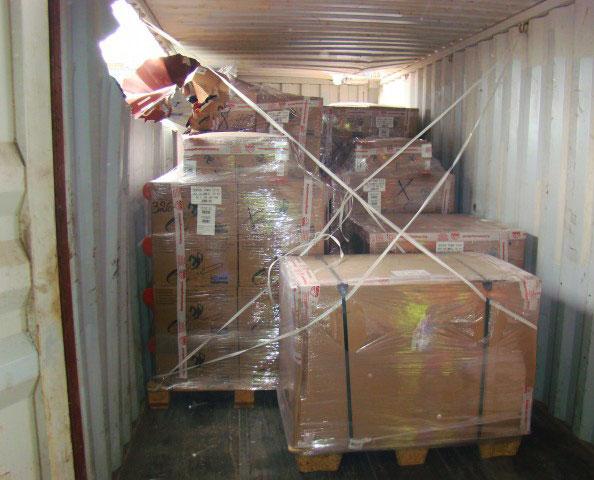
When investigating Charcoal Container Damage, photographs help establish the condition in which goods were received.
However, images are most useful when they clearly identify the shipment and show the relevant details.
A photograph of scattered charcoal alone may not demonstrate which container or delivery it came from.
A stronger evidence record connects the visible condition of the goods to the shipment identification and receiving documentation.
Relevant photographic records may include the container identification, affected packaging and visible condition of the products.
Maersk’s claims guidance specifically recommends photographing both sound and damaged cargo, the packaging and any relevant container damage, including the container number.
Photographs should also be preserved in their original form where possible.
Descriptions, timestamps and related receiving records can provide additional context.
The objective is not merely to demonstrate that some charcoal is broken.
It is to create reliable evidence of the condition observed at a particular point in the shipment’s journey.
This evidence may later assist a surveyor, insurer, carrier or supplier in assessing the reported problem.
Who Should Be Notified About a Damaged Charcoal Delivery?
A Damaged Charcoal Delivery can involve several parties with different responsibilities.
The ocean carrier may need to receive a formal notice of cargo loss or damage.
An insurer may require notification under the cargo insurance policy.
The supplier may need information about the condition of the delivered goods, particularly when a product-quality or contractual issue is suspected.
A freight forwarder or customs representative may also be involved, depending on the transportation arrangement.
These notifications should not automatically be treated as interchangeable.
Informing the supplier does not necessarily satisfy a carrier’s notice requirements.
Likewise, contacting the carrier does not automatically open an insurance claim.
For marine cargo insurance, QBE Vietnam advises insured parties to notify the designated survey agent, issue written claims to relevant carriers or other responsible parties and preserve evidence of the loss.
The correct recipients depend on the insurance policy, bill of lading, purchase contract and applicable rules.
Importers should confirm those arrangements promptly rather than assume that one party will notify everyone else.
Charcoal Shipment Claims: Why Reporting Deadlines Matter
For importers considering Charcoal Shipment Claims, one of the most important issues is the time available to notify the carrier.
International cargo disputes may be governed by different conventions, national laws and contractual provisions.
For example, Article III, Rule 6 of the Hague-Visby Rules provides for written notice of apparent loss or damage at or before the relevant delivery, while damage that is not apparent may generally be notified within three days.
The same provision establishes a one-year period for bringing certain proceedings, subject to applicable qualifications and extensions.
However, these periods should not be presented as universal deadlines for every charcoal shipment.
The governing law, bill of lading and transport arrangement must be examined.
A notice period is also different from a limitation period for legal proceedings.
An importer who notifies the carrier of damage has not necessarily completed all the steps required to preserve a legal claim.
This distinction matters because a buyer may spend time negotiating with a supplier while a carrier-related deadline continues to run.
The appropriate approach is to identify the relevant contractual and legal requirements promptly and seek qualified advice where a significant dispute is involved.
Charcoal Damage Inspection: What Does an Independent Survey Establish?
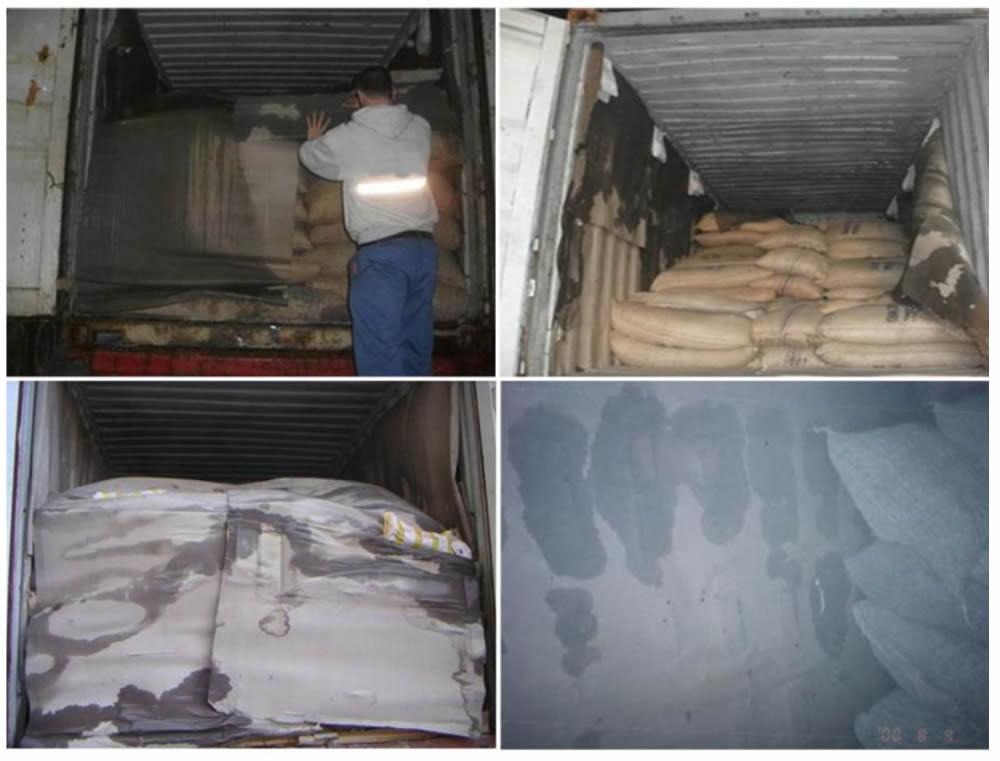
A Charcoal Damage Inspection may be necessary when the extent or cause of damage is disputed.
Independent surveyors can document the condition of the goods and assess the scope of a reported problem within the terms of their appointment.
However, a survey report does not automatically determine legal responsibility.
A surveyor may establish that a proportion of charcoal falls below the agreed minimum size without being able to prove exactly when every piece broke.
Likewise, evidence of moisture exposure does not necessarily establish which party caused it.
A useful survey should distinguish observations, measurements, possible causes and conclusions supported by evidence.
TT Club recommends obtaining relevant contracts, correspondence, survey reports and other documents when investigating cargo losses. It also notes that preserving the condition of disputed cargo for appropriate survey examination can be important.
For charcoal importers, the inspection scope should reflect the specific problem.
If the dispute concerns physical breakage, the relevant commercial size specifications and agreed acceptance tolerances become important.
If the problem involves water exposure or packaging damage, other forms of examination may be necessary.
The buyer should coordinate any survey with the insurer and relevant parties so that important evidence is not lost.
Charcoal Shipping Insurance: Does Every Policy Cover Breakage?
Charcoal Shipping Insurance can help protect importers against covered transportation losses, but an insurance certificate does not guarantee compensation for every damaged package.
Coverage depends on the exact policy wording, insured risks, exclusions and facts of the loss.
This distinction is especially important for charcoal because the material is naturally brittle.
Some cargo insurance clauses exclude ordinary wear and tear, inherent characteristics of the goods or certain losses arising from inadequate packaging.
For example, the Institute Cargo Clauses (C) contain exclusions relating to ordinary wear and tear, insufficient or unsuitable packing and inherent vice.
The presence of these exclusions does not automatically mean that every claim involving broken charcoal must be rejected.
Their application depends on the specific insurance policy and circumstances.
A sudden insured transport incident may require a different assessment from gradual deterioration arising from the ordinary characteristics of the cargo.
Importers should also understand that broader insurance coverage still contains exclusions.
The term all risks should not be interpreted as covering every possible financial loss.
For Charcoal Cargo Insurance Claims, an insurer may require evidence linking the claimed damage to an insured event and demonstrating its financial value.
Does CIF Mean the Supplier Must Pay for Damaged Charcoal?
Not automatically.
Under Incoterms® 2020, CIF requires the seller to arrange the specified ocean carriage and minimum cargo insurance.
However, the risk of loss or damage generally transfers to the buyer when the goods are delivered on board the vessel at the shipment port.
This means the seller’s obligation to obtain insurance should not be confused with responsibility for every event occurring during transportation.
Other claims may arise under the sales contract if the supplier failed to meet its own obligations.
For containerized charcoal, the parties should also confirm that their selected Incoterms rule accurately reflects the actual delivery arrangements.
The appropriate claims route depends on the contract, insurance and evidence—not simply whether the invoice states FOB or CIF.
How to Claim Shipping Damage: Documents Importers May Need
The documentation required for How to Claim Shipping Damage varies depending on whether the importer is pursuing a carrier claim, insurance claim or contractual claim.
Nevertheless, several documents commonly provide the basis for an investigation.
| Document | Why it matters |
|---|---|
| Commercial Invoice | Establishes transaction details and value |
| Packing List | Identifies quantities, packaging and weights |
| Bill of Lading | Establishes the relevant sea carriage |
| Delivery Receipt | Records condition or discrepancies at delivery |
| Container and Seal Records | Connect evidence to the shipment |
| Photographs | Documents visible damage and packaging condition |
| Survey Report | Provides independent observations and findings |
| Product Specification | Identifies agreed commercial requirements |
| Insurance Certificate | Identifies relevant policy coverage |
| Claim Calculation | Explains the financial amount requested |
Maersk’s published insurance claims checklist includes commercial invoices, packing lists, transport documents, delivery records, photographs and other evidence supporting the alleged loss.
However, submitting a complete document package does not guarantee that a claim will be accepted.
The receiving party must still assess the circumstances under the relevant contract or policy.
Importers should avoid submitting unsupported estimates or treating the entire cargo as a total loss when only part of it is affected.
Accurate documentation is more useful than an exaggerated claim amount.
How to Calculate the Commercial Loss from a Broken Charcoal Shipment
A Broken Charcoal Shipment may contain products with different levels of commercial value.
Some packages may remain fully saleable, while others may contain material that no longer meets the intended customer’s specifications.
Consider a hypothetical shipment containing 10,000kg of charcoal purchased for $6,000.
A representative assessment identifies 1,000kg of material that does not meet the contractual size requirements.
The original purchase value attributable to that quantity is $600.
However, this figure is not automatically the recoverable loss.
If the smaller charcoal can be sold through another channel, its recovery value may reduce the actual financial impact.
Additional justified expenses, such as inspection or sorting costs, may be relevant depending on the contract and insurance coverage.
The importer should therefore distinguish the original product value, potential salvage value and documented additional expenses.
Insurance guidance from MSIG Vietnam emphasizes taking reasonable steps to limit further losses, retaining damaged property for assessment and providing documentary evidence.
Any proposed disposal, sale or other treatment of disputed cargo should be coordinated with the relevant insurer or claims professionals where required.
Preventing Disputes Before the Next Charcoal Shipment
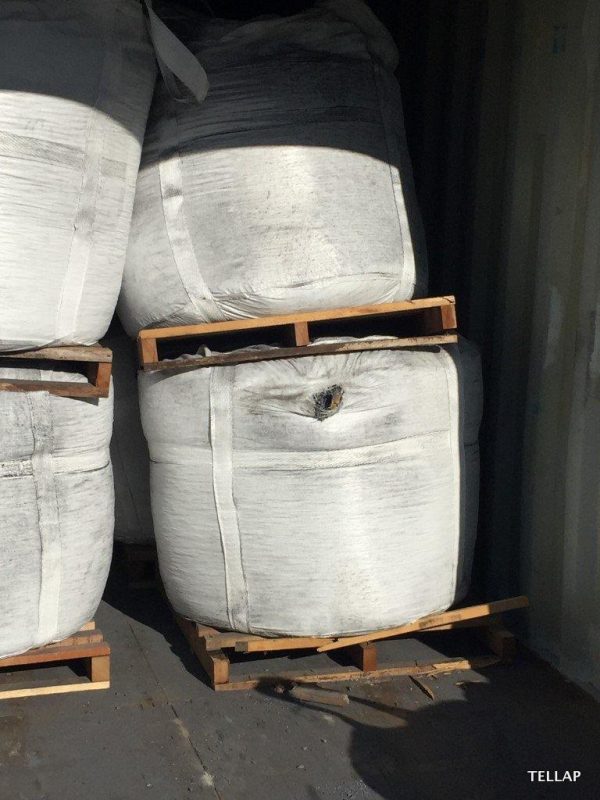
A damaged delivery can provide useful information for future purchasing arrangements.
However, the objective should not be to assign blame before the facts are established.
Importers can review whether the purchase agreement clearly defined the product’s physical condition, packaging requirements and acceptable quality tolerances.
The agreement should also identify the applicable delivery terms and inspection responsibilities.
For future orders, the parties may benefit from confirming which documents will be available before shipment and how discrepancies will be reported.
Cargo insurance should be reviewed before the goods are dispatched, rather than only after a loss occurs.
Packaging should also be evaluated for its intended distribution environment.
TT Club identifies inadequate cargo packing and securing as recurring contributors to commercial cargo damage claims.
However, charcoal packaging decisions must also comply with the applicable dangerous-goods rules.
The International Maritime Organization confirms that IMDG Code Amendment 42-24 became mandatory on January 1, 2026.
A package that provides adequate commercial protection is not necessarily compliant with maritime dangerous-goods requirements.
Both considerations must be addressed through appropriate technical and logistics arrangements.
Conclusion
A Damaged Charcoal Shipment can affect product value, customer deliveries and the financial performance of an international charcoal order.
However, discovering broken pieces or damaged packaging does not automatically establish the cause of the problem or the party responsible.
For importers, the most important considerations are documenting the condition of the goods, preserving relevant evidence, notifying the appropriate parties and understanding the applicable claims procedures.
Charcoal Shipping Insurance may provide protection for covered losses, but its scope depends on the policy wording and circumstances.
Likewise, claims against carriers or suppliers must be evaluated under the relevant contractual and legal framework.
When a charcoal shipment arrives damaged, the strongest response is based on timely communication, reliable evidence and a clear understanding of the buyer’s contractual rights—not assumptions about who caused the damage.
Recommended Internal Reading
Related Vietargo articles that support this topic:
-
Why Does Charcoal Break During Shipping? What Importers Should Know — explains the physical factors contributing to charcoal breakage.
-
Why Does Your Charcoal Sample Look Different from the Bulk Shipment? — examines product consistency and commercial quality expectations.
-
FOB vs CIF for Charcoal Imports: Responsibilities and Trade Terms — explains how risk and transportation obligations are allocated.
-
Importing Charcoal from Vietnam: What Documents Do Buyers Actually Need? — explains the role of commercial and shipping documentation.
Editorial note: Connect these titles to their verified published URLs on vietargo.com.
VIETARGO – THE BEST CHARCOAL OF THE WORLD TO YOUR SHELF
Website : https://vietargo.com/
Facebook : Vietargo
địa chỉ : 10 Nguyen Hien Street, 91B Residential Area, Can Tho, Vietnam
☎: 0939364888