

7 Red Flags to Watch for When Choosing a Charcoal Supplier
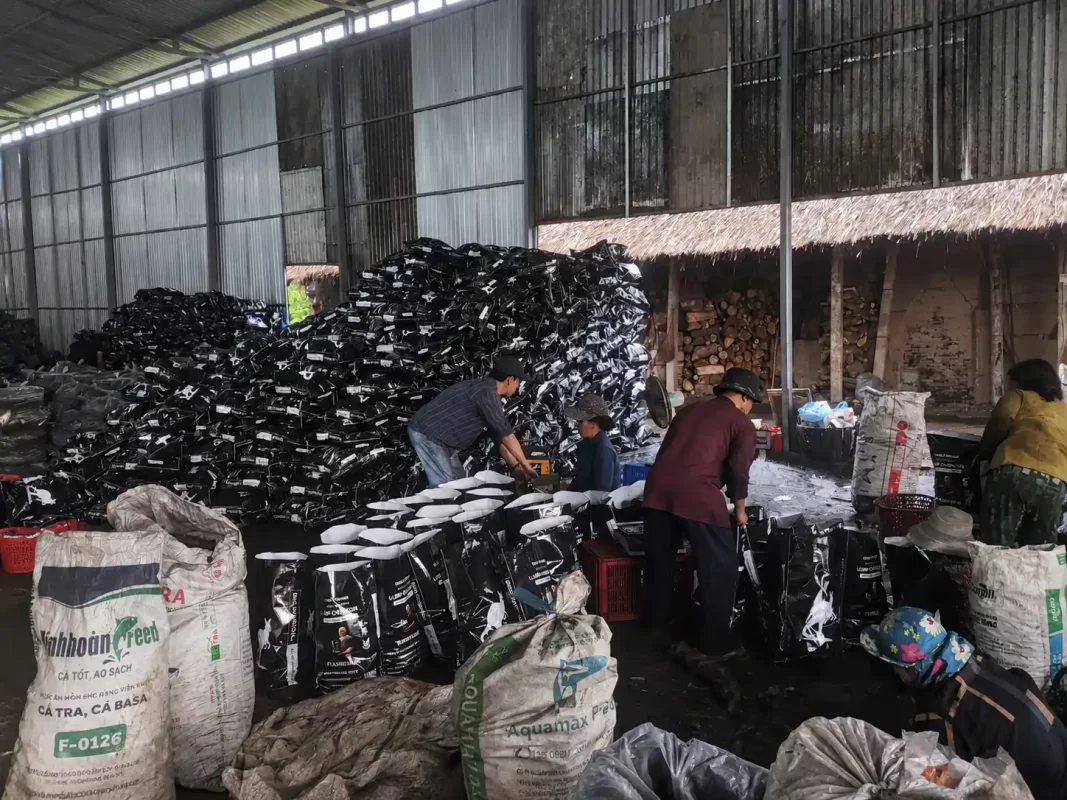
Finding a charcoal supplier is relatively easy. Finding a supplier that can consistently deliver the right product, provide accurate documentation and fulfill international orders is a much more demanding process.
For importers, choosing the wrong supplier can create problems that extend far beyond a disappointing product sample.
A shipment may contain charcoal that does not match the agreed specifications. Export documents may be incomplete, commercial terms may change unexpectedly, or the buyer may discover that the company receiving payment is not the business originally evaluated.
These situations demonstrate why understanding Charcoal Supplier Red Flags is an important part of international procurement.
However, a warning sign is not automatically evidence of fraud.
A newly established company, for example, may be a legitimate supplier without an extensive export history. A manufacturer may also be unable to provide certain information immediately for reasonable commercial reasons.
The difference lies in whether the supplier can explain discrepancies, provide verifiable information and agree to appropriate commercial controls.
The U.S. International Trade Administration recommends conducting due diligence on international business partners, including checking company identity, address, business contacts and available background information.
For businesses importing charcoal from Vietnam, these checks are particularly valuable when purchasing large quantities or developing long-term supply relationships.
This article examines seven Charcoal Supplier Warning Signs, explains why they matter and outlines how buyers can evaluate potential partners before committing to a commercial order.
Why Charcoal Supplier Red Flags Matter to International Importers
International charcoal transactions involve several interconnected activities.
The supplier must identify the agreed product, arrange or coordinate production and packaging, prepare commercial documentation and fulfill its obligations under the sales contract.
Depending on the transaction, shipping arrangements and destination-market requirements can introduce additional responsibilities.
A problem in one area may affect the entire purchasing process.
For example, unclear product specifications can lead to disputes over delivered quality. Inconsistent company information may make contractual responsibilities difficult to establish. Missing transportation documentation can interfere with shipment acceptance.
These are different Charcoal Supplier Risks, but they share a common characteristic: they become more expensive to resolve after the buyer has committed significant funds.
The UK government’s international trade fraud guidance recommends checking foreign business partners and obtaining appropriate company information and references as part of commercial due diligence.
Supplier verification should therefore be treated as a normal purchasing activity rather than a sign of distrust.
A reputable supplier should understand why an importer needs sufficient information to evaluate a commercial transaction.
Red Flag 1: Company Information Cannot Be Independently Verified
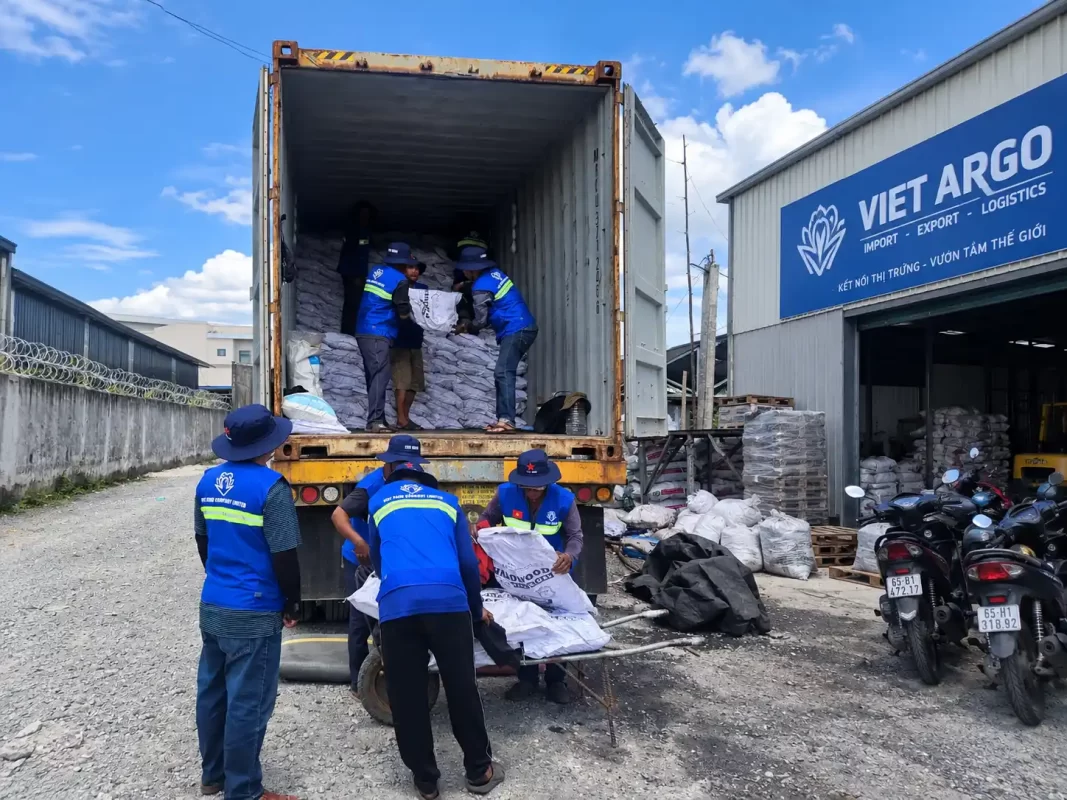
The first warning sign is an inability to establish the identity of the business offering the charcoal.
A supplier may present a professional website, product photographs and an attractive quotation. However, these materials alone do not confirm its legal identity.
An importer should be able to identify the contracting business and determine whether its company details are consistent across available records.
Potential concerns include conflicting company names, unclear registered addresses, inconsistent contact information or unexplained differences between the contracting entity and the proposed payment recipient.
The U.S. Commercial Service identifies mismatched email domains, limited company information and other inconsistent contact details as issues worth investigating.
However, buyers should distinguish between different legitimate business models.
A trading company may source products from independent manufacturers without owning a charcoal factory.
This does not automatically make it unreliable.
The important distinction is whether the business accurately describes its role and can support its contractual commitments.
How to Verify Charcoal Suppliers
How to Verify Charcoal Suppliers begins with checking the identity of the legal entity.
Buyers can compare business registration information with the company’s quotation, contract details and other available records.
Where appropriate, independent business references or a professional due diligence service may provide further assurance.
The objective is to establish who is responsible for supplying the goods, not simply whether the company has an attractive online presence.
Red Flag 2: The Supplier Cannot Explain Its Charcoal Specifications
A second warning sign appears when a supplier relies on general quality descriptions without providing useful product details.
Terms such as premium charcoal, export quality or restaurant grade may have commercial value, but they do not establish precise technical specifications.
For international buyers, Charcoal Quality Issues often begin with unclear expectations rather than visibly defective material.
A supplier may describe its charcoal as high quality without identifying the intended product dimensions, moisture content, ash content or other relevant parameters.
Another may use grading terms that differ from those used by competing manufacturers.
These differences matter because charcoal is not a completely uniform commodity.
The Food and Agriculture Organization explains that charcoal properties vary according to production conditions and material characteristics. Moisture, ash, fixed carbon and physical integrity can influence commercial suitability.
A buyer purchasing natural lump charcoal may need a defined size distribution.
A customer sourcing manufactured briquettes may require specific dimensions and an acceptable proportion of broken pieces.
These details cannot be replaced by a general statement that the product is suitable for export.
The warning sign becomes more serious when a supplier repeatedly avoids clarifying the requirements or provides contradictory figures.
A professional supplier comparison should use measurable specifications rather than promotional adjectives.
Red Flag 3: Product Samples and Quality Documents Are Inconsistent
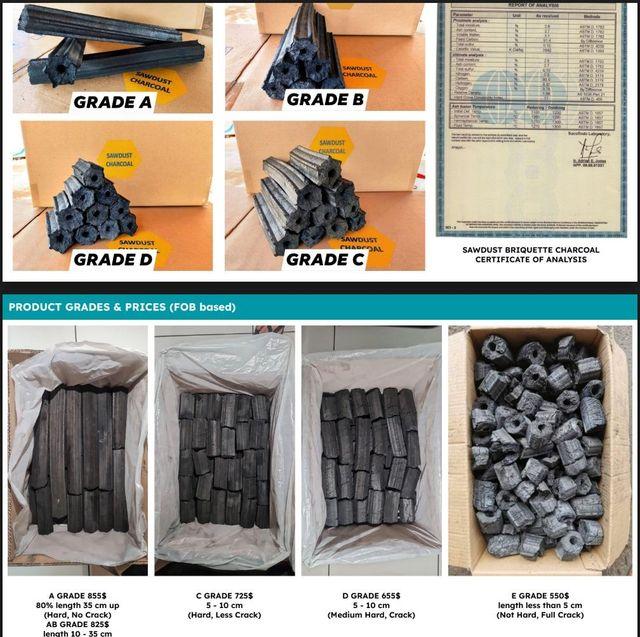
Samples are useful tools for evaluating charcoal before a bulk purchase.
However, an attractive sample should not be mistaken for proof that every later shipment will have identical characteristics.
Different charcoal production batches can vary, and small presentation samples may not represent the complete range of material in a commercial order.
A potential warning sign is a supplier presenting technical documentation that cannot be connected to the offered product.
For example, a laboratory certificate might identify a different charcoal category, contain inconsistent product descriptions or lack sufficient information to establish what was tested.
The International Finance Corporation’s guide to trade finance due diligence identifies discrepancies between goods descriptions and commercial documents as potential warning indicators.
Buyers should examine whether the approved sample, product specification and relevant testing documents refer to the same intended product.
Where independent testing is required, the testing provider and the scope of the report should be verifiable.
This does not mean that every charcoal shipment must be accompanied by the same laboratory documents.
The appropriate documentation depends on the contract, destination market and product requirements.
The essential issue is consistency between what is promised and what can be demonstrated.
Red Flag 4: Prices Are Unusually Low but the Offer Lacks Detail
Price is a major consideration when Choosing a Charcoal Supplier, especially for importers operating in competitive wholesale markets.
However, a quotation significantly below comparable offers deserves closer examination when the supplier cannot explain what is included.
A low price is not automatically suspicious.
It may reflect differences in raw materials, sorting requirements, packaging, purchasing quantities or production costs.
The concern arises when the supplier advertises unusually favorable terms while providing limited product specifications or unclear commercial conditions.
The UK government’s customs due diligence guidance identifies commercially implausible selling prices among the warning signs businesses should investigate.
For example, two suppliers may quote different prices for what they both describe as premium hardwood charcoal.
One quotation may include selected large pieces and printed packaging. The other may cover mixed-size charcoal in standard bags.
Without comparing the actual specifications, the prices are not directly equivalent.
Buyers should also distinguish between the FOB price and the total cost of importing the goods.
A low FOB quotation does not necessarily produce the lowest landed cost once applicable freight, insurance, customs and distribution expenses are considered.
For Reliable Charcoal Suppliers, the commercial offer should be detailed enough for the buyer to understand what is being purchased.
An unexplained price difference is a reason to ask questions, not necessarily a reason to reject the supplier immediately.
Red Flag 5: Payment Instructions Change Unexpectedly
One of the most serious warning signs in international procurement involves unexpected changes to payment instructions.
An importer may negotiate an order with a supplier, approve the commercial invoice and prepare to transfer the agreed amount.
Shortly before payment, the buyer receives a message stating that the supplier has changed its bank account.
The new details may refer to another company or an unfamiliar beneficiary.
There may be legitimate explanations, but the request should be independently verified.
Bank of Ireland warns that business email compromise can involve fraudulent invoices and altered bank account details, sometimes using a genuine supplier’s compromised email account.
This matters because a convincing invoice does not independently establish that the payment recipient is authorized.
Buyers should confirm unusual or changed payment instructions through an established, independently verified communication channel.
The financial terms of an international charcoal transaction should also be documented in the contract.
A supplier requesting payment through an unexplained third party, particularly when combined with urgency or pressure to bypass normal approval procedures, presents a more significant risk.
Not every advance payment arrangement is fraudulent. Advance payments are used legitimately in international trade.
The concern is the absence of adequate verification, transparent contractual terms or reasonable commercial safeguards.
Charcoal Supplier Scams can involve impersonation and payment diversion, so buyers should treat supplier identity and payment authentication as separate verification tasks.
Red Flag 6: Shipping and Export Compliance Responsibilities Are Unclear
A supplier may offer a competitive product and attractive delivery schedule but provide incomplete information about the proposed shipping arrangements.
For international charcoal buyers, this is a significant concern.
Charcoal transported by sea is subject to specific dangerous-goods requirements.
The International Maritime Organization confirms that IMDG Code Amendment 42-24 became mandatory on January 1, 2026.
Mediterranean Shipping Company also identifies the removal of earlier exemptions and the introduction of Special Provision 978 for charcoal classified under UN1361.
These requirements affect the documentation and acceptance of charcoal shipments.
A supplier offering a sea shipment without clarifying how applicable dangerous-goods requirements will be satisfied should prompt further questions.
However, buyers should distinguish the supplier’s responsibilities from those of the freight forwarder, carrier and other relevant parties.
The supplier may not personally perform every logistics activity.
The important issue is whether the parties can identify their obligations and arrange the required compliance documentation.
A reliable export arrangement should not depend on treating regulated charcoal cargo as ordinary non-dangerous goods when that would be inconsistent with the applicable rules.
For Charcoal Supplier Verification, transport compliance is therefore a separate consideration from product quality and commercial pricing.
Red Flag 7: Supplier Reputation and Previous Performance Cannot Be Substantiated
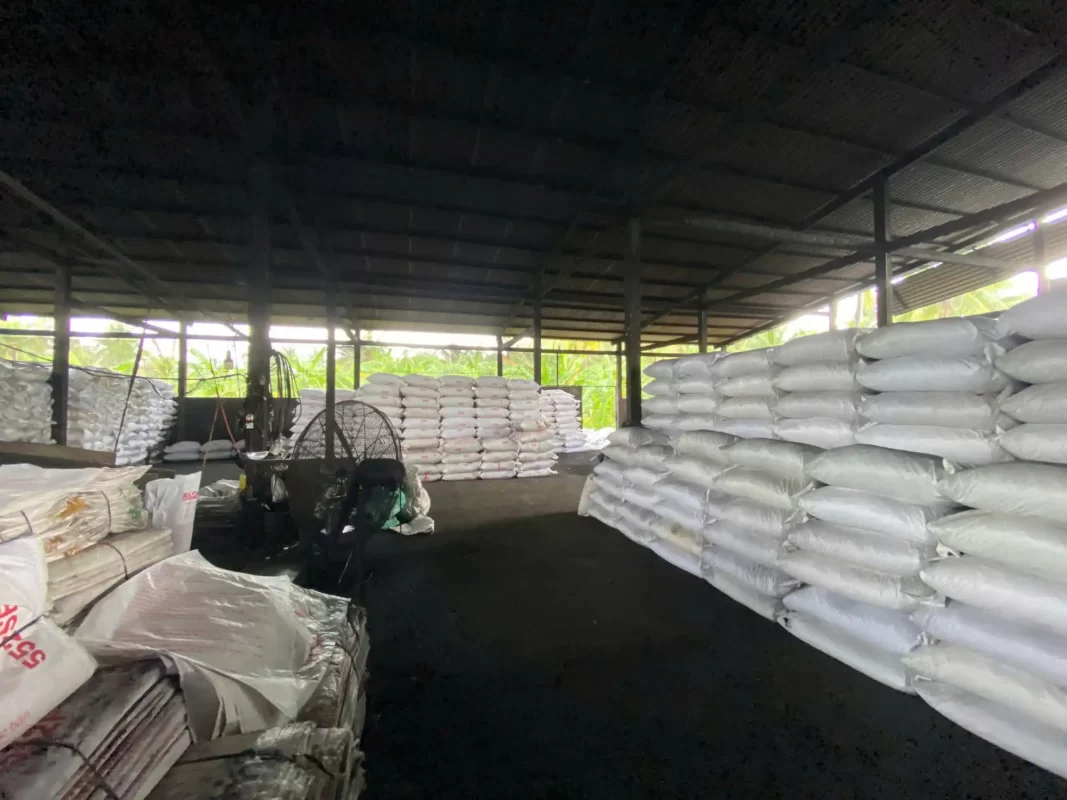
A supplier may describe itself as experienced, internationally recognized or trusted by customers worldwide.
These claims may be accurate, but buyers should evaluate whether there is supporting information.
Charcoal Supplier Reputation is more useful when assessed through verifiable business history, relevant references and evidence of commercial performance.
A well-established supplier may have experience with particular products or export markets.
A newer company may have fewer references but still possess legitimate capabilities.
Therefore, business age should not become the sole measure of reliability.
A more meaningful concern arises when a supplier makes extensive claims but cannot provide reasonable explanations or supporting information.
For example, a company claiming extensive international export experience may be unable to identify its legal contracting entity or explain its proposed shipping arrangements.
Buyers should also distinguish a manufacturer’s capabilities from those of a trading company.
A trading company may coordinate sourcing through several producers, while a direct manufacturer may operate its own production facility.
Neither model guarantees quality or reliability.
The U.S. International Trade Administration offers an International Company Profile service that can include business background, key officials, references, reputation and other information relevant to evaluating foreign companies.
The appropriate level of verification should reflect the commercial risk and size of the proposed transaction.
For long-term Charcoal Supplier Selection, documented performance across repeat orders can provide stronger evidence than promotional claims alone.
Charcoal Supplier Checklist: Turning Warning Signs into Better Decisions
The purpose of identifying Charcoal Supplier Red Flags is not to assume that every inconsistency indicates dishonesty.
Instead, buyers should use those observations to determine where additional verification is needed.
A practical supplier assessment can focus on seven questions.
| Verification area | Question for the importer |
|---|---|
| Company identity | Can the legal business entity be independently verified? |
| Product specifications | Are quality requirements and commercial grades clearly defined? |
| Samples and testing | Do samples and documents correspond to the product offered? |
| Pricing | Does the quotation explain the product and commercial conditions? |
| Payment security | Are payment instructions and beneficiaries independently verified? |
| Export compliance | Are applicable shipping and documentation responsibilities clear? |
| Supplier reputation | Can experience, references or operating capabilities be substantiated? |
A supplier does not necessarily fail the evaluation because one answer initially requires clarification.
However, repeated contradictions, refusal to provide essential information or pressure to proceed without appropriate verification should receive greater attention.
Buyers should also investigate the origin of wood-derived charcoal where relevant.
The OECD–FAO guidance on deforestation-related due diligence emphasizes identifying material sources and assessing risks associated with production areas, including protected ecosystems.
This can be particularly important when sourcing charcoal made from forest-derived materials.
The objective is to evaluate product quality, supplier credibility, legal sourcing and commercial reliability together.
Choosing a Charcoal Supplier in Vietnam
Vietnam offers various charcoal products for international markets, including natural wood charcoal and manufactured briquettes.
For buyers exploring Vietnamese suppliers, the evaluation process should begin with a clear understanding of the required product.
A restaurant distributor may prioritize physical dimensions and consistent supply, while a private-label importer may place greater emphasis on packaging specifications and repeat-order quality.
Both buyers should establish the legal identity of their supplier and understand the proposed commercial arrangement.
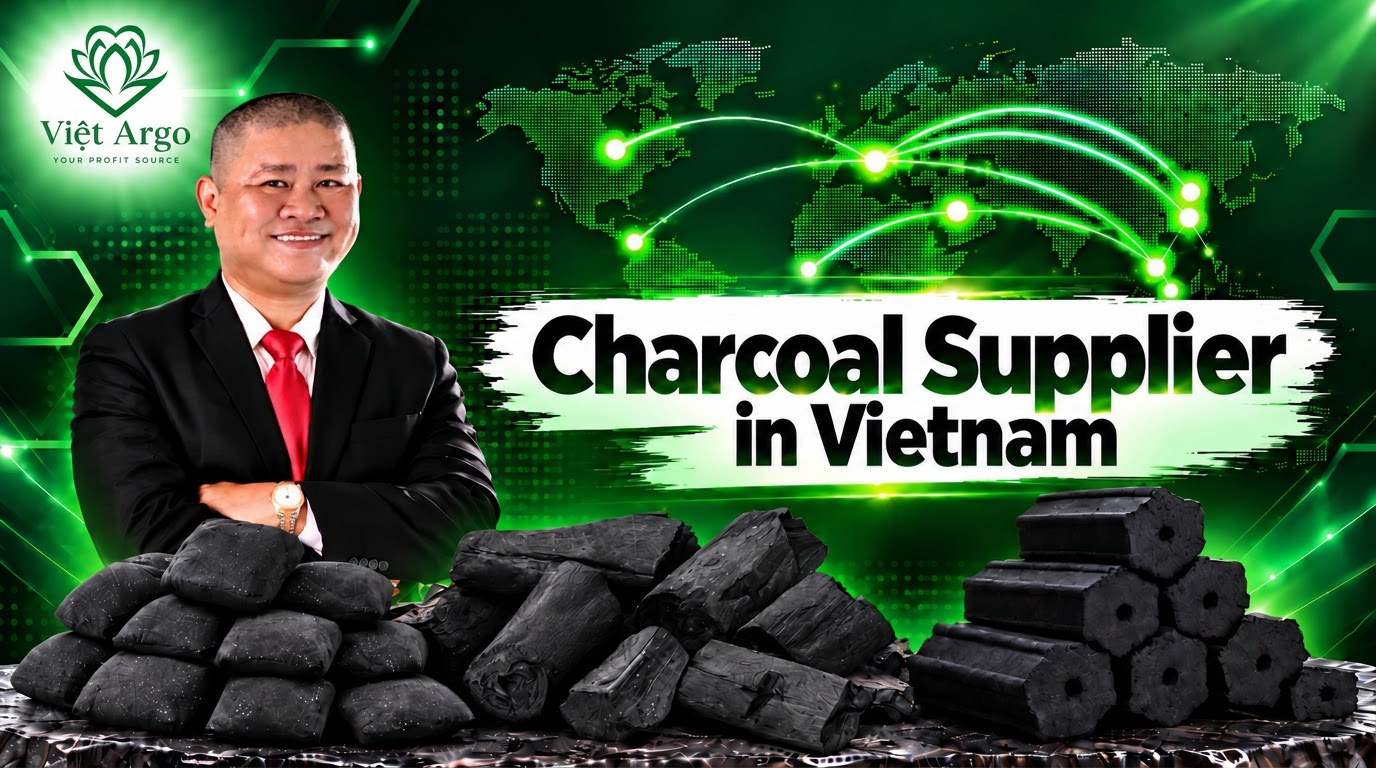
Vietargo operates in Vietnam’s charcoal export sector.
International buyers considering Vietargo can prepare a purchasing inquiry identifying the charcoal category, intended market, technical specifications, estimated quantity and destination.
Product availability, supporting documentation, commercial terms and specific supplier capabilities should be verified for each proposed transaction.
The purpose of Choosing a Charcoal Supplier is not simply to find a business offering charcoal at an attractive price.
It is to identify a supplier whose verified capabilities and commercial commitments match the buyer’s requirements.
Conclusion: Reliable Charcoal Suppliers Build Trust Through Evidence
Understanding Charcoal Supplier Red Flags can help international importers make more informed purchasing decisions.
Unverifiable company details, unclear product specifications, inconsistent documents, unexplained prices, suspicious payment instructions, uncertain export compliance and unsupported reputation claims all deserve attention.
However, an isolated warning sign should not automatically be interpreted as proof of misconduct.
A professional supplier evaluation distinguishes reasonable questions from unresolved commercial risks.
For importers, Reliable Charcoal Suppliers are best assessed through verifiable information, clear product specifications, transparent commercial arrangements and documented performance.
The strongest supplier relationship is not built on promises alone. It is built on information that buyers can verify, responsibilities that both parties understand and consistent performance across commercial orders.
Recommended Internal Reading
These existing Vietargo topics provide useful supporting information for readers evaluating potential suppliers:
-
How to Request a Charcoal Quotation: An RFQ Guide for Importers — preparing clear product and commercial requirements.
-
Why Does Your Charcoal Sample Look Different from the Bulk Shipment? — understanding sampling and quality consistency.
-
Importing Charcoal from Vietnam: What Documents Do Buyers Actually Need? — reviewing export and import documentation.
-
Cheap Charcoal vs Quality Charcoal: Which Offers Better Value for Importers? — assessing the commercial value of supplier quotations.
VIETARGO – THE BEST CHARCOAL OF THE WORLD TO YOUR SHELF
Website : https://vietargo.com/
Facebook : Vietargo
địa chỉ : 10 Nguyen Hien Street, 91B Residential Area, Can Tho, Vietnam
☎: 0939364888