

Cheap Charcoal vs Quality Charcoal: Which Offers Better Value for Importers?
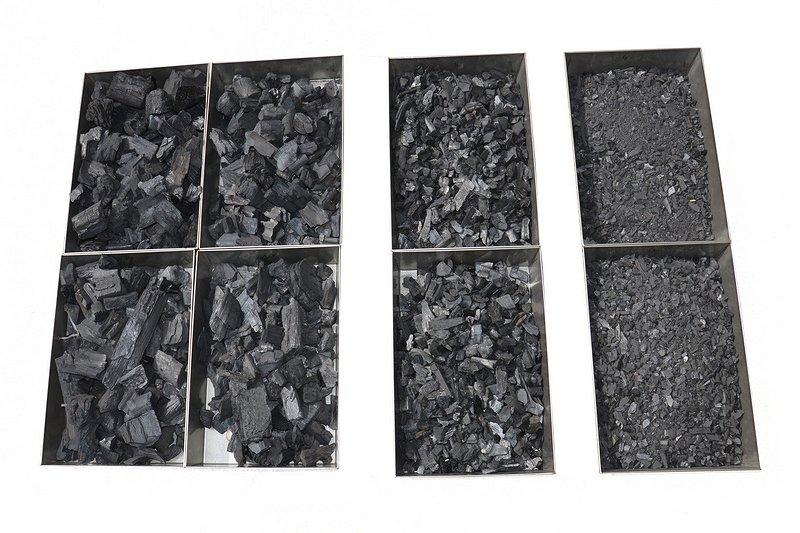
A charcoal importer receives two quotations for the same product category. One supplier offers a significantly lower price per metric ton, while another proposes a higher price with more detailed quality specifications.
Which offer represents the better investment?
For businesses purchasing charcoal in bulk, the answer cannot be determined by price alone. A cheaper shipment may appear attractive during negotiations but create additional expenses when the goods are inspected, distributed or sold to customers.
At the same time, a more expensive product does not automatically deliver better performance.
The Cheap Charcoal vs Quality Charcoal comparison is ultimately about understanding what importers receive for the total amount they spend.
Product characteristics such as moisture, ash content, fixed carbon, physical dimensions and the proportion of broken material can influence commercial value. However, the importance of each parameter depends on the intended market.
A restaurant distributor may require consistent charcoal sizes, while a wholesale buyer serving price-sensitive retail channels may accept a broader range of pieces.
The Food and Agriculture Organization (FAO) identifies moisture, volatile matter, fixed carbon and physical properties as important considerations when evaluating charcoal.
For international buyers, the challenge is distinguishing genuine savings from a low quotation that does not match the required specifications.
This article explores how charcoal quality influences purchasing value, why some low-priced products remain commercially suitable and how importers can make more accurate comparisons.
Cheap Charcoal vs Quality Charcoal: What Is the Real Difference?
The terms cheap charcoal and quality charcoal are commonly used in commercial discussions, but they are not technical product grades.
A product described as cheap may simply have a lower selling price because of favorable production conditions, purchasing volume or a less expensive packaging arrangement.
A product described as premium may have stricter sorting requirements or additional quality documentation.
Neither description independently proves the actual characteristics of the charcoal.
For a meaningful Charcoal Quality Comparison, buyers should begin with the product specifications.
These may include the type of raw material, moisture content, ash content, fixed carbon, product dimensions and acceptable quantity of fines.
The intended use is equally important.
For example, natural hardwood charcoal with mixed sizes may be suitable for one distribution channel but unsuitable for another requiring a high proportion of large pieces.
A buyer should therefore avoid assuming that every lower-priced product is defective or that every higher-priced product offers superior value.
The relevant question is whether the charcoal meets the commercial requirements at a competitive total cost.
Why a Lower Charcoal Cost per Ton Can Be Misleading
Charcoal Cost per Ton is one of the most visible figures in wholesale negotiations.
However, a quoted price normally describes a quantity of charcoal under specified commercial conditions. It does not necessarily describe the quantity that will meet the importer’s resale requirements.
Consider two hypothetical quotations for the same category of natural lump charcoal.
Supplier A offers charcoal at $550 per metric ton.
Supplier B offers charcoal at $600 per metric ton.
If both shipments contain the same quantity and satisfy the same specifications, Supplier A may offer a genuine purchasing advantage.
But suppose representative inspection establishes that Supplier A’s shipment contains a larger proportion of pieces below the agreed commercial size.
The effective cost changes.
| Purchasing factor | Lower-priced charcoal | Higher-priced charcoal |
|---|---|---|
| Hypothetical purchase price | $550/MT | $600/MT |
| Contract-conforming material | 88% | 98% |
| Conforming quantity per MT | 880kg | 980kg |
| Cost per conforming MT | $625.00 | $612.24 |
Illustrative calculations only, not actual market quotations or Vietargo prices. The example assumes the nonconforming material has no recoverable value and excludes other purchasing and distribution costs.
Under these assumptions, the higher-priced shipment provides a lower effective cost per metric ton of conforming material.
This does not mean the additional fragments are necessarily worthless.
Smaller pieces may still have a market, depending on their characteristics and the buyer’s customers.
However, a lower-priced shipment can create additional costs if the delivered material does not meet the agreed requirements.
For importers, comparing Bulk Charcoal Prices requires understanding both the nominal price and the commercial value of the product received.
Cheap Charcoal Quality: Moisture and the Cost of Water
Moisture content is one of the most relevant characteristics when evaluating Cheap Charcoal Quality.
Charcoal can absorb moisture during storage and distribution. Consequently, the amount of water present in the product may differ depending on its condition.
Moisture adds weight without contributing useful fuel energy.
The FAO explains that absorbed moisture reduces the useful heating value of charcoal because energy is required to evaporate the water.
This has a direct commercial implication for buyers purchasing charcoal by weight.
For example, a shipment containing 8% moisture has a different dry-material quantity from one containing 4% moisture, even when both have the same gross net product weight.
That difference does not automatically make either shipment noncompliant.
The relevant comparison depends on the contractual moisture specification and the applicable technical standard.
Importers should therefore request moisture results obtained using an appropriate method and reporting basis.
Visual appearance alone cannot reliably establish moisture content.
A charcoal product may look dry while still containing moisture that affects its commercial characteristics.
High Quality Charcoal: Understanding Fixed Carbon and Ash
High Quality Charcoal is often marketed using fixed carbon and ash content.
Fixed carbon refers to the carbon remaining after accounting for volatile matter and ash on the specified dry basis.
Ash is the inorganic residue remaining after combustion under the applicable test conditions.
These parameters provide useful information about fuel composition, but they should not be treated as interchangeable measures.
The FAO explains that charcoal’s chemical characteristics vary with production conditions and can affect its suitability for different applications.
For barbecue charcoal, EN 1860-2:2023 specifies requirements and test methods relevant to the products within its scope.
For conventional barbecue lump charcoal, the standard specifies a minimum fixed carbon content of 75% on a dry basis, maximum ash content of 8% on a dry basis and maximum total moisture content of 8%. Requirements for barbecue charcoal briquettes differ.
A product should not be advertised as compliant without evidence that it satisfies the applicable requirements.
For importers, laboratory results offer a stronger basis for comparison than descriptions such as super premium or extra clean.
However, even technically compliant charcoal may not match every customer’s preferred size, packaging or commercial specifications.
A product’s suitability must be evaluated as a whole.
Does More Expensive Charcoal Have a Longer Burning Time?
Charcoal Burning Time is frequently used to justify a higher selling price.
Some suppliers promote their products as long-burning or high-heat charcoal. These claims can be relevant to restaurant and BBQ buyers, but they require careful interpretation.
Burning duration depends on more than charcoal price.
The product’s composition, piece dimensions, density, fuel quantity and conditions of use can influence observed performance.
The FAO explains that volatile matter affects charcoal combustion characteristics. Charcoal with higher volatile content may ignite more readily and produce more visible flames, while lower-volatile charcoal can behave differently.
However, these observations do not establish a universal burning duration for every charcoal product.
Two suppliers may report different burning times because their tests used different conditions.
For a meaningful comparison, buyers should request information about how performance claims were established.
A statement that charcoal burns for several hours is difficult to evaluate without knowing the quantity of material, testing equipment and relevant assessment criteria.
Importers should also avoid assuming that the longest-burning product is necessarily the most economical.
A restaurant may value predictable performance and consistent supply more than the maximum duration reported under laboratory conditions.
Likewise, a retailer may prioritize customer preferences, packaging and product positioning.
The commercial objective is to select charcoal that meets the intended application—not simply the product making the most impressive claim.
Charcoal Quality Comparison: Why Size and Breakage Matter
Chemical characteristics are only part of the purchasing decision.
For natural lump charcoal, size distribution can affect whether the material is suitable for a particular commercial customer.
A restaurant supplier may require larger charcoal pieces, while another buyer may accept mixed-size material.
The FAO identifies charcoal friability—its tendency to fracture and create fines—as an important characteristic affecting transportation and distribution.
This means charcoal can lose some of its preferred physical form during handling.
However, broken charcoal does not necessarily have a lower chemical quality than the original piece.
The commercial problem arises when it no longer meets the intended size specification.
For example, two products may have similar laboratory values but different percentages of pieces within the buyer’s required dimensions.
Their value to a particular distributor may therefore differ.
Buyers should establish how physical sizes are measured and what proportion of smaller material is acceptable.
Without these details, disputes may arise even when both parties believe they supplied or purchased the correct grade.
When Cheap Charcoal Can Be the Best Value Charcoal
A lower-priced charcoal product can be the Best Value Charcoal when it satisfies the buyer’s requirements at a competitive total cost.
Price sensitivity varies across distribution channels.
A business selling mixed-size charcoal may not need the same sorting specification as a premium restaurant supplier.
Similarly, a wholesale buyer purchasing charcoal for further processing may evaluate the product differently from a company selling branded retail bags.
If the product meets the agreed technical and commercial requirements, a lower quotation can provide a real advantage.
This is why buyers should avoid purchasing specifications that are unnecessarily strict for their intended market.
More demanding requirements may increase the cost of sorting, inspection or production without delivering corresponding commercial benefits.
However, reducing specifications should never mean overlooking mandatory product requirements, legal sourcing obligations or applicable transport safety rules.
The purchasing objective is to establish the right quality level for the customer.
A reasonable specification balances product suitability and economic value.
Why a Premium Price Does Not Guarantee Premium Quality
Higher prices may reflect additional production, sorting or packaging expenses.
They may also be influenced by freight terms, smaller order quantities or supplier pricing strategy.
Consequently, a higher quotation does not guarantee that the charcoal is technically superior.
A supplier can charge more for a product that does not meet the buyer’s requirements.
For example, a company may offer expensive charcoal with attractive retail packaging, while the buyer actually needs an economical wholesale format.
The packaging premium would provide limited value in that transaction.
Similarly, a product marketed as high-fixed-carbon charcoal may still contain an unsuitable proportion of undersized pieces.
Importers should therefore examine each quality claim separately.
ASTM D1762-84(2026) provides methods for determining moisture, volatile matter and ash in wood charcoal, including lumps and briquettes within its scope.
Such testing can support an objective comparison of chemical characteristics.
However, it does not replace commercial inspection of dimensions, package quantities or other contractual requirements.
The value of a premium product should be established through characteristics that matter to the intended customer.
Calculating the Total Value of a Charcoal Shipment
A reliable Charcoal Buying Guide should consider more than the supplier’s price per metric ton.
The full purchasing cost may include transportation, insurance, import duties, customs handling, inspection and inland delivery.
The allocation of these costs depends on the contract and applicable trade term.
Under Incoterms® 2020, FOB and CIF divide freight and insurance responsibilities differently. Buyers should therefore ensure that competing quotations cover equivalent commercial obligations.
For a more complete assessment, importers can estimate the cost of obtaining one metric ton of product that satisfies their requirements.
A simplified analytical approach is:
This calculation is useful when quality differences affect the quantit y available for the intended customer.
However, it should be adjusted when nonconforming material has recoverable value.
For example, smaller fragments may be resold through another channel.
In that situation, their expected recovery value should be considered instead of assuming a complete loss.
The same principle applies to other quality-related commercial expenses, such as agreed inspection costs or additional sorting.
The goal is not to create an artificially complicated purchasing formula.
It is to understand whether the lower quotation produces a genuinely lower cost for the product the importer needs.
Charcoal Price vs Quality: Choosing for Your Market
Different buyers may reach different conclusions when comparing Charcoal Price vs Quality.
A supermarket importer may prioritize a consistent retail product and an acceptable selling price.
A restaurant supplier may emphasize product dimensions, repeat-order consistency and reliable supply.
A wholesale trader may place greater importance on the cost of contract-conforming material and its resale flexibility.
These priorities are not mutually exclusive.
However, a supplier offering the most expensive product is not automatically the best choice for every buyer.
Likewise, the lowest-price supplier should not automatically be rejected.
The strongest purchasing decisions begin with a clear understanding of the intended market.
Buyers can then compare products using relevant quality specifications and equivalent commercial terms.
This approach is more reliable than categorizing suppliers as cheap or premium based only on their quotations.
What International Importers Should Verify Before Ordering
Before confirming a wholesale charcoal purchase, importers should establish the product characteristics that matter to their customers.
The purchasing agreement should identify the charcoal category, relevant quality parameters, dimensions and packaging requirements.
When laboratory documentation is necessary, the buyer should ensure that the tested material and methods are appropriate.
Representative samples can help establish product expectations, but a visually attractive sample does not guarantee that the entire shipment will have identical characteristics.
For repeat purchasing, consistency across commercial orders may be more valuable than exceptionally high specifications demonstrated by a single sample.
Buyers should also verify the delivery term and understand which expenses are included in the quotation.
A supplier offering transparent specifications, documented commercial conditions and realistic commitments provides a stronger basis for comparison than one relying exclusively on price claims.
Vietargo and Wholesale Charcoal Sourcing from Vietnam
Vietargo operates in Vietnam’s charcoal export industry.
For international buyers comparing charcoal products, a useful starting point is to define the intended application and the specifications required by the destination market.
These may include charcoal type, physical dimensions, moisture, ash, fixed carbon, packaging and purchasing quantity.
Buyers considering Vietargo can use these requirements when requesting information about available products and commercial quotations.
However, specific product characteristics, testing documentation, prices and delivery arrangements must be confirmed directly for each proposed transaction.
A quotation should be assessed according to the actual goods and contractual obligations rather than a general description of premium or economical charcoal.
Conclusion: Which Charcoal Offers Better Value?
The Cheap Charcoal vs Quality Charcoal debate does not have one universal answer.
A lower-priced product can offer excellent commercial value when it satisfies the buyer’s requirements.
A higher-priced product can be more economical when verified quality differences reduce the quantity of unusable material or support the needs of a particular customer market.
However, neither outcome should be assumed without evidence.
For international importers, the strongest purchasing approach is to compare measurable product characteristics, contractual specifications, total purchasing costs and the quantity of charcoal suitable for the intended application.
The best value charcoal is not necessarily the cheapest product per ton. It is the product that meets the buyer’s requirements at the most competitive total cost.
Recommended Internal Reading
Related Vietargo articles that can support this topic include:
-
What Affects Charcoal Prices? 6 Factors Every Importer Should Know — explains the commercial factors behind supplier quotations.
-
What Matters Most When Buying Charcoal: Price, Quality or Delivery? — explores purchasing priorities for international buyers.
-
Fixed Carbon, Ash and Moisture: What Charcoal Test Results Mean — explains the laboratory parameters used to evaluate charcoal.
-
Why Does Your Charcoal Sample Look Different from the Bulk Shipment? — examines product consistency between samples and commercial orders.
Editorial note: Connect these titles to their actual published URLs on vietargo.com.
Sources & References
VIETARGO – THE BEST CHARCOAL OF THE WORLD TO YOUR SHELF
Website : https://vietargo.com/
Facebook : Vietargo
địa chỉ : 10 Nguyen Hien Street, 91B Residential Area, Can Tho, Vietnam
☎: 0939364888