

EN 1860-2 Barbecue Charcoal Standard: What Buyers Should Understand
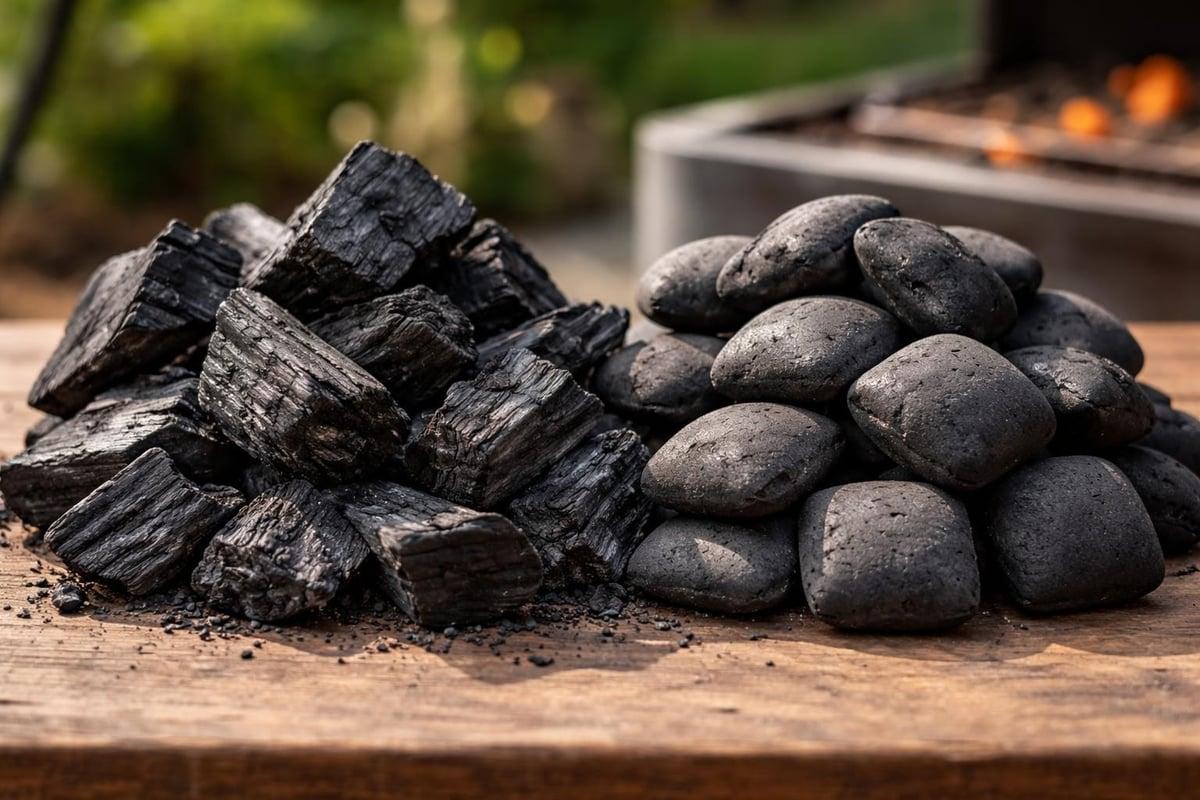
Natural barbecue charcoal and manufactured charcoal briquettes are assessed under different requirements. ALT: EN 1860-2 Charcoal Standard – comparison of BBQ charcoal and briquettes.
The EN 1860-2 Charcoal Standard is an important technical reference for businesses importing, distributing and selling barbecue charcoal in European markets.
For international buyers, product quality involves more than appearance, burning-time claims or the price per kilogram. Fixed carbon, ash content, moisture, particle size and product composition all contribute to quality evaluation.
However, EN 1860-2 Requirements are not identical for natural lump charcoal and manufactured charcoal briquettes.
Understanding the differences in EN 1860-2:2023 helps importers interpret laboratory reports accurately, compare suppliers and avoid misunderstandings about product compliance.
What Is the EN 1860-2 Charcoal Standard?
The EN 1860-2 Charcoal Standard is part of the European EN 1860 series covering barbecue appliances, solid fuels and firelighters.
Its full title is Appliances, solid fuels and firelighters for barbecuing – Part 2: Barbecue charcoal and barbecue charcoal briquettes – Requirements and test methods.
Published by the European Committee for Standardization (CEN), EN 1860-2:2023 establishes requirements and testing methods for charcoal products intended for barbecue appliances.
The 2023 edition replaced EN 1860-2:2005 and introduced changes to product definitions, particle-size requirements, prohibited additions and testing provisions.
The current edition is listed by European national standards organizations, including NSAI and DIN Media.
Among European Charcoal Standards, EN 1860-2 is particularly relevant because it focuses specifically on charcoal products used for grilling.
Which Charcoal Products Are Covered?
The EN 1860-2 Charcoal Standard covers barbecue charcoal and barbecue charcoal briquettes produced from carbonized wood or other vegetable matter.
Two important product categories are distinguished.
Barbecue Charcoal refers to carbonized material commonly supplied as natural charcoal pieces.
Barbecue Charcoal Briquettes are manufactured from compressed charcoal particles, with or without a suitable binder.
The standard also addresses certain impregnated products, which are subject to additional provisions.
For importers, EN 1860-2 Charcoal Briquettes should not be confused with uncarbonized biomass briquettes.
A compressed sawdust fuel that has not undergone carbonization is not automatically equivalent to a manufactured barbecue charcoal briquette.
Understanding product classification is therefore essential before applying the relevant BBQ Charcoal Quality Standards.
Key EN 1860-2 Requirements for BBQ Charcoal
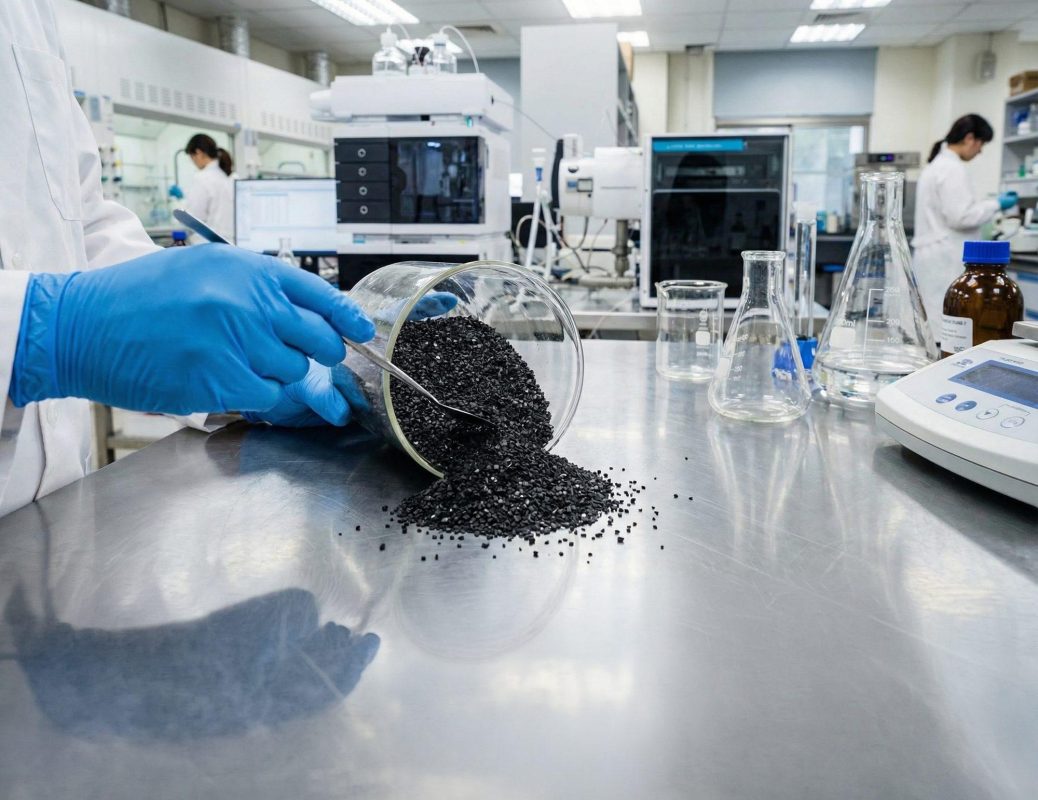
Laboratory measurements provide evidence for charcoal quality assessment. ALT: EN 1860-2 Charcoal Testing – charcoal laboratory quality parameters.
The most frequently reviewed EN 1860-2 Requirements include fixed carbon, ash content and total moisture.
The following thresholds distinguish natural barbecue charcoal from barbecue charcoal briquettes:
| Quality parameter | Barbecue charcoal | Barbecue charcoal briquettes |
|---|---|---|
| Fixed carbon, dry basis | Minimum 75% | Minimum 60% |
| Ash content, dry basis | Maximum 8% | Maximum 18% |
| Total moisture | Maximum 8% | Maximum 8% |
These are product-category requirements. Meeting them does not automatically demonstrate suitability for every commercial grilling application.
EN 1860-2 Fixed Carbon
EN 1860-2 Fixed Carbon refers to the fixed carbon remaining after volatile matter and ash are accounted for on a dry basis.
For natural barbecue charcoal, the minimum fixed carbon requirement is 75% by mass.
For barbecue charcoal briquettes, the minimum is 60%.
This distinction is important because the 75% threshold should not automatically be imposed on every manufactured briquette.
Higher fixed carbon may be desirable for particular applications, but it does not independently establish burning duration or overall product quality.
Buyers should also confirm whether a laboratory reports fixed carbon on a dry basis or an as-received basis.
EN 1860-2 Ash Content
EN 1860-2 Ash Content measures the inorganic residue remaining after the relevant analytical procedure.
For barbecue charcoal, the maximum ash content is 8% on a dry basis.
For barbecue charcoal briquettes, the permitted maximum is 18%.
The difference reflects the standard’s separate product categories.
Ash content can be influenced by raw material characteristics, contamination and the formulation of manufactured briquettes.
For reliable EN 1860-2 Compliance assessment, results must be compared with the correct threshold and reporting basis.
EN 1860-2 Moisture Content
EN 1860-2 Moisture Content refers to the total moisture measured using the applicable testing method.
The standard specifies a maximum total moisture content of 8% for both barbecue charcoal and barbecue charcoal briquettes.
Moisture can affect storage conditions, shipment weight and the useful energy available from fuel on an as-received mass basis.
Because charcoal can absorb moisture during storage, buyers should understand when the sample was collected and how it relates to the delivered goods.
EN 1860-2 Moisture Content should be supported by appropriate testing rather than visual inspection alone.
Particle Size, Binders and Product Composition
The EN 1860-2 Charcoal Standard addresses additional quality considerations beyond chemical percentages.
Particle size distribution, also called granulation, is relevant because different charcoal sizes may suit different barbecue applications.
The 2023 edition distinguishes the particle-size requirements for general barbecue charcoal, table-grill charcoal and restaurant charcoal.
This is particularly relevant to buyers supplying restaurants or professional foodservice operators.
The standard also contains provisions concerning foreign materials and inadmissible additions.
For EN 1860-2 Charcoal Briquettes, binders must satisfy the relevant requirements for compatibility with food-related barbecue applications.
Consequently, BBQ Charcoal Quality Standards should be understood as a combination of chemical, physical and composition-related criteria.
How EN 1860-2 Charcoal Testing Works
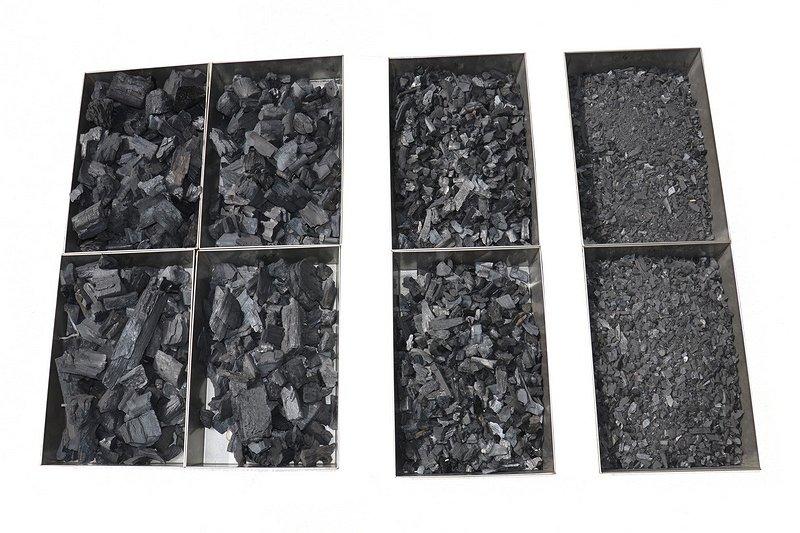
Particle-size distribution is one component of charcoal quality inspection. ALT: EN 1860-2 Charcoal Testing – granulometry assessment.
EN 1860-2 Charcoal Testing establishes methods for sampling and evaluating the technical characteristics of applicable charcoal products.
Testing can cover fixed carbon, volatile matter, ash, total moisture, particle size and prohibited additions.
The relevance of the results depends on how the samples were selected and documented.
A test report should allow the reader to identify the product, tested sample, methods used and reported results.
When reviewing EN 1860-2 Charcoal Testing, importers should consider the relationship between the sample and the commercial shipment.
An approved laboratory sample does not automatically establish that every subsequent production batch has identical characteristics.
For repeated bulk orders, shipment-specific inspection or periodic verification may be appropriate according to contractual quality requirements.
Does EN 1860-2 Compliance Mean Product Certification?
EN 1860-2 Compliance and independent product certification are related but different concepts.
A supplier may declare that a product complies with EN 1860-2 based on available testing evidence.
However, this declaration alone does not prove that an independent certification body has certified the product.
DIN CERTCO, part of TÜV Rheinland, operates a barbecue charcoal certification program using DIN EN 1860-2 as its technical basis.
Its certification scheme includes product testing, conformity assessment and ongoing quality monitoring.
The program includes DINgeprüft and DINplus marks. Some DINplus requirements are more demanding than the baseline requirements of EN 1860-2.
Importers should therefore distinguish among:
-
A manufacturer’s declaration of conformity.
-
A laboratory test report.
-
An independent product certification issued under a defined scheme.
This distinction matters when assessing claims of compliance with European Charcoal Standards.
EN 1860-2 is a product standard. Compliance should not be presented as automatic fulfillment of every EU customs, labelling, transport or environmental obligation.
Why Packaging and Labelling Matter
Product information and packaging are relevant to barbecue charcoal conformity assessments. ALT: EN 1860-2 Compliance – charcoal packaging and labelling.
The EN 1860-2 Charcoal Standard also includes provisions relating to information supplied to consumers.
For businesses selling charcoal in European markets, packaging and product descriptions are important alongside laboratory results.
DIN CERTCO’s certification-related labelling guidance addresses information such as manufacturer or distributor identification, product designation, quantity and applicable warning statements.
The exact obligations must be evaluated according to the applicable standard, certification scheme and destination-market rules.
For importers, reviewing packaging information before placing a bulk order can help identify discrepancies between the marketed product and its supporting technical documents.
Product labels should not claim EN 1860-2 Compliance or certification beyond what the available evidence supports.
What Should International Charcoal Buyers Verify?
When comparing European-market charcoal offers, importers should begin by establishing whether the product is natural barbecue charcoal or manufactured charcoal briquettes.
The correct EN 1860-2 Requirements can then be applied to the relevant product category.
Buyers should review fixed carbon, ash, moisture, size distribution and any other requirements relevant to the intended product.
Supporting documentation should identify the tested samples, methods and applicable standard edition.
For repeat orders, consistency between production batches is an additional commercial consideration.
Vietargo operates in Vietnam’s charcoal export sector. As with any charcoal supplier, buyers evaluating products associated with Vietargo should request product-specific specifications and relevant evidence rather than relying solely on general quality statements.
Understanding EN 1860-2:2023 helps buyers evaluate technical information more consistently and distinguish verified performance characteristics from promotional claims.
Conclusion
The EN 1860-2 Charcoal Standard provides an important technical framework for evaluating barbecue charcoal and barbecue charcoal briquettes intended for European markets.
Key EN 1860-2 Requirements cover fixed carbon, ash content, total moisture and additional product characteristics.
Importers must recognize that EN 1860-2 Fixed Carbon, EN 1860-2 Ash Content and other criteria differ between natural charcoal and manufactured briquettes.
Understanding these distinctions, reviewing test reports and verifying certification claims are central to accurate EN 1860-2 Compliance assessments.
For international buyers, the value of EN 1860-2 lies in connecting recognized testing requirements with the actual charcoal products being purchased.
Sources & References
VIETARGO – THE BEST CHARCOAL OF THE WORLD TO YOUR SHELF
Website : https://vietargo.com/
Facebook : Vietargo
địa chỉ : 10 Nguyen Hien Street, 91B Residential Area, Can Tho, Vietnam
☎: 0939364888