

FOB vs CIF for Charcoal Imports: Responsibilities and Trade Terms
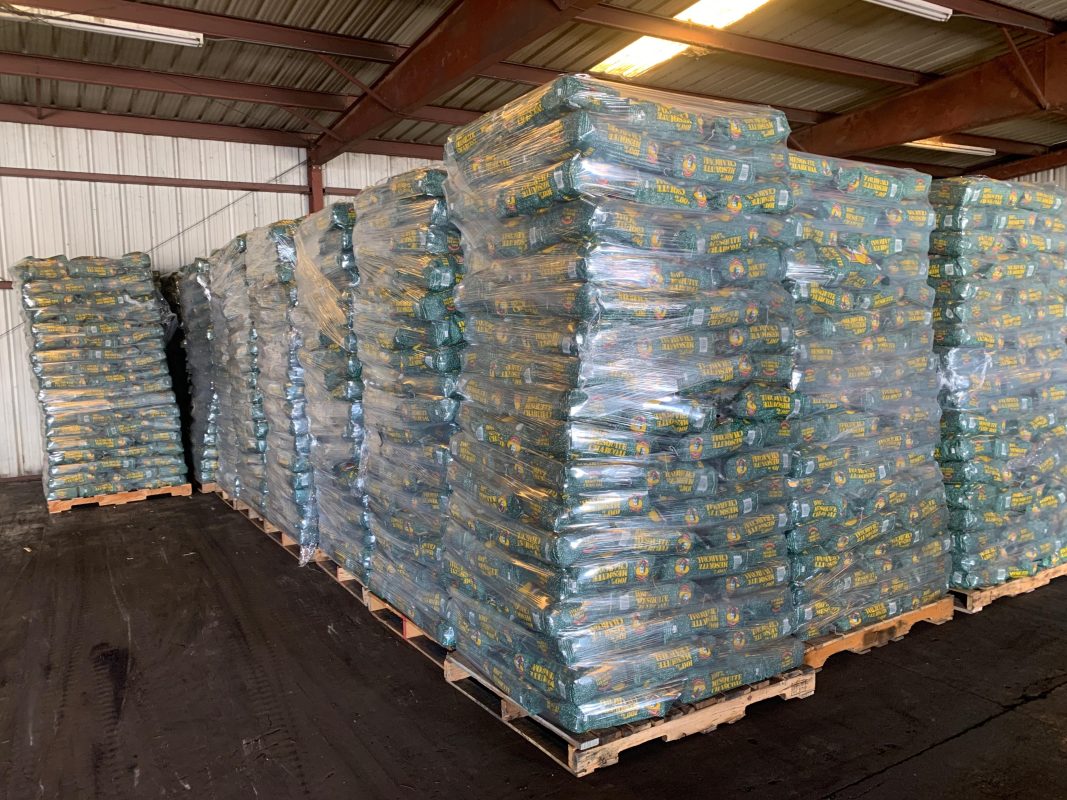
Understanding FOB vs CIF Charcoal is essential for importers comparing quotations from international charcoal suppliers. Although the two trade terms are commonly used in global commodity transactions, they create different obligations for arranging ocean freight, obtaining cargo insurance and paying transportation costs.
For charcoal buyers importing from Vietnam, these differences can affect purchasing budgets, logistics coordination and the way a shipment is managed.
A supplier may offer a Charcoal FOB Price at a Vietnamese port or a Charcoal CIF Price for delivery to a named overseas destination port.
However, a CIF quotation does not automatically mean that the supplier assumes all risks until the charcoal arrives.
Under Incoterms® 2020, both FOB and CIF transfer the risk of loss or damage when goods are delivered on board the vessel at the port of shipment. The key differences concern who arranges and
This distinction is especially important when negotiating international charcoal contracts.
This guide explains FOB vs CIF Responsibilities, compares commercial costs and highlights the special considerations that charcoal importers should review before confirming a shipping arrangement.
What Are FOB and CIF Under Incoterms® 2020?
FOB vs CIF Incoterms refers to two standardized trade rules published by the International Chamber of Commerce (ICC).
Incoterms® rules help sellers and buyers allocate specific transportation obligations, costs and risks in a contract for the sale of goods.
FOB means Free On Board, while CIF means Cost, Insurance and Freight.
Both rules are designed for sea and inland waterway transportation.
They are traditionally used in maritime commodity trading, although their suitability depends on the actual cargo delivery process.
Incoterms® 2020 identifies where delivery occurs, when risk transfers and which party arranges transportation or insurance.
However, the rules do not determine every aspect of a sales contract.
They do not automatically establish ownership transfer, payment deadlines, product quality requirements or the remedies available if goods fail to meet specifications.
These matters require separate contractual provisions.
For charcoal importers, the correct trade term should be considered together with product specifications, port arrangements and shipment requirements.
FOB Shipping Terms: What Does FOB Mean for Charcoal?
Under FOB Shipping Terms, the seller is responsible for delivering the goods on board the vessel nominated by the buyer at the agreed port of shipment.
The seller is also responsible for export customs formalities under the rule.
Once the goods are delivered on board, the risk of loss or damage generally passes to the buyer.
The buyer arranges and pays for the main ocean carriage and handles import clearance at the destination.
For example, a quotation described as FOB Ho Chi Minh City Port, Vietnam – Incoterms® 2020 identifies the agreed shipment port for the transaction.
The parties should specify the precise port or terminal arrangements as appropriate.
A buyer using FOB ordinarily needs to coordinate with its freight forwarder or shipping line to arrange the main international movement.
FOB can be attractive to experienced importers that have established freight arrangements and want direct involvement in the transportation contract.
However, FOB does not mean that the seller’s obligations end when the charcoal leaves the factory.
Under the rule, the seller’s delivery obligation is linked to loading the goods on board the vessel, subject to the detailed provisions and exceptions.
The ICC emphasizes that this distinction must be understood before choosing FOB.
CIF Shipping Terms: What Does CIF Mean for Charcoal?
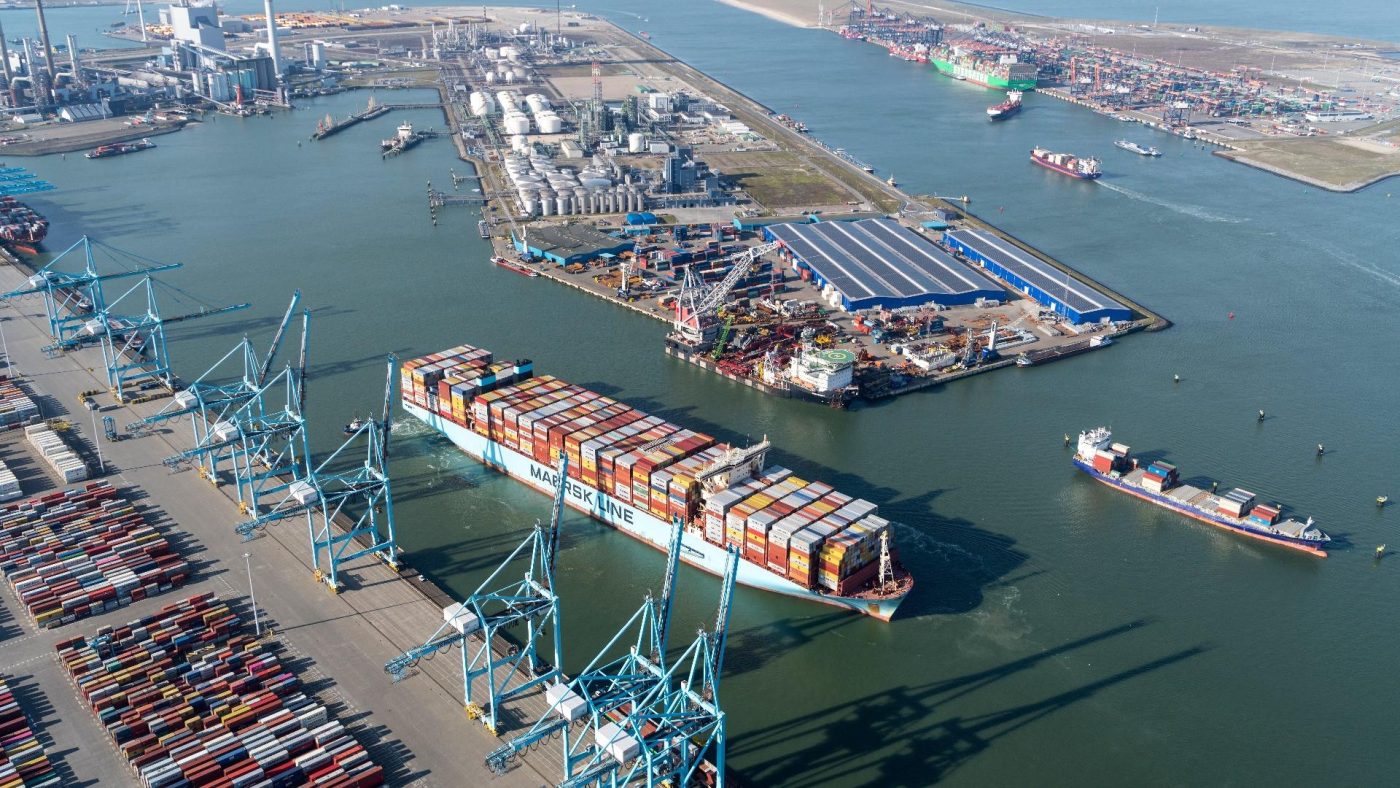
Under CIF Shipping Terms, the seller arranges and pays for the sea carriage to the named port of destination.
The seller also obtains cargo insurance meeting the rule’s minimum requirements.
For example, a quotation described as CIF Rotterdam, Netherlands – Incoterms® 2020 identifies Rotterdam as the destination port to which the seller contracts and pays for carriage.
The seller is responsible for the required export formalities, but the buyer normally handles import customs clearance.
An important distinction concerns the point of delivery.
Under CIF, the seller delivers the goods when they are on board the vessel at the port of shipment, not when they arrive at Rotterdam.
The risk therefore passes to the buyer at the shipment port.
Although the seller pays freight to the destination port, the buyer bears the relevant transportation risk after the on-board delivery point.
The ICC describes CIF as a rule with separate points for risk transfer and the allocation of certain costs.
For buyers, this means the word destination in a CIF quotation should not be confused with a guarantee of risk-free arrival.
FOB vs CIF Responsibilities: Complete Comparison
The following table summarizes the principal differences under Incoterms® 2020.
| Responsibility | FOB | CIF |
|---|---|---|
| Export customs clearance | Seller | Seller |
| Delivery on board vessel | Seller | Seller |
| Main ocean freight contract | Buyer | Seller |
| Main ocean freight payment | Buyer | Seller |
| Cargo insurance required from seller | No | Yes, minimum cover |
| Risk transfers | On board at origin | On board at origin |
| Import customs clearance | Buyer | Buyer |
| Import duties and taxes | Buyer | Buyer |
| Destination unloading charges | Depends on transport contract and agreed allocation | Depends on transport contract and agreed allocation |
| Final inland delivery | Normally buyer | Normally buyer |
The most important takeaway from this FOB vs CIF Responsibilities comparison is that paying for transportation and bearing transportation risk are not always the same thing.
Under CIF, the seller pays for specified transportation and insurance despite the risk transferring at origin.
Under FOB, the buyer has greater responsibility for arranging the main carriage after delivery.
Both arrangements can be commercially appropriate when they match the parties’ actual requirements.
FOB vs CIF Costs: How Charcoal Import Prices Differ
A Charcoal FOB Price generally covers the goods and the seller’s obligations to deliver them on board at the named shipment port.
A Charcoal CIF Price additionally reflects the seller’s obligation to contract and pay for transportation to the named destination port and obtain the required cargo insurance.
Consider the following hypothetical example.
A charcoal importer requests quotations for 20 metric tons of hardwood charcoal.
| Cost component | Illustrative amount |
|---|---|
| FOB value of charcoal shipment | $12,000 |
| Ocean freight | $2,200 |
| Cargo insurance premium | $120 |
| Illustrative CIF quotation | $14,320 |
Figures are hypothetical, for explaining pricing only. They are not actual freight rates, market prices or quotations from Vietargo. Calculations exclude any other charges not explicitly identified.
The illustrative CIF value is calculated as:
However, a real commercial quotation may contain other agreed expenses, and the seller’s pricing structure may not disclose every component separately.
The example should not be interpreted as a fixed formula for calculating all freight offers.
For an accurate FOB vs CIF Costs comparison, buyers should request quotations for identical charcoal products, quantities, packaging specifications and shipment periods.
A lower FOB quotation is not necessarily cheaper once transportation and insurance have been included.
Likewise, a CIF quotation may not represent the buyer’s final landed cost.
Does CIF Include Cargo Insurance?
Yes. One of the defining characteristics of CIF is the seller’s obligation to obtain cargo insurance.
However, the standard insurance requirement under CIF is often misunderstood.
Incoterms® 2020 generally requires a minimum level of cover corresponding to Institute Cargo Clauses (C), or similar coverage.
The seller must arrange insurance for at least 110% of the contract price, in the contract currency, unless the parties have agreed otherwise in accordance with the rule.
Minimum insurance does not necessarily cover every possible cause of cargo loss.
For example, buyers should not assume that all forms of breakage, theft, moisture damage or handling-related deterioration are automatically covered.
Coverage depends on the policy wording, exclusions and circumstances.
For charcoal shipments, importers should request details of the insurance scope and confirm that the relevant cargo and transportation risks have been appropriately disclosed.
When broader protection is required, the parties may agree on additional cover or the buyer may arrange supplementary insurance.
Under FOB, the seller has no corresponding obligation to obtain insurance for the buyer’s main carriage, although the buyer should evaluate its own insurance needs.
The presence of cargo insurance does not mean the seller retains transportation risk until arrival.
Charcoal Import Costs Beyond FOB and CIF Prices
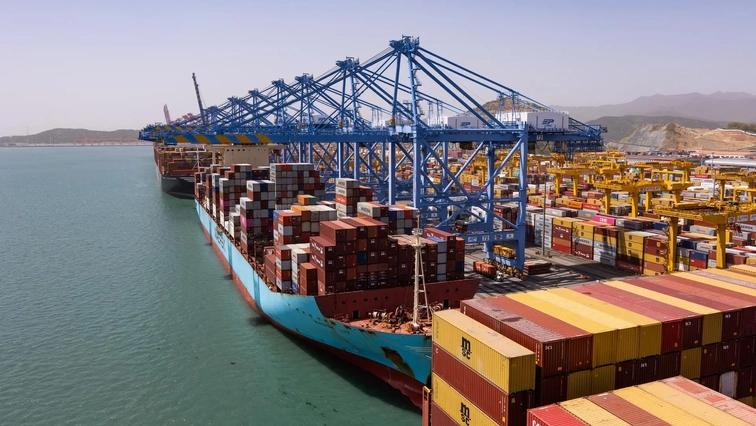
A complete Charcoal Import Costs calculation should include expenses that may fall outside the supplier’s quotation.
Examples can include destination terminal charges, customs broker fees, import duties, taxes, inland transportation and other shipment-specific expenses.
Their allocation depends on the agreed Incoterms rule, the underlying carriage contract and any additional contractual arrangements.
For instance, CIF requires the seller to pay for the agreed transportation to the named destination port, but it does not automatically make the seller responsible for all unloading, terminal or destination-handling charges.
Some costs may already be included in the carrier’s freight contract; others may be charged separately.
Importers should therefore request a clear list of included and excluded services.
For containerized shipments, detention, demurrage and storage charges can also become relevant if equipment or cargo remains at the port longer than allowed under the applicable arrangements.
These costs should not be treated as automatically included in a CIF price.
When evaluating Charcoal FOB Price against Charcoal CIF Price, a buyer should compare the total expected cost under equivalent assumptions.
Special Shipping Requirements for Charcoal Imports
Charcoal requires particular attention because its maritime transport is subject to dangerous-goods requirements.
The International Maritime Organization (IMO) confirms that IMDG Code Amendment 42-24 became mandatory on January 1, 2026.
Charcoal covered by UN1361, Class 4.2, is subject to the relevant dangerous-goods provisions.
Shipping lines may also impose additional acceptance conditions.
For example, Maersk’s published charcoal advisory identifies specific booking, documentation and carrier-approval requirements for the cargo.
These obligations can affect the commercial arrangements of an international charcoal shipment.
When comparing Charcoal Shipping Terms, buyers should confirm whether the quoted carriage includes applicable dangerous-goods surcharges, required documentation fees and other carrier charges.
However, the Incoterms rule does not replace compliance with maritime safety regulations.
Whether the shipment is sold under FOB or CIF, the involved parties must satisfy their applicable legal and contractual obligations.
A quotation described simply as “freight included” is not enough to establish which transport services and compliance costs have been covered.
All shipping conditions should be confirmed with qualified freight and dangerous-goods professionals before booking.
FOB or CIF for Containerized Charcoal: An Important Incoterms Distinction

Although FOB and CIF are familiar terms in commodity trading, they are not necessarily the most appropriate rules for containerized charcoal.
In a typical container movement, the exporter hands over the loaded container at a terminal before the container is placed on a vessel.
The shipping line may hold the container at the terminal before loading occurs.
Under FOB and CIF, however, the contractual delivery and risk-transfer point is linked to goods being loaded on board.
This can create a mismatch between the contractual term and the operational point where the seller hands over the container.
The ICC specifically advises that FCA is generally more suitable than FOB when goods are handed over to a carrier at a container terminal.
For situations where the seller arranges and pays for transportation, CPT or CIP may be more appropriate than the maritime-only rules CFR and CIF, depending on the insurance requirements.
This does not mean every existing FOB or CIF container contract is automatically invalid.
It means buyers and sellers should check whether the chosen rule accurately reflects how the shipment will be delivered.
For charcoal imports moving in shipping containers, this distinction deserves attention before the purchase contract is signed.
FOB vs CIF: Which Gives Buyers More Control?
FOB generally gives the buyer greater control over the selection of the main ocean carrier and freight arrangements.
This can be useful for importers working with established logistics providers.
Buyers may prefer negotiating transportation directly, particularly when coordinating multiple suppliers and regular shipments.
However, greater control also involves more responsibility for arranging carriage and managing the associated documentation.
Under CIF, the seller manages the main ocean freight contract and obtains the required insurance.
This may simplify part of the purchasing process for importers that prefer receiving a quotation to a named destination port.
Nevertheless, the buyer should still review the shipping arrangements, insurance terms and destination costs.
The appropriate choice depends on the buyer’s logistical capabilities, purchasing structure and contractual preferences.
Neither FOB nor CIF is inherently better for every charcoal import transaction.
The objective is to match commercial responsibilities with the parties’ ability to manage them effectively.
Common Mistakes When Comparing FOB vs CIF Charcoal
Several misunderstandings can lead to inaccurate purchasing decisions.
The first is assuming that CIF means the seller retains the risk until the charcoal arrives at the destination port. Under Incoterms® 2020, risk normally transfers when the cargo is delivered on board at origin.
The second is comparing FOB and CIF quotations without accounting for different freight and insurance obligations.
Another mistake is assuming that CIF insurance provides comprehensive coverage against every type of loss or damage.
Buyers may also overlook charges at the destination port, import clearance expenses and inland delivery.
For containerized charcoal, using FOB or CIF without examining the actual terminal handover process can create additional uncertainty.
Finally, some contracts specify only “FOB Vietnam” or “CIF Europe.”
These descriptions are insufficiently precise for effective commercial planning.
The ICC recommends naming the relevant port and identifying the applicable Incoterms version.
Clear contract wording helps reduce misunderstandings over delivery and payment responsibilities.
What Should a Charcoal Importer Check Before Accepting a Quote?
A professional quotation review should cover the product itself as well as the trade arrangement.
| Review item | Key question |
|---|---|
| Product specification | Are charcoal type, quality, dimensions and packaging identical? |
| Named port | Is the exact shipment or destination port identified? |
| Incoterms | Does the quotation state Incoterms® 2020? |
| Ocean freight | Who arranges and pays for the main carriage? |
| Insurance | Is appropriate coverage available, and what are its exclusions? |
| Dangerous-goods charges | Which applicable carrier and documentation costs are included? |
| Destination charges | Which expenses remain payable by the importer? |
| Shipment timing | Are cargo readiness and vessel schedules clearly distinguished? |
| Payment terms | Are the payment conditions documented separately? |
| Container handover | Would FCA, CPT or CIP better reflect the actual operation? |
This review can make FOB vs CIF Responsibilities easier to understand and reduce the risk of comparing incomplete quotations.
FOB vs CIF Charcoal: Questions International Buyers Frequently Ask
Is FOB cheaper than CIF for charcoal imports?
An FOB quotation normally excludes the seller’s obligation to pay the main ocean freight and obtain CIF insurance, so its displayed price may be lower. However, the total import cost depends on the freight and other charges the buyer must pay separately.
Does CIF mean delivery to my warehouse?
No. CIF names a destination port, not an inland warehouse delivery location. Delivery to a warehouse requires additional arrangements or a more appropriate Incoterms rule.
Who arranges insurance under FOB?
FOB does not require the seller to obtain cargo insurance for the buyer’s ocean transport. The buyer should evaluate its insurance needs and make appropriate arrangements.
Who is responsible if charcoal is damaged during sea transportation?
Under both FOB and CIF, risk generally transfers to the buyer when the goods are delivered on board at the shipment port. However, responsibility for a particular loss may also depend on contractual breaches, carrier liability and insurance terms.
Can FOB and CIF be used for containerized charcoal?
They are sometimes used commercially, but the ICC recommends considering FCA, CPT or CIP when container-terminal handover occurs before vessel loading.
Vietargo and Charcoal Import Trade Terms

Vietargo operates in Vietnam’s charcoal export sector.
For international buyers considering charcoal from Vietargo, a detailed quotation request should identify the product category, technical specifications, purchasing quantity, packaging and preferred destination.
Buyers may also specify the trade term they would like evaluated, subject to its suitability for the actual shipping arrangement.
Any available FOB, CIF or alternative quotation, together with applicable carrier charges and delivery schedules, must be confirmed directly with the supplier.
No indicative prices in this article represent an official Vietargo quotation.
Clear communication about the intended trade term helps buyers and suppliers establish the scope of the proposed transaction before confirming a purchase order.
Conclusion
Understanding FOB vs CIF Charcoal is essential for comparing international charcoal quotations accurately.
Under FOB Shipping Terms, the buyer generally arranges the main ocean carriage after the seller delivers the goods on board the nominated vessel.
Under CIF Shipping Terms, the seller arranges and pays for the main carriage to the named destination port and obtains the required cargo insurance.
However, both rules normally transfer the transportation risk when the goods are delivered on board at the port of shipment.
For charcoal importers, additional considerations include insurance coverage, dangerous-goods-related costs, destination charges and the suitability of the trade term for containerized cargo.
The right shipping term is not simply the one with the lowest quoted price. It is the arrangement that clearly defines responsibilities, matches the actual transportation process and supports an accurate assessment of total import costs.
VIETARGO – THE BEST CHARCOAL OF THE WORLD TO YOUR SHELF
Website : https://vietargo.com/
Facebook : Vietargo
địa chỉ : 10 Nguyen Hien Street, 91B Residential Area, Can Tho, Vietnam
☎: 0939364888