

What Matters Most When Buying Charcoal: Price, Quality or Delivery?
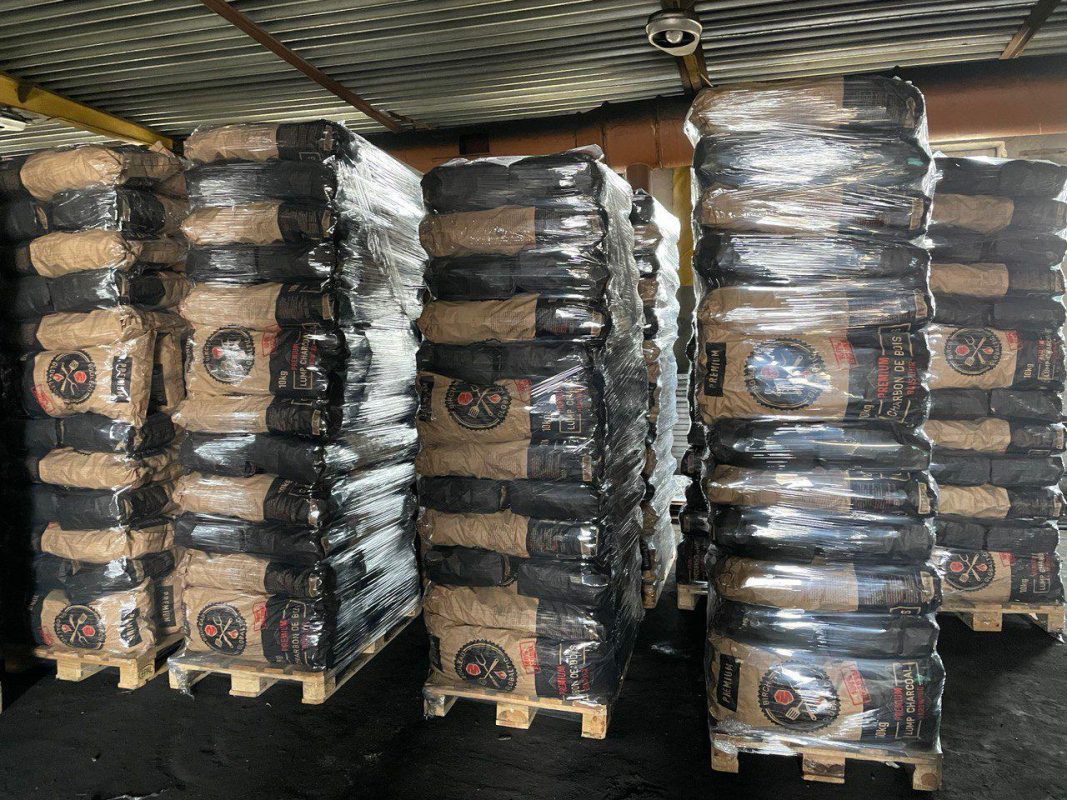
What matters most when buying charcoal in bulk: price, quality or delivery reliability?
For international buyers, the answer is rarely as simple as choosing the supplier with the lowest quotation. A competitive charcoal price may help protect profit margins, but inconsistent quality can create customer complaints. Meanwhile, a reliable product becomes difficult to sell if shipments arrive after customers need them.
A practical Charcoal Buying Guide must therefore examine all three factors together.
For some buyers, controlling the purchase price is the first priority. Others place greater value on consistent product specifications, particularly when supplying restaurants or specialty BBQ retailers.
Delivery reliability can be equally important for distributors operating with limited inventory or preparing for seasonal sales.
These priorities also change depending on the type of charcoal being purchased. Natural hardwood lump charcoal, mangrove charcoal, coconut shell briquettes and manufactured sawdust charcoal can have different specifications, customer expectations and commercial applications.
This article explores the main Charcoal Buying Factors, explains how importers can compare suppliers and provides a practical framework for making purchasing decisions.
At the end, we invite international charcoal buyers to answer one question:
If you could prioritize only one factor, would you choose price, quality or delivery?
Why Price, Quality and Delivery All Matter
A successful charcoal import transaction requires more than purchasing a specified quantity of fuel.
The charcoal must meet the customer’s requirements, arrive within an acceptable period and generate a commercially sustainable margin.
These three objectives are closely connected.
A lower-priced product may become more expensive when additional sorting, damaged stock or customer claims are considered.
A premium product may offer consistent specifications, but its commercial value depends on whether customers are willing to pay the corresponding price.
A supplier may offer an attractive combination of price and quality but still create difficulties if shipment timing is unpredictable.
Therefore, Charcoal Supplier Selection should begin by identifying which risks matter most to the buyer.
A supermarket distributor preparing for a promotional campaign may be particularly sensitive to delivery deadlines.
A restaurant supplier might prioritize repeatable product specifications.
A wholesale trader competing in a highly price-sensitive market may focus on purchase cost while maintaining minimum quality requirements.
There is no universal ranking that applies to every charcoal business.
The objective is to find a supplier whose overall offer matches the buyer’s market.
Charcoal Price vs Quality: Is Cheaper Always Better?
Charcoal Price vs Quality is one of the most common debates in wholesale purchasing.
A lower quoted price can improve potential gross margins, but price alone does not establish the usable value of a shipment.
Two charcoal products may have different moisture levels, ash content, size distributions and amounts of broken material.
These differences can affect commercial suitability.
The Food and Agriculture Organization (FAO) notes that charcoal quality varies with fixed carbon content and that charcoal is vulnerable to breakage during handling and transport.
Consider two hypothetical wholesale quotations.
| Purchasing factor | Supplier A | Supplier B |
|---|---|---|
| Quoted FOB price | $580/MT | $620/MT |
| Contract-conforming product | 90% | 98% |
| Product specification | Same agreed target | Same agreed target |
| Illustrative price per conforming MT | $644.44 | $632.65 |
Illustrative example only. Prices and conformity percentages are invented for comparison and do not represent market data or Vietargo quotations. The calculation assumes the nonconforming portion has no commercial recovery value and excludes additional costs.
Although Supplier A offers the lower nominal price, Supplier B has the lower illustrated cost per conforming metric ton.
This does not prove that higher-priced charcoal is always better.
Instead, it demonstrates why buyers should compare products using a consistent quality specification.
The most useful question is not simply “Which quotation is cheaper?”
It is “What quantity of contract-conforming charcoal am I receiving for the total amount paid?”
Understanding Bulk Charcoal Prices
Bulk Charcoal Prices depend on several commercial variables.
The charcoal type, product dimensions, agreed quality parameters, packaging format, order quantity and delivery terms can all influence the quotation.
A price for mixed hardwood lump charcoal should not be compared directly with a quotation for selected mangrove charcoal sticks unless the buyer has a valid basis for comparing the products.
Likewise, an FOB quotation cannot be compared directly with a CIF quotation without considering the included transportation and insurance obligations.
Under Incoterms® 2020, FOB and CIF allocate main-carriage responsibilities differently, although both generally transfer transportation risk when goods are delivered on board the vessel.
For a meaningful price comparison, importers should normalize the quotation conditions.
This means using the same product specification, packaging weight, purchasing quantity, named delivery location and shipment period wherever possible.
Buyers should also identify whether freight-related charges and applicable dangerous-goods costs are included.
A transparent supplier quotation makes it easier to understand what the buyer is actually purchasing.
4. Charcoal Quality Standards: What Should Buyers Verify?
Charcoal Quality Standards help buyers evaluate fuel characteristics using defined requirements instead of subjective descriptions.
Important parameters may include fixed carbon, moisture content, ash content and the proportion of pieces within the agreed size range.
For barbecue charcoal sold in markets where EN 1860-2:2023 applies, the standard specifies relevant requirements and test methods.
For barbecue lump charcoal, these include a minimum fixed carbon content of 75% on a dry basis, maximum ash content of 8% on a dry basis and maximum total moisture content of 8%. The standard also addresses particle-size distribution.
However, these requirements should not automatically be applied to every type of charcoal briquette or industrial charcoal.
The applicable standard depends on the product and market.
Importers should request product specifications and suitable supporting test results.
A supplier’s claim that charcoal is “premium quality” does not independently verify compliance with a technical standard.
For repeat purchases, buyers should also consider whether the delivered product remains consistent with approved samples and contractual tolerances.
Quality is therefore not just about obtaining a good initial sample.
It is about defining and maintaining the product characteristics required by customers.
Charcoal Delivery Time: Why Reliability Matters
Charcoal Delivery Time can become a decisive factor when customers need products within a specific sales period.
For importers sourcing internationally, delivery involves more than the ocean transit time.
The complete timeline can include order approval, production, export documentation, shipping arrangements, customs procedures and inland distribution.
The buyer should distinguish the date when goods are ready for shipment from the date they become available at the destination warehouse.
A supplier’s ability to prepare an order on time is important, but the ocean transport and destination processes also affect the final result.
Delivery reliability should therefore be measured using clear milestones.
For example, an importer may monitor whether the supplier meets confirmed cargo-readiness dates and provides documentation within agreed deadlines.
The buyer should also track actual arrival and warehouse-receipt performance across repeat orders.
However, it would be misleading to assign every transportation delay automatically to the charcoal supplier.
Responsibility depends on the commercial contract, delivery term and circumstances.
For time-sensitive purchasing, realistic planning and transparent communication are often more valuable than an unsupported promise of the fastest possible shipment.
Charcoal Supplier Reliability: More Than On-Time Shipping
Charcoal Supplier Reliability involves the supplier’s ability to fulfill agreed commercial requirements consistently.
Delivery performance is one part of this assessment, but it is not the only consideration.
A reliable supplier should communicate product specifications clearly, provide accurate quotation details and address questions about order preparation and documentation.
Buyers should also evaluate whether the information presented during negotiations matches the final purchase agreement.
For example, a supplier may initially offer a particular charcoal size range but later propose an alternative. A change is not automatically a problem if the buyer understands and approves it.
The concern arises when important differences are not communicated before shipment.
For Wholesale Charcoal Buying, supplier reliability becomes especially important during repeat orders.
An importer may need the same product specifications and packaging format over several purchasing cycles.
For this reason, buyers should document approved samples, specifications and agreed changes instead of relying solely on informal conversations.
Commercial reliability is demonstrated through consistent performance over time, not merely through confident marketing claims.
7. How to Buy Charcoal for Different Customer Markets
Understanding How to Buy Charcoal begins with identifying the final customer.
Different purchasing channels may assign different priorities to price, quality and delivery.
| Buyer segment | Potential first priority | Why it matters |
|---|---|---|
| Supermarket distributor | Price and delivery | Retail margins, promotional schedules and shelf availability |
| Restaurant supplier | Quality consistency | Repeatable product specifications for commercial customers |
| Wholesale trader | Total purchasing cost | Competitive resale pricing and inventory turnover |
| Private-label brand | Product and packaging consistency | Customer expectations and brand reputation |
| Seasonal BBQ retailer | Delivery timing | Product availability during the intended selling period |
Illustrative buyer priorities, not survey findings. Actual requirements depend on each business.
A business supplying restaurants may have recurring demand throughout the year.
A seasonal BBQ retailer may concentrate purchases before its primary sales period.
A private-label importer may require additional packaging approvals before confirming production.
Therefore, the preferred Charcoal Buying Factors should be determined by the actual business model.
Buyers should resist the temptation to apply one purchasing strategy to every product and customer.
Can Fast Delivery Compensate for Lower Quality?
Fast delivery can solve an urgent stock problem, but it cannot automatically compensate for products that fail essential specifications.
If a shipment does not meet a buyer’s contractual quality requirements, receiving it earlier does not necessarily make it commercially acceptable.
For example, a restaurant supplier purchasing a particular charcoal size may be unable to use or resell a shipment containing excessive undersized material.
Similarly, a retail brand may reject packaging that does not match its approved artwork.
In these situations, delivery performance and product conformity must be considered separately.
However, some commercial requirements allow flexibility.
A buyer may accept an approved alternative pack size or charcoal grade when that product is suitable for the intended customer.
Any substitution should be evaluated and documented before the order is changed.
A practical Charcoal Buying Guide should therefore distinguish non-negotiable requirements from preferences.
Quality and delivery can be balanced only within the conditions the buyer is prepared to accept.
Why Shipping Compliance Also Affects Supplier Selection
International charcoal imports require attention to transportation regulations in addition to price and product quality.
The International Maritime Organization confirms that IMDG Code Amendment 42-24 became mandatory on January 1, 2026.
Under the revised requirements, charcoal covered by UN1361, Class 4.2, is subject to dangerous-goods transport provisions.
Shipping company Hapag-Lloyd also confirms that charcoal shipments must be declared as dangerous goods under the applicable classification and may be subject to specific carrier acceptance requirements.
These conditions can affect shipping documentation, carrier arrangements and commercial costs.
For importers, a low quotation is not sufficient if the proposed shipping arrangement cannot be accepted under applicable requirements.
Supplier evaluation should therefore consider whether the parties can provide the information and documentation necessary for lawful transport.
Specific compliance arrangements should be verified with qualified logistics and dangerous-goods professionals.
A Practical Charcoal Import Checklist
A structured Charcoal Import Checklist helps buyers compare suppliers using the same criteria.
Buyer checklist
0 of 8 reviewed
The checklist does not replace technical inspection or legal advice. It provides a consistent starting point for commercial evaluation.
Which Factor Should Come First in a Purchasing Decision?
Price, quality and delivery should not always carry equal weight.
A buyer may decide that minimum quality and legal compliance are mandatory requirements. Only suppliers meeting those conditions proceed to a commercial comparison.
Among qualifying offers, price and delivery reliability can then be assessed according to business priorities.
For example, a buyer could develop an internal scorecard allocating 40% to product conformity, 35% to total cost and 25% to delivery reliability.
These percentages are only an illustrative purchasing method.
A time-sensitive retailer may reasonably give more weight to delivery, while another buyer may prioritize cost predictability.
The important point is to establish the evaluation criteria before selecting a preferred supplier.
Otherwise, procurement teams may unintentionally change their priorities depending on which quotation appears most attractive.
For Charcoal Supplier Selection, a documented scoring method can make decisions easier to explain and review.
Vietargo and International Charcoal Procurement
Vietargo operates in Vietnam’s charcoal export sector.
For buyers considering charcoal from Vietargo or other Vietnamese suppliers, a clear purchasing inquiry should identify the desired product type, quality specifications, quantity, packaging and destination.
Importers should also explain whether their primary commercial concern is price competitiveness, product consistency or delivery scheduling.
This can help structure discussions around the information most relevant to the transaction.
However, product availability, prices, production schedules and specific supplier capabilities must be confirmed directly.
General market information should not be interpreted as a verified commercial commitment from Vietargo.
A professional purchasing process benefits from transparent specifications, realistic scheduling and clearly defined responsibilities.
Conclusion: Price, Quality or Delivery?
A useful Charcoal Buying Guide does not recommend choosing the lowest price, highest advertised grade or shortest promised delivery time without further evaluation.
For international charcoal buyers, the strongest purchasing decision balances commercial cost, verified product quality and reliable supply arrangements.
Charcoal Price vs Quality should be evaluated using comparable specifications and the cost of contract-conforming goods.
Charcoal Supplier Reliability should be assessed through documentation, communication and actual performance.
Meanwhile, Charcoal Delivery Time should be considered alongside the buyer’s inventory requirements and the realities of international transportation.
Ultimately, the most important purchasing factor depends on the customer’s business model.
The best charcoal supplier is not necessarily the cheapest or the fastest. It is the supplier whose verified offer best matches the buyer’s commercial and technical requirements.
VIETARGO – THE BEST CHARCOAL OF THE WORLD TO YOUR SHELF
Website : https://vietargo.com/
Facebook : Vietargo
địa chỉ : 10 Nguyen Hien Street, 91B Residential Area, Can Tho, Vietnam
☎: 0939364888