

Private Label Charcoal: Building a Product Line for Your Brand
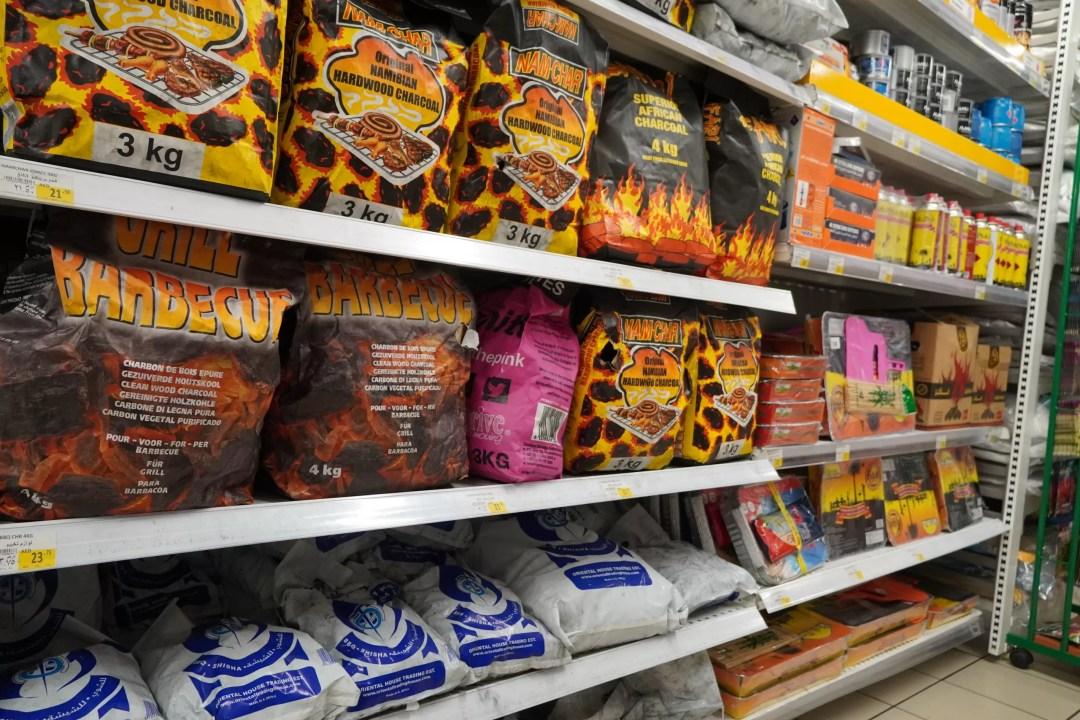
Private Label Charcoal offers importers, distributors and retailers an opportunity to develop charcoal products under their own brand identity rather than relying entirely on established third-party brands.
For businesses operating in the international BBQ fuel market, private-label development involves much more than placing a logo on a charcoal bag. A successful product line requires suitable charcoal specifications, packaging design, consistent product identification, supplier coordination and clear commercial agreements.
A company may source natural hardwood lump charcoal, mangrove charcoal or manufactured charcoal briquettes and sell them under a brand developed specifically for its target market.
However, different products appeal to different customers. A supermarket chain may prioritize compact retail packaging, while a restaurant supplier may focus on larger commercial formats and consistent product specifications.
Working with a Private Label Charcoal Supplier can help buyers explore these options, but the supplier’s capabilities must be verified before committing to production.
This guide explains how international businesses can build a private-label charcoal range, select packaging, prepare artwork, approve samples and establish an effective OEM purchasing workflow.
What Is Private Label Charcoal?
Private Label Charcoal refers to charcoal products marketed under a brand owned or controlled by a business other than the original manufacturing operation.
For example, a distributor may purchase charcoal from a supplier and sell it under the distributor’s own brand.
The manufacturer or packing partner may provide the finished charcoal, while the brand owner determines the product positioning, visual identity and approved packaging specifications.
Private-label arrangements can vary.
Some suppliers manufacture and package charcoal at their own facilities. Others coordinate production and packing through established partners.
Therefore, a buyer should not assume that every company advertising private-label services is necessarily the direct manufacturer of every product it supplies.
Vietnamese supplier THALOCA, for example, publicly describes OEM and private-label offerings across wood charcoal, sawdust charcoal and coconut charcoal, with multiple packaging formats.
This demonstrates the availability of such services in Vietnam’s charcoal export market, but it does not establish the capabilities of other suppliers.
For buyers, the important question is which activities the selected supplier can actually perform and document.
Private Label vs OEM Charcoal Manufacturing
The terms private label and OEM are often used together, but they can describe different business arrangements.
Private label generally emphasizes ownership and marketing of the finished product under the buyer’s brand.
An OEM Charcoal Manufacturer may produce or package goods according to specifications supplied by the customer.
In practice, an OEM project may involve product dimensions, quality requirements, packaging materials, printing and other agreed details.
The scope should always be specified in the contract.
| Factor | Private label | OEM arrangement |
|---|---|---|
| Brand identity | Buyer’s brand | Usually buyer’s brand |
| Product specifications | May use an existing product | May involve customized requirements |
| Packaging | Custom branding | Custom branding and technical specifications |
| Product development | Often limited | Depends on manufacturer capabilities |
| Commercial approval | Buyer approves branded product | Buyer approves agreed OEM specifications |
These categories can overlap.
A Charcoal OEM Supplier may offer standard charcoal with custom packaging, while another manufacturer may support changes to shape, size or other product characteristics.
Importers should confirm which options are available rather than assuming that an OEM label guarantees unrestricted customization.
Step 1: Define Your Charcoal Brand Positioning
Before contacting a manufacturer, brand owners should identify their intended customers.
A private-label product developed for supermarkets may require a different approach from charcoal supplied to restaurants or specialty BBQ distributors.
Retail customers may place importance on pack size, product presentation and clear labeling.
Commercial buyers may focus more heavily on product specifications, order quantities and supply consistency.
A brand can also carry several product lines, provided the differences are understandable to customers.
For example, one product range might focus on natural hardwood charcoal, while another contains manufactured briquettes.
The brand owner should decide whether these products will share one visual identity or use distinct packaging systems.
Product positioning should be supported by verifiable attributes.
Statements such as “long-burning,” “low ash” or “responsibly sourced” should not be printed as factual guarantees without appropriate evidence.
A strong brand identity begins with a clear product promise that the supplier can support.
Step 2: Choose the Right Charcoal Products
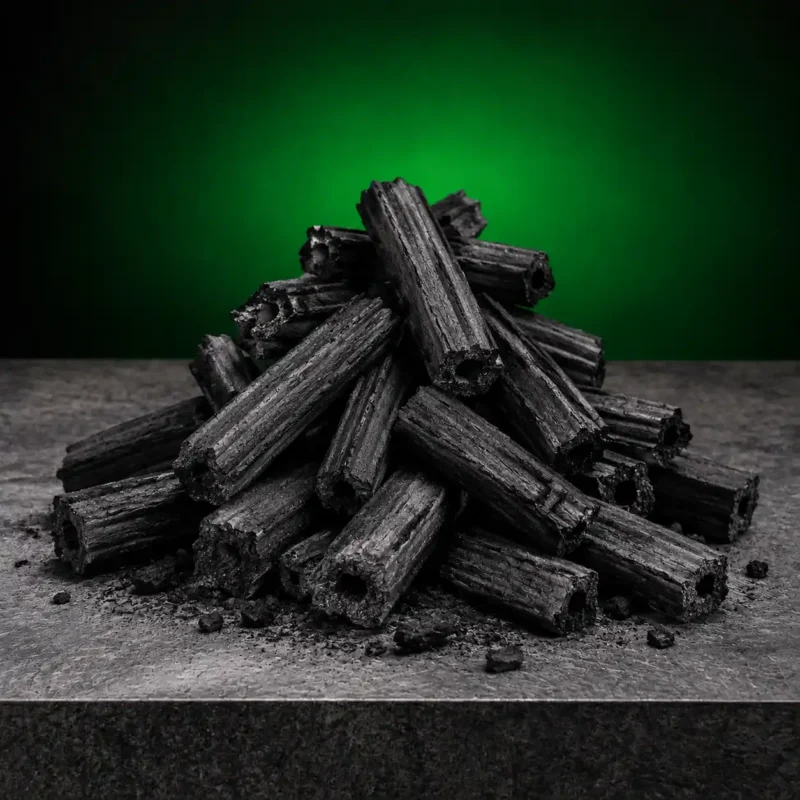
Supplier product photography reference: Natural lump charcoal and manufactured briquettes can serve different private-label ranges. ALT: Private Label BBQ Charcoal – hardwood lump charcoal and charcoal briquette product options.
Choosing the correct product is an essential step in developing Private Label BBQ Charcoal.
Natural lump charcoal, mangrove charcoal, sawdust charcoal and coconut shell briquettes have different physical characteristics.
For example, natural lump charcoal may be supplied in irregular pieces, whereas manufactured briquettes often have more consistent shapes.
However, external appearance alone does not establish fuel quality.
Importers should request technical specifications covering relevant parameters such as moisture, ash, fixed carbon, product dimensions and the percentage of broken material.
For Private Label Charcoal Briquettes, shape can also be part of the commercial identity.
A hexagonal sawdust briquette and a molded coconut shell briquette may require different packaging and product descriptions.
Vietnamese exporters advertise several of these categories for international sourcing, demonstrating the potential for multi-product private-label ranges.
Nevertheless, each product should be evaluated individually.
One supplier’s published laboratory values should never be treated as universal values for charcoal of the same type.
Step 3: Select Packaging Sizes for Your Market
Pack size affects product positioning, retail pricing and distribution.
A small package may suit convenience-oriented customers, while a larger package may be more appropriate for repeat purchasers or certain foodservice buyers.
Commonly advertised charcoal packaging formats include 2kg, 5kg, 10kg and larger commercial sizes, depending on the supplier.
For example, VCSC Charcoal publishes private-label retail options across several products and packaging weights, while other Vietnamese suppliers advertise cartons and woven bags for different commercial quantities.
These are examples of supplier offerings, not universal requirements.
Buyers should evaluate packaging quantities against expected sales, storage costs and retail requirements.
Launching too many pack sizes simultaneously can increase artwork complexity, stockkeeping units and inventory commitments.
A limited initial range may be easier to manage until actual customer demand becomes clearer.
Step 4: Develop Custom Charcoal Packaging
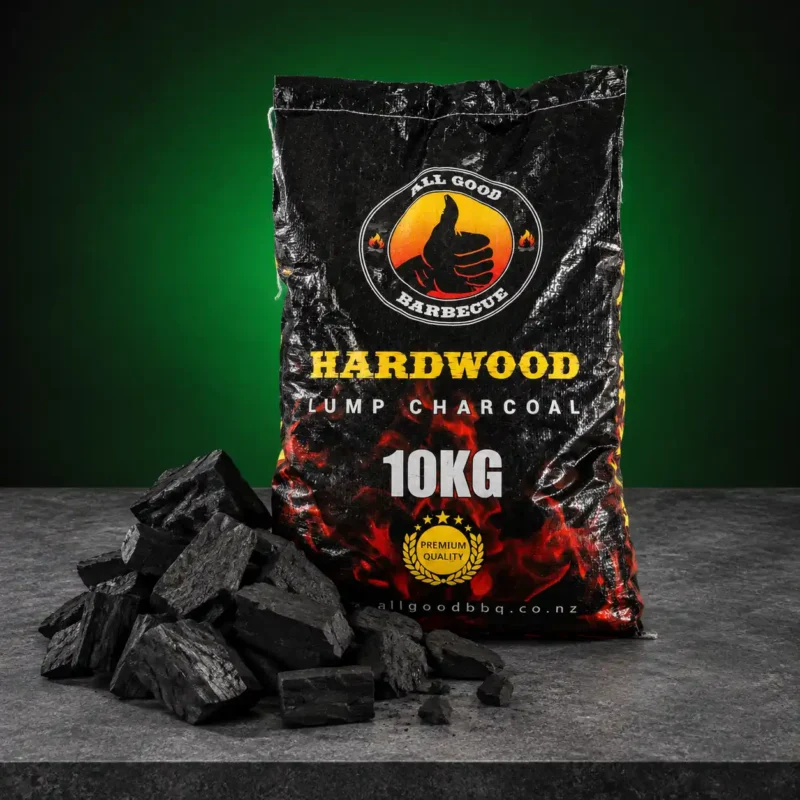
Custom Charcoal Packaging is one of the most visible aspects of a private-label product.
Packaging communicates brand identity, product category and essential purchasing information.
Common commercial formats include kraft paper bags, woven polypropylene sacks and retail cartons.
Each material offers different design, printing and handling characteristics.
For Charcoal Private Label Packaging, the brand owner should establish a consistent design system covering the front, back and side panels where applicable.
Important elements may include the brand logo, product name, net weight, product description, manufacturer or importer details and other information required for the destination market.
Safety information is particularly important for charcoal products. Packaging intended for consumers should carry appropriate warnings about carbon monoxide hazards and use in unsuitable enclosed spaces.
Artwork should also consider readability.
A visually attractive design can become ineffective if essential information is difficult to read after printing or when bags are stacked in retail displays.
Before approving production, buyers should confirm packaging dimensions, material specifications, printing colors and the final artwork version.
Packaging design is a commercial asset, but its regulatory information must also be accurate.
Step 5: Prepare Artwork and Barcode Information
A professional Custom Branded Charcoal project requires print-ready artwork and accurate product identification.
The supplier may request vector design files, such as Adobe Illustrator documents or print-ready PDFs, depending on its printing equipment.
The brand owner should establish the approved logo, colors, typography and product information.
Barcodes are another important consideration.
For retail trade items, GS1 identifies the brand owner as the party normally responsible for assigning the Global Trade Item Number (GTIN), even when another company manufactures the product.
Different retail products generally require separate identification according to GS1’s GTIN allocation rules.
For example, 2kg and 5kg versions of the same charcoal brand may need distinct GTINs.
A supplier should not simply invent a barcode number or reuse an unrelated product’s identifier.
The packaging proof should also identify the approved language, origin statement and any claims requiring documentation.
Once artwork is approved, revision control becomes important.
The final print file should be clearly distinguished from previous drafts to prevent outdated information from appearing on commercial packaging.
Step 6: Review Packaging Compliance in the Destination Market
Real supplier packaging reference: Printed charcoal bag showing multiple information panels. Source: Shunye Packaging. ALT: Charcoal Private Label Packaging – branded charcoal packaging design and labeling.
Private-label brands must consider the regulations of their intended destination market.
These requirements can involve product quantity declarations, responsible business information, packaging materials and consumer safety warnings.
Retailer specifications may add further requirements.
For businesses selling in the European Union, Regulation (EU) 2025/40 on Packaging and Packaging Waste began applying on August 12, 2026. It introduces requirements concerning packaging composition, documentation and waste management, with additional obligations phased in over later years.
Therefore, a private-label importer should not assume that an existing packaging design will automatically satisfy every future EU requirement.
Importers should also avoid treating one recycling symbol or generic environmental statement as proof of full regulatory compliance.
Market-specific labeling rules should be reviewed before the artwork is finalized.
This is especially important when one brand plans to distribute the same product across several countries.
A multilingual label may be commercially useful, but translation alone does not guarantee legal compliance.
Step 7: Approve Product and Packaging Samples
Before mass production, buyers should establish a sample-approval process.
This may involve two different approvals: the charcoal product and its packaging.
The charcoal sample should be checked against the agreed product description, dimensions and relevant quality specifications.
The packaging sample should be reviewed for structure, print quality, dimensions and accuracy of information.
An approved artwork proof is not necessarily the same as a finished, filled package.
For this reason, brand owners may wish to evaluate a representative physical packaging sample before authorizing a large print run.
A written approval record should identify the version, date and any remaining conditions.
VCSC Charcoal’s published OEM workflow, for example, includes specification review, artwork development, optional pre-production sampling and production following approval.
This is one example of a supplier-defined process. Other suppliers may organize the stages differently.
The objective is to ensure that buyer expectations are documented before commercial production.
Step 8: Understand MOQ, Pricing and Production Lead Time
A Private Label Charcoal Supplier may apply different commercial terms to standard products and custom-branded products.
Minimum order quantity, or MOQ, can depend on packaging type, print method, product specification and the number of designs.
A manufacturer may require a minimum quantity for custom-printed bags even when the charcoal itself can be supplied in smaller volumes.
Private-label pricing may also include separate costs for packaging materials, printing setup, artwork adjustments and product testing.
These costs should be identified in the quotation.
Production lead time is another important consideration.
The buyer should distinguish artwork preparation, packaging procurement, product production and the time required before the goods are ready for shipment.
Ocean freight and customs processing add separate periods to the overall import timeline.
There is no single reliable MOQ or lead-time figure that applies to all OEM charcoal manufacturers.
Buyers should request order-specific quotations instead of relying on generic industry estimates.
Step 9: Protect Brand Consistency Across Repeat Orders
Real factory photograph: A production employee checking packaged charcoal products. Source: Eifelglut. ALT: OEM Charcoal Manufacturer – charcoal packaging production and quality inspection.
The first shipment is only the beginning of a private-label product line.
For repeat orders, buyers need a method of maintaining consistency in the charcoal product, packaging and printed information.
The approved technical specification should serve as the reference for future purchases.
If raw materials, product dimensions or packaging construction change, the supplier should communicate those changes before production when they affect agreed requirements.
The brand owner should also maintain an archive of approved artwork, product descriptions and barcode assignments.
Batch identification and agreed inspection records can help investigate discrepancies between shipments.
However, a supplier should not be assumed to operate a particular traceability or quality management system unless its capabilities have been verified.
A sustainable commercial relationship depends on clearly documented expectations, not only the appearance of the first successful product sample.
Step 10: Plan Shipping and Export Documentation
Wholesale Branded Charcoal orders require coordination between product preparation and international logistics.
Buyers should confirm the delivery term, named port, packaging specifications and the documents required for the transaction.
Charcoal shipping also involves specific safety-related regulations.
The International Maritime Organization confirms that IMDG Code Amendment 42-24 became mandatory on January 1, 2026.
Commercial packaging intended for store shelves does not automatically establish that a shipment satisfies maritime dangerous-goods requirements.
The applicable classification, packaging, documentation and carrier acceptance conditions should be reviewed with qualified logistics professionals.
Private-label buyers should also ensure the commercial invoice and packing list accurately describe the supplied product.
The brand name alone is not sufficient to identify the charcoal type for customs purposes.
A clear distinction should be maintained between branding information and the technical description of the goods.
Choosing a Charcoal Manufacturer in Vietnam
Vietnam has companies supplying natural charcoal and manufactured briquettes to international markets.
When selecting a Charcoal Manufacturer in Vietnam, buyers should evaluate whether the company can support the specific product and branding requirements of the proposed project.
Important considerations include product availability, technical specifications, packaging options, artwork approval, inspection arrangements and export documentation.
A Charcoal OEM Supplier should also be able to clarify whether manufacturing and packaging are performed directly or through production partners.
Neither arrangement is automatically better; what matters is transparency, accountability and the ability to deliver the agreed product.
For international buyers, reviewing supplier documentation and representative samples is more reliable than relying only on promotional claims.
Vietargo and Private Label Charcoal Sourcing
Vietargo operates in Vietnam’s charcoal export industry, serving the international charcoal supply market.
For buyers exploring Private Label Charcoal, a useful first step is to prepare a clear product and packaging brief before requesting a quotation.
The brief should identify the intended charcoal type, target market, quality requirements, pack sizes, artwork and estimated order quantity.
Buyers considering Vietargo can use these details when discussing available products and potential branding arrangements.
However, specific OEM manufacturing capabilities, custom printing arrangements, MOQ and delivery schedules should be confirmed directly with Vietargo before any commercial commitment.
Private Label Charcoal Project Checklist
| Project stage | Key approval |
|---|---|
| Brand positioning | Target buyers and sales channels |
| Product selection | Charcoal type and technical specification |
| Packaging | Material, dimensions and net weight |
| Artwork | Final logo, design files and language |
| Barcode | Correct GTIN and product identification |
| Compliance | Relevant destination-market requirements |
| Sampling | Approved product and packaging references |
| Commercial terms | MOQ, price, payment and lead time |
| Production | Agreed specifications and change control |
| Shipment | Export documents and logistics arrangements |
Conclusion
Private Label Charcoal allows importers, distributors and retailers to develop branded charcoal products designed for their target customers.
However, establishing a successful product line involves more than printing a logo.
Product selection, Charcoal Private Label Packaging, accurate labeling, sample approval and reliable supplier coordination all contribute to the final commercial result.
Working with an experienced Private Label Charcoal Supplier can help simplify development, but every capability and commitment should be confirmed for the specific order.
For buyers sourcing from Vietnam, clear technical specifications and documented artwork approvals provide a strong foundation for building Custom Branded Charcoal products.
A successful private-label charcoal brand combines a recognizable identity with verifiable product quality, appropriate packaging and consistent execution across repeat orders.
VIETARGO – THE BEST CHARCOAL OF THE WORLD TO YOUR SHELF
Website : https://vietargo.com/
Facebook : Vietargo
địa chỉ : 10 Nguyen Hien Street, 91B Residential Area, Can Tho, Vietnam
☎: 0939364888