

How to Request a Charcoal Quotation: An RFQ Guide for Importers

A detailed charcoal RFQ allows importers to compare suppliers using consistent commercial requirements. ALT: Charcoal Request for Quotation – charcoal import sourcing and supplier quotation.
A Charcoal Request for Quotation (RFQ) is an essential part of international charcoal procurement. For importers, a well-prepared quotation request helps suppliers understand product requirements, purchasing volumes, packaging specifications and delivery expectations before submitting a commercial offer.
Many buyers begin supplier discussions with a simple question: “What is your charcoal price per ton?”
However, this question rarely provides enough information for an accurate quotation.
Charcoal products differ in raw materials, shapes, physical dimensions, chemical properties and packaging formats. International trade terms, shipping destinations and order quantities can also significantly influence the final offer.
A quotation for natural mangrove charcoal packed in 10 kg sacks cannot automatically be compared with a quotation for manufactured coconut shell briquettes supplied in 2 kg retail bags.
Similarly, Charcoal FOB Price and Charcoal CIF Price reflect different commercial obligations.
Understanding How to Request a Charcoal Quote can help importers avoid unclear offers, reduce unnecessary communication and make more informed purchasing decisions.
This guide explains the information required in a professional Charcoal RFQ, how to compare supplier quotations and what buyers should check before confirming a bulk order.
What Is a Charcoal Request for Quotation?
A Charcoal Request for Quotation is a formal purchasing inquiry sent to a charcoal supplier asking for prices and commercial conditions based on defined product requirements.
An RFQ is generally most useful when the buyer already has a reasonably clear understanding of the product they intend to purchase.
Unlike a general product inquiry, an RFQ should identify the information needed to calculate and evaluate a quotation.
For example, a message stating “We are looking for restaurant charcoal” leaves several important questions unanswered.
The supplier may not know whether the buyer requires natural hardwood charcoal, mangrove charcoal or manufactured briquettes.
The supplier may also lack information about package weight, destination, commercial quantity and technical quality requirements.
A stronger Charcoal Quotation Request describes the product, intended application, packaging and preferred delivery terms.
This allows suppliers to prepare quotations that can be compared more meaningfully.
The RFQ does not replace the final sales contract, but it provides a structured starting point for negotiations.
Step 1: Identify the Exact Charcoal Product
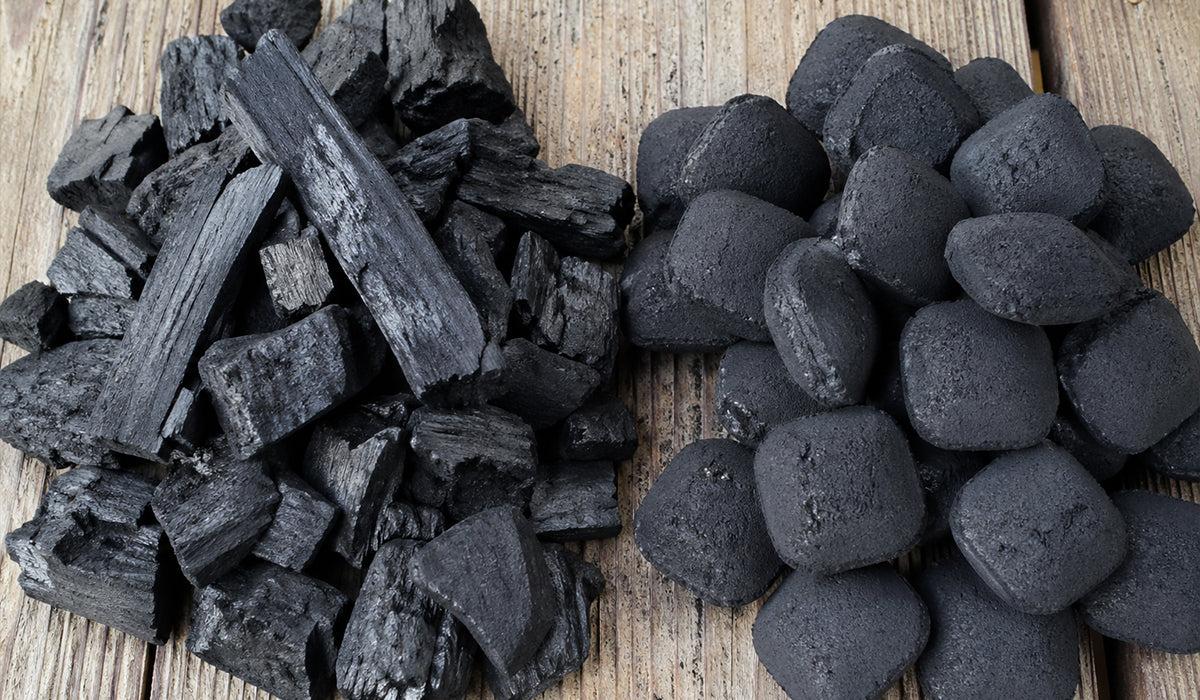
Different charcoal categories require different product specifications and commercial pricing. ALT: Charcoal RFQ – mangrove, hardwood and sawdust briquette product comparison.
The first step in preparing a Charcoal RFQ is identifying the product category.
International charcoal suppliers may offer mangrove charcoal, natural hardwood charcoal, coconut shell charcoal briquettes, sawdust charcoal briquettes and other products.
These categories should not be treated as interchangeable.
Natural charcoal generally retains characteristics of the original carbonized biomass, while manufactured briquettes are formed into defined shapes from processed carbonaceous materials.
A buyer requesting natural mangrove charcoal may need to specify whether long sticks, short pieces or mixed lumps are acceptable.
For manufactured briquettes, the buyer may need to state whether cylindrical, hexagonal or another shape is required.
Dimensions should be specified where they influence the commercial product.
The intended customer can also be relevant.
A retail distributor may require a different packaging format from a company supplying restaurants.
When product requirements are not yet finalized, the buyer can request a supplier catalog and technical data sheets before preparing the formal RFQ.
This approach prevents the purchasing team from comparing fundamentally different charcoal products.
Step 2: Define Charcoal Quality Specifications
A Charcoal Price Quotation becomes more meaningful when the buyer provides measurable quality requirements.
Common charcoal specifications include fixed carbon, moisture content, ash content and volatile matter.
Physical characteristics may include dimensions, shape, acceptable fines and the proportion of intact pieces.
ASTM D1762-84(2026) provides a laboratory method for determining moisture, volatile matter and ash in wood charcoal, including lumps and briquettes within its scope.
When reviewing laboratory results, importers should confirm the analytical method and reporting basis.
For example, a fixed carbon percentage reported on a dry basis should not be compared directly with an as-received result without considering the difference.
Buyers should also distinguish an agreed quality specification from a supplier’s typical product description.
If a supplier provides a technical sheet, the buyer should clarify which figures are contractual limits and which are indicative values.
A test result for a preliminary sample does not automatically guarantee that every subsequent shipment will have identical characteristics.
For this reason, the Charcoal Quotation Request should identify any quality parameters that must be satisfied by the delivered goods.
Step 3: Specify Quantity and Minimum Order Requirements
A Bulk Charcoal Quotation requires clear information about the expected purchasing quantity.
Importers may describe orders in metric tons, packaging units or shipping containers.
However, specifying one container does not automatically establish the exact product weight.
The amount of charcoal that can be commercially loaded depends on the container configuration, packaging dimensions, cargo properties and applicable transport restrictions.
A professional RFQ should therefore distinguish the desired quantity from the container type.
Buyers should also ask suppliers to confirm their Minimum Order Quantity (MOQ).
MOQ represents the minimum quantity a supplier is willing to accept for a particular order.
There is no universal MOQ that applies to all charcoal manufacturers or export transactions.
The requirement may differ for standard packaging, custom products or private-label orders.
Importers planning regular purchases may request quotations for several order volumes.
For example, a company may ask about a trial shipment and a potential recurring monthly purchasing arrangement.
The supplier should confirm whether different quantities affect pricing, production planning or packaging arrangements.
Step 4: Choose Packaging and Private-Label Requirements
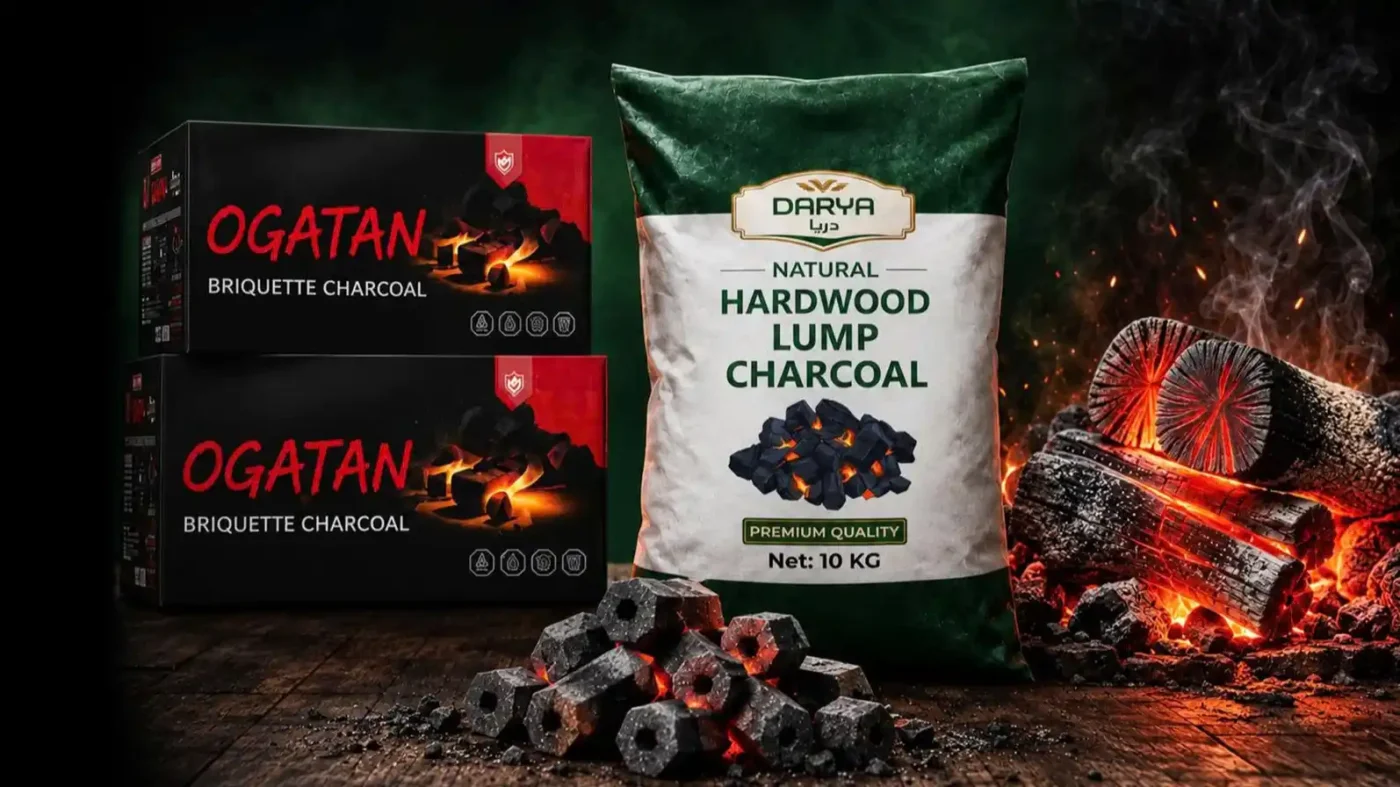
Packaging format and bag weight can influence charcoal product quotations. ALT: Bulk Charcoal Quotation – wholesale charcoal packaging and private label options.
Packaging details are a major component of a Charcoal Supplier Quote.
Commercial charcoal may be packed in kraft paper bags, woven plastic sacks or other packaging configurations appropriate to the product and destination market.
The buyer should specify the required net weight per package.
Additional details may include packaging material, bag construction, labeling language and whether cartons or other grouping materials are needed.
For private-label products, artwork and brand requirements should also be identified.
A buyer requesting custom packaging should clarify whether print-ready designs are available or whether the supplier is expected to provide design support.
Custom packaging can affect production cost and MOQ.
Therefore, a Charcoal Quotation Request should indicate whether standard packaging is acceptable or whether an OEM arrangement is required.
Importers should also consider the distinction between commercial packaging preferences and packaging approved for the relevant dangerous goods transport arrangements.
A visually attractive retail bag does not automatically meet every international shipping requirement.
Step 5: Understand Charcoal FOB Price and CIF Price
One of the most important elements of a Charcoal Import Quotation is the agreed delivery term.
FOB and CIF are commonly encountered in international bulk trade.
Under Incoterms® 2020, these terms allocate certain responsibilities, costs and risks between sellers and buyers.
FOB – Free On Board
Under FOB, the seller delivers the goods on board the vessel nominated by the buyer at the named loading port.
The risk of loss or damage transfers when the goods are on board the vessel.
The buyer generally arranges the main sea carriage.
CIF – Cost, Insurance and Freight
Under CIF, the seller contracts and pays for carriage to the named destination port and obtains the required insurance coverage.
However, the risk of loss or damage still transfers when the goods are delivered on board at the loading port.
The ICC also clarifies that CIF normally requires only minimum insurance coverage unless the parties agree otherwise.
| Commercial issue | FOB | CIF |
|---|---|---|
| Named port | Loading port | Destination port |
| Main ocean carriage | Arranged by buyer | Arranged by seller |
| Main freight cost | Generally buyer’s responsibility | Seller contracts and pays |
| Cargo insurance | No seller obligation under FOB | Seller obtains required minimum cover |
| Risk transfers | When goods are on board | When goods are on board at origin |
The distinction between payment responsibility and risk transfer is particularly important.
Importers should never assume that CIF means the exporter bears all transport risks until the goods arrive at the destination.
The RFQ should identify the named port and Incoterms version.
For example, the buyer might request a quotation under FOB Cat Lai or CIF Rotterdam, subject to the suitability of the term for the transaction.
Because containerized cargo is often handed over before loading on board, buyers should discuss whether FCA or another Incoterms rule is more appropriate for the actual delivery process.
The final term should match the logistics arrangement rather than simply follow industry habit.
Step 6: Clarify Dangerous Goods Charges and Shipping Costs
A Charcoal Import Quotation may involve transport requirements that differ from ordinary general cargo.
The International Maritime Organization confirms that IMDG Code Amendment 42-24 became mandatory on January 1, 2026.
Under the revised framework, charcoal falls within the relevant dangerous goods classification as UN1361, Class 4.2.
Hapag-Lloyd has published requirements concerning charcoal declarations, packaging and other transport conditions. The carrier also identifies additional dangerous goods-related charges.
For commercial buyers, this makes it essential to clarify the scope of shipping quotations.
A base ocean freight rate may not include all dangerous goods surcharges, documentation fees or inspection-related expenses.
Additional costs can depend on the carrier, route and shipment-specific requirements.
An importer requesting a CIF quotation should ask which transport-related charges are included in the seller’s offer.
The buyer should also identify expenses that remain payable at the destination.
CIF does not automatically include import duties, all destination handling charges or inland delivery to the buyer’s warehouse.
For Charcoal Supplier Quote comparisons, the relevant question is the total commercial cost under equivalent conditions.
Any dangerous goods compliance requirements should be confirmed with qualified logistics professionals.
Step 7: Confirm Lead Time, Availability and Payment Terms

Production schedules and commercial terms should be included in the quotation process. ALT: Charcoal Import Quotation – supplier production planning and delivery schedules.
A complete Charcoal Price Quotation should include information about order preparation and commercial timing.
Buyers should ask when the supplier expects the goods to be available for shipment.
Production lead time must be distinguished from estimated ocean transit time.
The date goods are ready at the factory is not the same as the date they arrive at the destination port.
Importers should also request the quotation validity period.
This is important because shipping costs, currency conditions and other commercial inputs may change.
Payment terms should be included in the discussion as well.
The appropriate arrangement depends on the parties’ commercial agreement and risk assessment.
An importer may also ask whether samples are available before confirming a bulk order.
However, sample availability, costs and approval procedures should be clarified with each supplier.
A quotation that omits lead time or payment conditions may require further negotiation before it can support a purchase decision.
Charcoal RFQ Template: A Practical Importer Checklist
A useful Charcoal RFQ Template should identify the buyer’s requirements without making assumptions about the supplier’s product range or manufacturing capability.
The following table provides a reference structure.
| RFQ field | Information to provide |
|---|---|
| Buyer details | Company, country and contact |
| Product | Charcoal type and intended use |
| Dimensions | Shape, size range and tolerances |
| Quality | Fixed carbon, moisture, ash and other requirements |
| Quantity | Metric tons or estimated container quantity |
| Packaging | Net weight, material and branding |
| Destination | Country and named port |
| Trade terms | FOB, CIF or other agreed Incoterms rule |
| Schedule | Preferred shipment period |
| Additional requests | MOQ, samples, documents, quotation validity |
When requesting a Charcoal Supplier Quote, buyers should also encourage suppliers to identify any requirements they cannot meet exactly.
This is preferable to receiving a quotation that appears compliant but actually refers to a different product.
Example: How to Request a Charcoal Quote by Email
The following short email illustrates a professional inquiry.
Dear Sales Team,
We are interested in importing charcoal and would like to request a detailed quotation.
Our preliminary requirements are:
- Product: [Charcoal type]
- Size and shape: [Specifications]
- Quality: [Fixed carbon, moisture, ash, other requirements]
- Quantity: [Metric tons / Containers]
- Packaging: [Net weight and bag type]
- Destination: [Port and country]
- Requested terms: [FOB / CIF, Incoterms® 2020]
- Target shipment period: [Month / Year]
Please include your MOQ, production lead time, payment terms, quotation validity, available quality documents and any applicable dangerous goods-related transport costs.
If any specifications require adjustment, please indicate the alternatives available.
Best regards,
[Buyer Name]
[Company Name]
The template should be adapted to the specific product, destination market and purchasing requirements.
It is a commercial inquiry rather than a final contract.
How to Compare Multiple Charcoal Quotations
Importers should evaluate offers using a consistent comparison method.
A simple comparison based only on the quoted price per metric ton may be misleading.
For example, two suppliers may offer different packaging, allowable fines, shipment quantities or delivery terms.
Even if their prices appear similar, their commercial conditions may not be equivalent.
Consider a hypothetical comparison:
| Condition | Supplier A | Supplier B |
|---|---|---|
| FOB price | $620/MT | $600/MT |
| Packaging | 10 kg bags | 10 kg bags |
| Allowed fines | 5% | 10% |
| Quality testing | Method specified | Requires clarification |
| Freight | Excluded | Excluded |
Illustrative values only. These figures are not actual supplier quotations or Vietargo prices.
Supplier B offers a lower nominal price, but the difference in allowable fines and documentation may be relevant.
The buyer should examine which product best meets the intended specification.
Other considerations include confirmed availability, packaging requirements and payment conditions.
For a Bulk Charcoal Quotation, the lowest displayed number does not always represent the lowest cost of obtaining suitable goods.
Common Mistakes in a Charcoal Quotation Request
One common mistake is failing to identify the exact charcoal type.
Another is requesting CIF pricing without naming the destination port.
Buyers may also specify a container quantity without explaining the expected net cargo weight.
Packaging information is frequently overlooked, particularly for private-label products.
Some importers provide a product photo but no measurable dimensions.
Images can help communicate appearance, but they do not replace a specification sheet.
A quotation request may also fail to distinguish the desired target quality from the supplier’s ordinary product grade.
Finally, comparing FOB prices against CIF prices without considering included services can lead to incorrect conclusions.
A structured Charcoal RFQ helps prevent these issues by identifying the information needed before commercial offers are compared.
Requesting a Charcoal Quotation from Vietargo
Vietargo operates in Vietnam’s charcoal export sector.
Buyers interested in charcoal supplied by Vietargo can use a structured RFQ to communicate their product requirements and intended trade arrangements.
The inquiry should identify the charcoal category, expected quantity, dimensions, quality specifications, packaging and destination.
Pricing, MOQ, lead time and product availability should be confirmed directly through the supplier’s formal quotation.
General market examples should not be interpreted as official Charcoal FOB Price or Charcoal CIF Price offers from Vietargo.
A detailed inquiry provides a stronger basis for reviewing available products and commercial conditions.
Conclusion
A professional Charcoal Request for Quotation is a practical tool for international charcoal buyers.
It helps suppliers understand the product being requested and allows importers to compare offers using consistent criteria.
Important information includes charcoal type, technical specifications, quantity, packaging, destination, delivery terms and shipment timing.
Buyers should also consider dangerous goods transport requirements, quotation validity and relevant documentation.
A clear Charcoal RFQ Template can simplify the process, but every request must be adapted to the intended product and transaction.
The objective is not simply to obtain the cheapest charcoal quote. It is to obtain a complete, transparent and comparable offer that supports a reliable purchasing decision.
Sources & References
VIETARGO – THE BEST CHARCOAL OF THE WORLD TO YOUR SHELF
Website : https://vietargo.com/
Facebook : Vietargo
địa chỉ : 10 Nguyen Hien Street, 91B Residential Area, Can Tho, Vietnam
☎: 0939364888