

HS Code 4402 Explained: How Charcoal Products Are Classified

Accurate tariff classification helps international charcoal buyers prepare consistent import documentation. ALT: Charcoal HS Code 4402 – international charcoal customs classification.
Charcoal HS Code 4402 is an important tariff classification for businesses importing and exporting wood charcoal, coconut shell charcoal, bamboo charcoal and certain manufactured charcoal briquettes.
For international charcoal buyers, identifying the correct Harmonized System (HS) code is essential when preparing customs declarations, reviewing import duties and checking the regulations applicable to a shipment.
However, not every charcoal product should be declared using exactly the same tariff code.
The raw material, product characteristics and level of processing can influence classification.
For example, charcoal produced from bamboo and charcoal produced from coconut shells are covered by different six-digit subheadings under the current HS system.
Another important distinction concerns the international HS nomenclature and the more detailed tariff codes used by individual countries.
A code used in Vietnam may not have exactly the same additional digits as the corresponding code used in the European Union or United States.
Understanding Charcoal HS Code Classification therefore helps buyers avoid using outdated or incomplete tariff descriptions.
This guide explains the structure of HS Code 4402, the principal subheadings and the factors that importers should review before declaring charcoal products.
What Is Charcoal HS Code 4402?
HS Code 4402 is a four-digit tariff heading within Chapter 44 of the Harmonized System.
Chapter 44 covers wood, articles of wood and wood charcoal.
The legal heading description is:
Wood charcoal (including shell or nut charcoal), whether or not agglomerated.
The wording is important because heading 4402 is not limited to charcoal made directly from solid wood pieces.
It also includes charcoal obtained from certain shells and nuts, together with qualifying charcoal that has been agglomerated.
According to the United Kingdom government’s classification guidance, wood charcoal under heading 4402 can appear in several physical forms, including blocks, sticks, granules, powder and briquettes.
This means that the outward shape of a charcoal product does not necessarily determine its heading.
A natural hardwood charcoal lump and an agglomerated charcoal briquette may both fall under heading 4402, provided their actual characteristics satisfy the relevant legal classification.
However, the heading should not be applied automatically to every product marketed as a briquette.
The material composition and processing history remain relevant.
For businesses purchasing BBQ Charcoal HS Code products, the first step is identifying exactly what the finished product contains.
How HS Code 4402 Is Structured Under HS 2022
The Harmonized System is administered by the World Customs Organization (WCO).
It provides an internationally harmonized classification structure at the six-digit level.
Individual countries can add further digits to meet their customs, statistical and administrative requirements.
Under HS 2022, heading 4402 contains three six-digit subheadings:
| International HS code | Official classification | Typical product |
|---|---|---|
| 4402.10 | Of bamboo | Bamboo charcoal |
| 4402.20 | Of shell or nut | Coconut shell charcoal |
| 4402.90 | Other | Hardwood and mangrove charcoal |
These categories are based primarily on the source material within the scope of the heading.
One important development is the introduction of subheading 4402.20 under HS 2022.
The previous HS 2017 structure contained subheadings 4402.10 and 4402.90.
Under that earlier structure, shell and nut charcoal was included within the broader other-charcoal category.
The WCO’s HS 2022 correlation table confirms that the new 4402.20 subheading was created specifically for shell or nut charcoal.
This change matters for historical product documentation.
An importer reviewing an older shipment may encounter a code that does not correspond to the current classification structure.
Therefore, Charcoal Customs Classification should always use the nomenclature applicable at the time and place of declaration.
Coconut Shell Charcoal HS Code: Understanding 440220
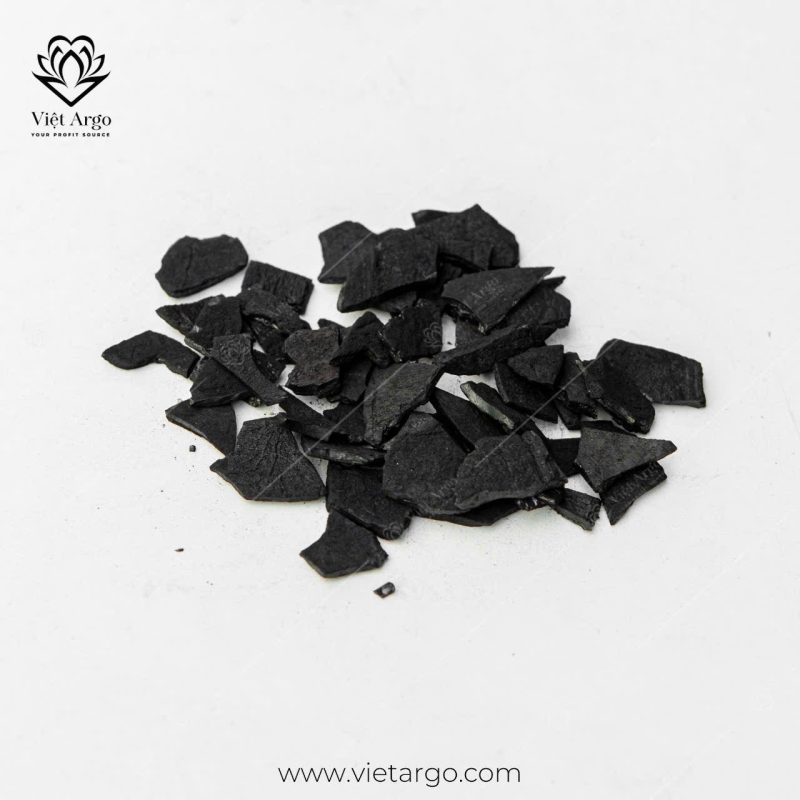
Coconut shell charcoal is classified separately from other wood charcoal under HS 2022. ALT: Coconut Shell Charcoal HS Code – shell charcoal and compressed charcoal briquettes.
Coconut Shell Charcoal HS Code is an important search topic for buyers importing coconut-based charcoal products.
Under HS 2022, charcoal obtained from coconut shells generally falls under subheading 4402.20, provided the product satisfies the legal description of heading 4402.
This distinction is relevant because coconut shell charcoal may be supplied in different commercial forms.
Some suppliers offer carbonized coconut shell fragments.
Others manufacture agglomerated charcoal briquettes from carbonized coconut shell material.
The fact that a product has been formed into a briquette does not automatically move it outside heading 4402.
However, buyers should verify the actual composition and manufacturing process before determining the final tariff classification.
Vietnam’s tariff nomenclature further distinguishes coconut shell charcoal through a national eight-digit code.
Published Vietnamese tariff schedules identify:
-
4402.20.10: Of coconut shell.
-
4402.20.90: Other shell or nut charcoal.
These are national subdivisions under the international six-digit code 4402.20.
Importers should verify the current national schedule before submitting customs declarations.
A further distinction concerns activated carbon.
Ordinary coconut shell charcoal and activated carbon are not necessarily classified under the same tariff heading.
When a coconut-based carbon material has undergone an activation process and is classified as activated carbon, heading 3802 may become relevant instead of 4402.
The US Harmonized Tariff Schedule specifically excludes activated charcoal from Chapter 44 and directs it to heading 3802.
This difference is important for businesses purchasing carbon materials for different industrial applications.
Bamboo Charcoal HS Code: Understanding 440210
Bamboo Charcoal HS Code is associated with subheading 4402.10.
This category applies to qualifying charcoal produced from bamboo.
Bamboo charcoal can be marketed in different physical forms, depending on the product and manufacturing process.
However, appearance alone is not enough to establish the correct classification.
A cylindrical charcoal stick made from another raw material does not become bamboo charcoal simply because it resembles a bamboo-based product.
Similarly, bamboo charcoal may retain its raw material classification even when supplied in an agglomerated form, subject to the relevant legal rules.
The United States tariff schedule identifies bamboo charcoal under 4402.10.00.00.
The international portion is the first six digits, while the remaining digits belong to the United States’ national tariff structure.
For importers, the essential information is the actual feedstock and the nature of the finished material.
A product specification should clearly state whether the charcoal is made from bamboo, wood, coconut shells or another source.
This information is more useful for Charcoal HS Code Classification than generic marketing terms such as premium charcoal or restaurant-grade charcoal.
HS Code 440290: Hardwood and Mangrove Charcoal
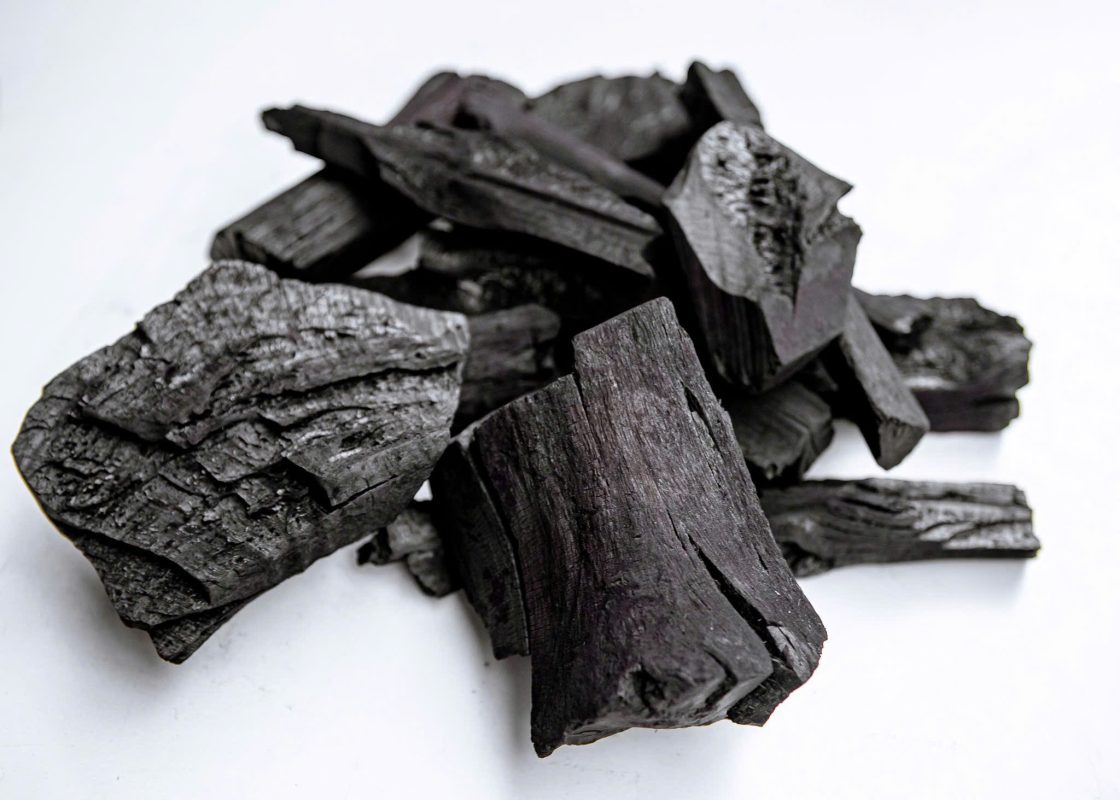
Natural mangrove and hardwood charcoal commonly require assessment under the other-charcoal subheading. ALT: HS Code 440290 – mangrove charcoal and natural hardwood lump charcoal.
HS Code 440290 covers the “Other” category within heading 4402.
This subheading is generally relevant to qualifying wood charcoal that is not classified as bamboo charcoal or shell/nut charcoal.
Examples can include natural hardwood lump charcoal and mangrove charcoal.
However, the final classification must be based on the actual product characteristics.
It should not be determined solely by the commercial name printed on the packaging.
In Vietnam, the corresponding national code is presented as 4402.90.00 in the published tariff nomenclature.
This classification can be relevant to charcoal exporters supplying natural wood charcoal from Vietnam.
Mangrove charcoal may be offered in long sticks, shorter pieces or irregular lumps.
These physical differences do not automatically require separate six-digit HS subheadings.
Commercial grades such as A1, A2, Small or Large are product specifications rather than Harmonized System classifications.
A supplier may offer several physical grades within the same tariff category.
For importers, it is therefore important to separate product grading from customs classification.
The grade describes commercial characteristics, while the tariff code addresses the product’s position within the legal nomenclature.
Charcoal Briquettes HS Code: Carbonized vs Non-Carbonized Products
One of the most important distinctions in Charcoal Briquettes HS Code classification concerns whether the material has been carbonized.
The commercial word briquette describes a physical form, but it does not establish the product’s chemical nature.
For example, a briquette made from already carbonized wood particles may qualify as agglomerated wood charcoal under heading 4402.
However, compressed sawdust or wood residues that have not been carbonized may fall under heading 4401.
The HS system includes separate subheadings for certain wood briquettes and other wood-based fuels.
Consequently, a buyer should not assume that every product marketed as a wood briquette has the same customs classification.
For hexagonal sawdust charcoal, the processing history is particularly relevant.
If the product has been carbonized and meets the legal description of wood charcoal, heading 4402 may be appropriate.
If it remains a compressed wood fuel rather than charcoal, another heading may apply.
The distinction must be assessed using the actual product description, composition and processing.
This is why Charcoal Customs Classification requires accurate information from the manufacturer.
A label stating “sawdust briquette” without further technical detail may be insufficient.
BBQ Charcoal HS Code: Does Intended Use Change Classification?
BBQ Charcoal HS Code is a common inquiry among importers serving retail and foodservice markets.
However, barbecue use does not automatically create a separate six-digit subheading within heading 4402.
Two products sold as BBQ charcoal may require different classifications because they are made from different raw materials.
For example, coconut shell charcoal briquettes and natural hardwood lump charcoal may both be marketed for barbecue applications.
Nevertheless, their underlying feedstocks can place them in different subheadings.
A retailer may therefore sell several charcoal products under one brand while using different customs codes for different product categories.
This distinction is important when preparing product-specific commercial invoices and customs declarations.
It also demonstrates why customs classification should not be based only on the intended consumer market.
Terms such as BBQ charcoal, restaurant charcoal and premium charcoal are generally commercial descriptions rather than substitutes for legal tariff classification.
Why Six-Digit HS Codes Differ From National Tariff Codes

National customs systems can extend international six-digit HS codes into more detailed tariff lines. ALT: Charcoal Customs Classification – international and national tariff code documentation.
A key concept in Charcoal HS Code 4402 is the distinction between international and national coding systems.
The HS provides internationally harmonized classification at the six-digit level.
However, countries add further digits for national tariff, statistical and regulatory purposes.
Vietnam uses detailed commodity codes within its import-export tariff structure.
The European Union uses the eight-digit Combined Nomenclature and the more detailed TARIC system.
The United States uses the Harmonized Tariff Schedule of the United States, including ten-digit statistical reporting numbers.
The European Commission explains that the EU’s Combined Nomenclature is based on the Harmonized System and is used to determine customs treatment and statistical classification.
Consequently, a Vietnamese export code may not match every digit of the import code used by an overseas buyer.
This does not necessarily indicate a classification problem.
For example, Vietnam distinguishes coconut shell charcoal under its own eight-digit subdivision, while the United States applies a different national extension.
What matters is that the relevant international classification and the appropriate national tariff rules are correctly applied.
Importers should never assume that the Vietnamese eight-digit code can be copied unchanged into a United States or European customs declaration.
Does Charcoal HS Code 4402 Determine Import Duties?
Tariff classification is an essential factor in determining customs duties, but it is not the only factor.
Actual import duties can depend on the destination country, origin of goods, applicable trade agreements and any additional measures in effect at the time of import.
For example, the United States Harmonized Tariff Schedule shows a normal general duty rate of Free for the main charcoal tariff lines under heading 4402.
However, that does not establish that every charcoal shipment entering the United States will be free of all import-related duties.
Additional duties or country-specific trade measures may apply.
Importers must therefore verify the complete tariff treatment of the actual shipment.
The same principle applies to the European Union and other markets.
A correct Wood Charcoal HS Code allows a buyer to identify the relevant tariff line, but the final cost assessment requires additional information.
This is particularly important for buyers comparing sourcing options from multiple exporting countries.
A product with the same six-digit HS code can face different effective import costs depending on origin and the destination’s trade rules.
HS Code 4402 and Non-Tariff Import Requirements
The role of Charcoal HS Code Classification extends beyond customs duty calculations.
Tariff codes are also used to identify products affected by certain import restrictions, reporting requirements and other regulatory measures.
The European Commission confirms that tariff classification may determine whether goods are subject to permits, restrictions and other non-tariff obligations.
For wood-based products, sourcing and environmental regulations may be relevant.
The European Union Deforestation Regulation (EUDR), for example, covers certain products associated with specified commodities.
However, its application cannot be established solely by reading the four-digit heading 4402 without examining the legal product scope and actual material composition.
A coconut shell charcoal product and a wood charcoal product may require different analysis depending on the exact legislation.
Likewise, customs classification does not replace separate maritime dangerous goods requirements.
The HS code and the transport classification system serve different regulatory purposes.
For international charcoal buyers, these distinctions are essential.
One number cannot be used as proof that every legal and logistics obligation has been satisfied.
Common Mistakes in Charcoal Customs Classification
Several recurring mistakes can cause confusion when importing or exporting charcoal products.
The first is using an outdated HS code without checking the current nomenclature.
This is especially relevant to coconut shell charcoal because subheading 4402.20 was introduced under HS 2022.
The second is classifying products based only on commercial names.
A bag labeled “premium charcoal briquettes” may not provide enough information to determine the correct subheading.
The third is assuming that all briquettes fall under heading 4402.
Carbonized charcoal briquettes and non-carbonized wood fuel briquettes may require different classifications.
Another mistake involves activated carbon.
Activated carbon generally belongs under heading 3802, rather than heading 4402.
A further issue is copying a country’s full tariff code into another country’s customs documentation without checking the national nomenclature.
Finally, buyers sometimes assume that an HS code automatically confirms applicable tax rates or regulatory compliance.
In reality, proper classification is the starting point for assessing those obligations, not proof that they have all been fulfilled.
How to Verify a Charcoal HS Code Before Importing
When a classification is uncertain, importers should collect the product information necessary for a proper assessment.
Relevant details may include the raw material, manufacturing process, degree of carbonization, physical form and intended commercial description.
The applicable national tariff schedule should then be consulted.
If uncertainty remains, businesses should contact qualified customs professionals or the relevant customs authority.
The WCO advises traders to consult national customs administrations for specific classifications because the organization does not provide binding classifications to individual commercial operators.
In the European Union, the Binding Tariff Information (BTI) system offers a formal mechanism for obtaining a legally binding classification decision.
According to the European Commission, BTI decisions are generally valid for three years and are binding under the applicable EU rules.
For businesses importing charcoal regularly, an appropriate classification ruling can provide greater legal certainty.
It can be particularly valuable for products containing mixed or unusually processed carbonaceous materials.
Charcoal HS Code Classification for Vietnamese Exporters
Vietnam supplies several charcoal product categories to international markets.
These may include mangrove charcoal, natural hardwood charcoal, coconut shell charcoal and manufactured sawdust charcoal briquettes.
Because these products can have different raw materials and processing characteristics, exporters should not assume that one HS subheading applies to their entire product range.
For B2B transactions, product descriptions should be consistent across technical documents, commercial invoices and other relevant shipping records.
Vietargo operates in Vietnam’s charcoal export sector.
When reviewing products supplied by Vietargo or other Vietnamese exporters, importers should identify the actual product characteristics before determining the applicable Charcoal HS Code 4402 subdivision.
The final national declaration code should be verified with the appropriate customs authority or qualified customs representative.
This approach supports more transparent international transactions and reduces the risk of relying on incomplete or outdated product descriptions.
Conclusion
Charcoal HS Code 4402 covers wood charcoal, including qualifying charcoal derived from shells or nuts and certain agglomerated charcoal products.
Under HS 2022, the heading contains three principal subheadings:
-
4402.10: Bamboo charcoal.
-
4402.20: Shell or nut charcoal, including qualifying coconut shell charcoal.
-
4402.90: Other charcoal, including many natural hardwood and mangrove charcoal products.
However, the correct tariff classification depends on the actual characteristics of the goods.
Importers must also distinguish international six-digit HS codes from the detailed national codes used in Vietnam, the European Union, the United States and other markets.
Accurate Charcoal Customs Classification supports proper declarations, tariff verification and regulatory assessment. The correct code should always be based on the product and the applicable legal nomenclature—not simply its commercial name.
Sources & References
VIETARGO – THE BEST CHARCOAL OF THE WORLD TO YOUR SHELF
Website : https://vietargo.com/
Facebook : Vietargo
địa chỉ : 10 Nguyen Hien Street, 91B Residential Area, Can Tho, Vietnam
☎: 0939364888