

2kg, 5kg or 10kg: Which Charcoal Pack Size Fits Your Market?
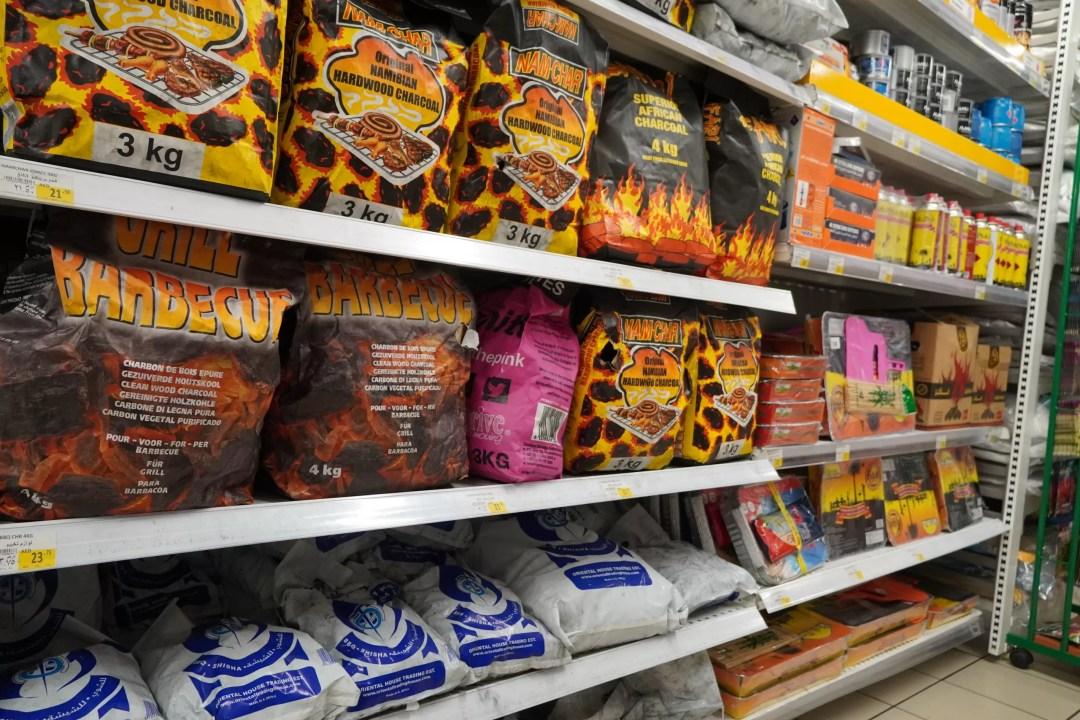
Real retail example: Packaged charcoal sold in different quantities on supermarket shelves. ALT: Charcoal Packaging Sizes – retail barbecue charcoal packaging and supermarket distribution. Image source: Charcoal Market.
Choosing the right Charcoal Packaging Sizes is an important commercial decision for charcoal importers, wholesalers, supermarket buyers and companies developing private-label BBQ fuel products.
While charcoal quality remains essential, packaging determines how a product is displayed, transported, stored and purchased by its target customers.
A compact Charcoal 2kg Bag may suit occasional household buyers, while a Charcoal 5kg Bag can provide a practical middle option for general retail. A Charcoal 10kg Bag may appeal to repeat users, specialty retailers and certain foodservice customers.
However, these are market-positioning considerations rather than universal rules. Actual demand depends on regional shopping habits, retail channels, charcoal types and customer expectations.
For international buyers, selecting between 2kg, 5kg and 10kg packaging also influences freight efficiency, packaging costs, warehouse operations and product pricing.
Understanding Charcoal Packaging Sizes can help importers build a more targeted product range instead of offering a single bag size to every customer.
This guide compares three packaging formats, examines their commercial applications and explains what businesses should consider when requesting Custom Charcoal Packaging from suppliers in Vietnam.
Why Charcoal Packaging Sizes Matter to Importers
Charcoal Packaging Sizes influence several stages of the supply chain.
For retail businesses, bag size affects shelf placement, stock rotation and the quantity consumers purchase during each transaction.
For wholesalers, pack size determines the number of individual selling units contained in a shipment and can influence handling requirements.
For foodservice buyers, packaging affects purchasing frequency, storage allocation and inventory management.
A smaller bag can offer a lower total purchase price at checkout, but it may require more packaging material and handling per metric ton of product.
A larger bag can reduce the number of individual units in a shipment, although it may be less convenient for customers who buy charcoal infrequently.
Packaging therefore involves a balance between consumer accessibility and operational efficiency.
A Vietnamese charcoal supplier, VCSC Charcoal, publicly offers retail formats ranging from 1kg to 10kg, with different configurations for supermarkets, specialty stores and wholesale distribution. This illustrates the variety of packaging formats available in the export market rather than establishing a universal standard.
For importers, the right decision starts with the customers they intend to serve.
Charcoal Pack Size Comparison: 2kg vs 5kg vs 10kg
The following Charcoal Pack Size Comparison summarizes potential applications for each format.
| Factor | 2kg Bag | 5kg Bag | 10kg Bag |
|---|---|---|---|
| Typical positioning | Convenience retail | General BBQ retail | Bulk-oriented retail |
| Potential customers | Occasional buyers | Household BBQ users | Frequent users, some restaurants |
| Checkout price | Lower per bag | Mid-range per bag | Higher per bag |
| Handling convenience | High | Moderate to high | Depends on user and bag design |
| Packaging units per ton | 500 | 200 | 100 |
| Shelf-space requirement per unit | Relatively small | Medium | Relatively large |
| Possible sales channels | Convenience, specialty | Supermarket, hardware | Wholesale, garden, foodservice |
| Private-label potential | Yes | Yes | Yes |
Commercial positioning is illustrative. Unit counts assume exactly 1,000kg net product weight and exclude packaging tare, pallet weight and shipment limitations.
The table demonstrates why no single format is automatically the best choice.
A supermarket may benefit from offering both smaller and larger packages, while a foodservice distributor may prefer fewer, heavier units.
Similarly, an online retailer may consider parcel handling and fulfillment charges when choosing among BBQ Charcoal Bag Sizes.
The appropriate range should be evaluated against local customer behavior and distribution conditions.
Charcoal 2kg Bag: A Compact Retail Format
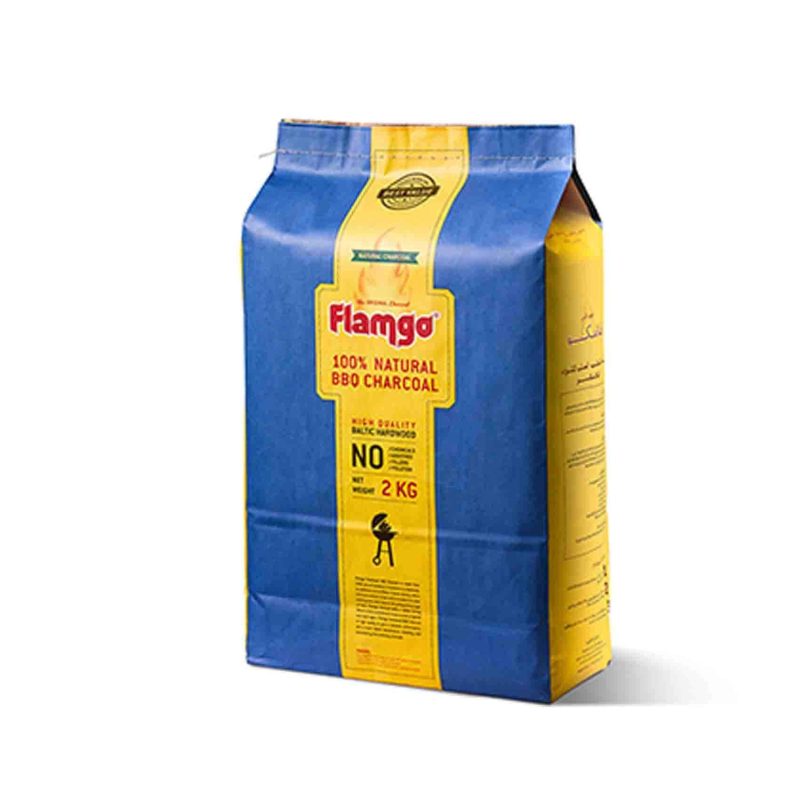
Real product reference: Flamgo 2kg natural BBQ charcoal sold through Carrefour Qatar. ALT: Charcoal 2kg Bag – compact retail barbecue charcoal packaging.
A Charcoal 2kg Bag is a compact format that may appeal to customers purchasing charcoal for occasional outdoor cooking.
Its principal commercial advantage is a relatively low total purchase price per package compared with larger bags of the same charcoal.
This can make the product suitable for buyers who do not want to purchase a large quantity at once.
For convenience retailers, smaller packs may also fit display areas where space is limited.
The format can be relevant to smaller supermarkets, neighborhood shops, outdoor recreation outlets and specialty BBQ retailers.
An actual market example is the Flamgo 2kg natural BBQ charcoal product listed by Carrefour Qatar. Its retail presentation demonstrates that the 2kg category is commercially available.
However, importers should evaluate its economics carefully.
At the same net product weight, 2kg bags require more individual packages than 5kg or 10kg formats.
For one metric ton of charcoal, the theoretical quantity is 500 bags.
That increases the number of units requiring packaging, labeling, counting and distribution.
The cost per kilogram of packaging may also be higher, depending on materials and manufacturing arrangements.
A Charcoal 2kg Bag can therefore be suitable for convenience-oriented sales, but it is not necessarily the most economical wholesale configuration.
Charcoal 5kg Bag: A Flexible Mainstream Retail Option
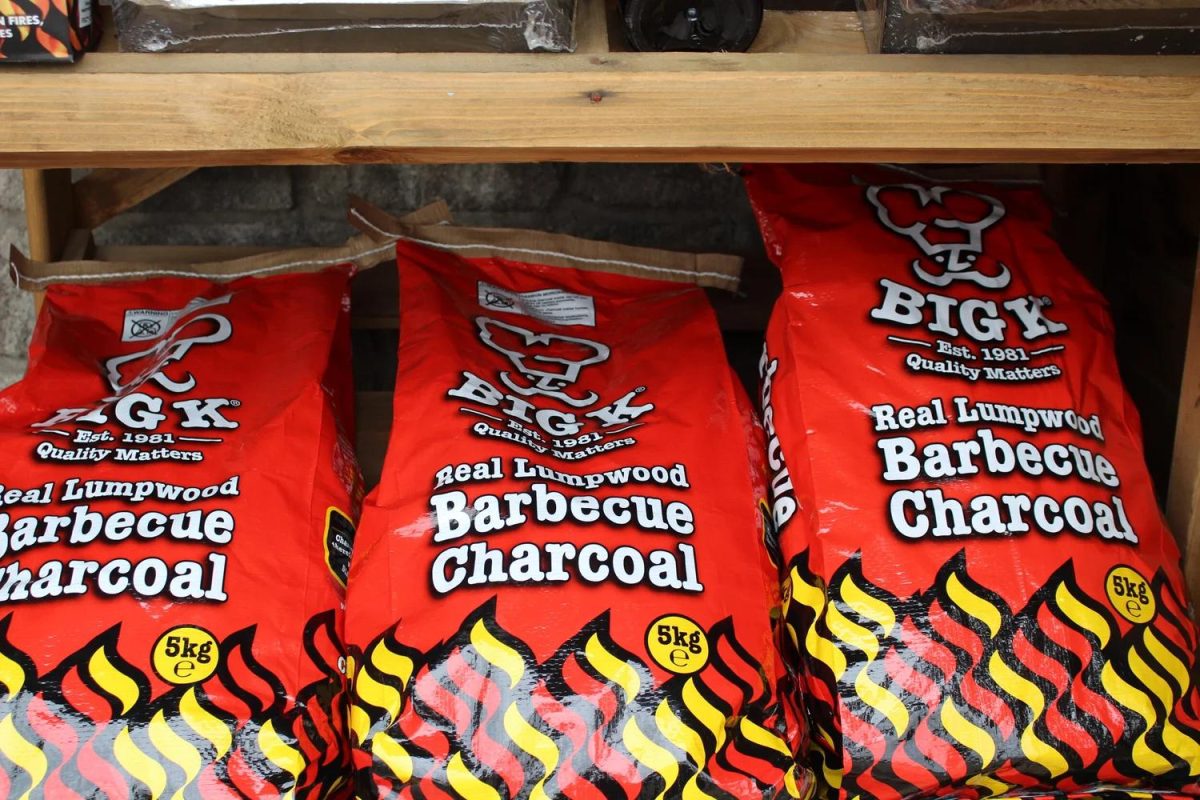
Real retail reference: Big K 5kg lumpwood charcoal displayed at Easter Compton Farm Shop. ALT: Charcoal 5kg Bag – mainstream supermarket and garden retail packaging.
A Charcoal 5kg Bag provides a middle option between compact convenience packs and larger bulk-oriented formats.
For many retailers, this size can support general household BBQ sales while remaining manageable for consumers who do not need a 10kg package.
Actual examples include Big K 5kg lumpwood charcoal, which is sold through UK retail channels.
The 5kg format may be appropriate for supermarkets, garden centers, hardware stores and specialty grilling retailers.
Its potential commercial advantage is versatility.
Compared with a 2kg bag, it contains more charcoal per package and requires fewer selling units for the same total product weight.
Compared with a 10kg bag, it offers a lower total checkout price when the underlying price per kilogram is similar.
For one metric ton of net charcoal, the theoretical requirement is 200 bags.
This may provide a manageable balance between unit quantity, shelf display and purchasing convenience.
However, Charcoal 5kg Bag demand should be validated by the target market.
Some countries favor smaller household packages, while certain specialist stores may attract customers who regularly buy larger quantities.
Importers should assess sales data and retail price expectations before choosing 5kg as the main packaging format.
Charcoal 10kg Bag: A Larger Format for Frequent Buyers
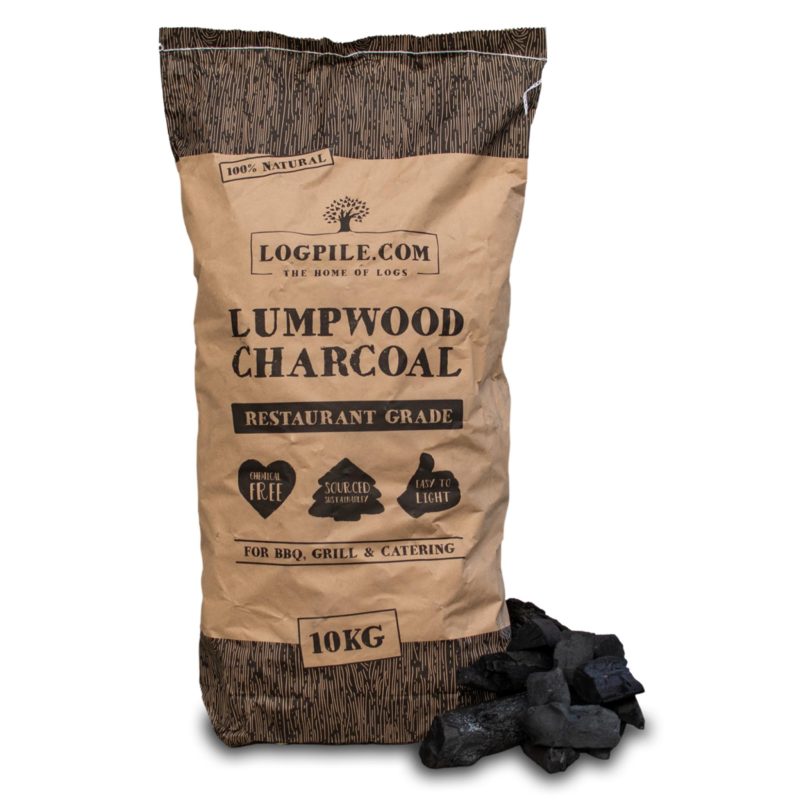
Real product reference: Logpile 10kg restaurant-grade lumpwood charcoal. ALT: Charcoal 10kg Bag – larger charcoal packaging for commercial and repeat buyers.
A Charcoal 10kg Bag is often considered for customers purchasing larger quantities of fuel.
These may include frequent household BBQ users, specialty grilling enthusiasts, foodservice operators and wholesale distributors.
A real example is Logpile’s 10kg restaurant-grade lumpwood charcoal, which is marketed to BBQ, grilling and catering customers.
The commercial benefit of the 10kg format is that fewer individual bags are needed for a given quantity of charcoal.
One metric ton corresponds to 100 bags at a net weight of 10kg each.
That is half as many packages as a 5kg configuration and one-fifth the number of 2kg packages.
However, fewer bags do not automatically guarantee lower total logistics costs.
Larger packages may require stronger materials, more careful handling and appropriate warehouse arrangements.
They also occupy more physical space per selling unit.
For retailers, the higher purchase price per bag may influence customer decisions.
For commercial buyers, the larger format may be convenient when purchasing charcoal frequently, provided it matches their handling and storage requirements.
A Charcoal 10kg Bag is therefore worth considering for bulk-oriented sales, but its suitability should be tested against the target customer segment.
Retail Charcoal Packaging vs Wholesale Charcoal Packaging
Retail Charcoal Packaging and Wholesale Charcoal Packaging serve different commercial purposes.
Retail packaging must communicate product identity, quantity and important information to customers. It may also need to fit retailer shelf requirements and barcode systems.
Wholesale packaging places greater emphasis on purchasing quantities, distribution efficiency and handling requirements.
A retailer could offer 2kg and 5kg packs to household customers while purchasing stock through a distributor in larger consolidated quantities.
A restaurant supplier might prefer 10kg bags or another bulk format based on its customers’ needs.
Vietnamese suppliers also advertise 15kg, 20kg and other formats, demonstrating that bulk packaging is not limited to the three sizes compared in this article.
Importers should therefore distinguish the retail selling unit from the packaging configuration used for wholesale distribution.
Charcoal Bag Weight: Net Weight vs Gross Weight
Charcoal Bag Weight should be clearly defined in purchasing specifications and product labeling.
Net weight refers to the weight of the charcoal itself, excluding packaging.
Gross weight includes the charcoal and its packaging.
For example, a bag containing 5kg of charcoal will have a gross weight above 5kg once the bag and other packaging components are included.
This distinction becomes important when calculating commercial quantities, transport weights and warehouse inventory.
Market-specific quantity-control regulations also matter.
In Great Britain, packaged goods within the applicable legal scope are subject to quantity-control requirements, including rules for products packed using the average system.
The EU also operates quantity-control rules for qualifying prepacked products. The voluntary ℮-mark indicates compliance with the applicable average quantity requirements; it is not a general product-quality certification.
Importers should confirm the rules applicable to their destination rather than assuming every market uses identical tolerances.
Kraft Paper, Woven PP and Custom Charcoal Packaging
Custom Charcoal Packaging can involve different bag materials, printing methods and structural designs.
Kraft paper bags are frequently used for retail products where printed presentation is important.
Woven polypropylene bags are also used in charcoal distribution, particularly for larger commercial packages.
Some designs incorporate additional layers or coatings.
However, no packaging material should be assumed to provide superior protection under every condition.
Actual performance depends on the bag construction, product characteristics and required distribution environment.
A Vietnamese packaging supplier offers kraft and woven PP configurations for charcoal, with options including custom printing and different commercial pack weights.
For OEM or private-label products, buyers should identify the packaging specifications before requesting a final quotation.
Artwork, bag dimensions, material composition, printing quantities and approval requirements may all influence commercial terms.
The selected bag should also be compatible with any applicable transport requirements.
How Packaging Size Affects Wholesale Economics
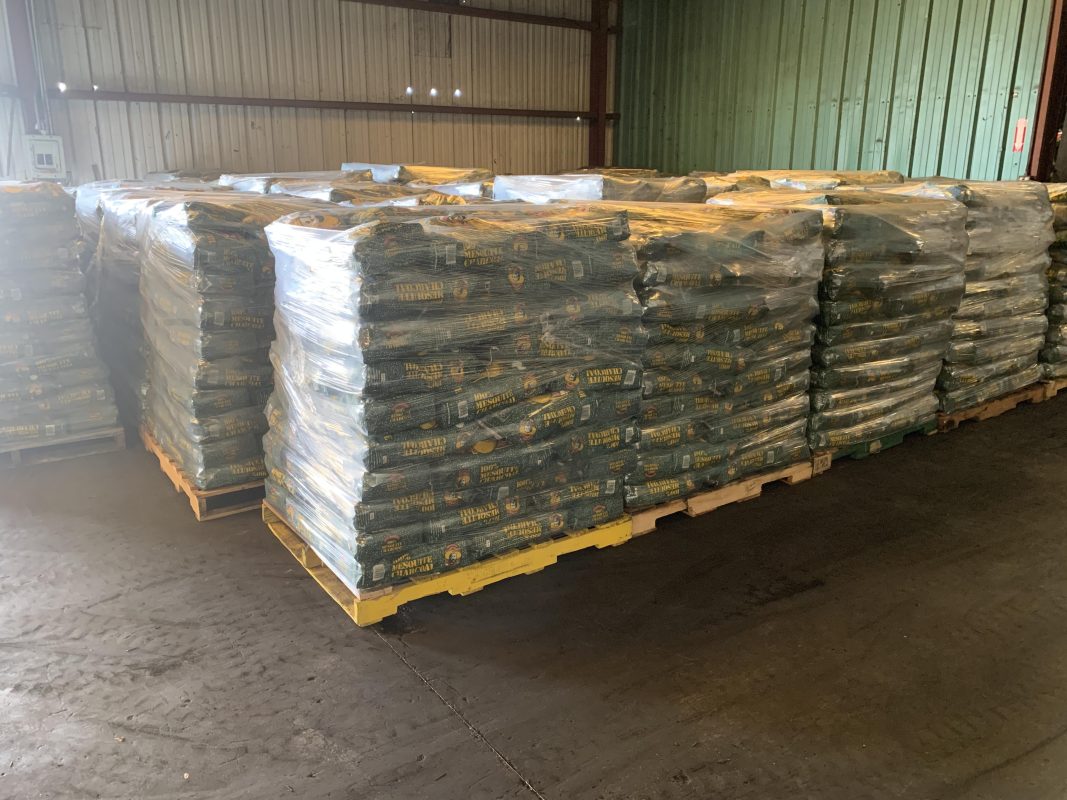
Real distribution reference: Commercial charcoal bags palletized inside a warehouse. ALT: Bulk Charcoal Packaging – wholesale charcoal pallets and distribution logistics.
The cost of Bulk Charcoal Packaging involves more than the price of each empty bag.
Importers should consider the number of selling units, packaging cost, labeling, handling, storage and distribution requirements.
The following comparison uses a hypothetical packaging-only cost assumption to illustrate how unit count affects expenditure.
| Pack size | Bags per 1,000kg | Hypothetical cost per bag | Total bag cost |
|---|---|---|---|
| 2kg | 500 | $0.18 | $90 |
| 5kg | 200 | $0.30 | $60 |
| 10kg | 100 | $0.45 | $45 |
Illustrative calculation only. These values are not actual market quotations or confirmed Vietargo packaging costs.
The example shows that larger packs can reduce packaging expenditure per metric ton under certain assumptions.
However, this does not establish that 10kg packaging is always cheaper overall.
Different bag materials, print runs, supplier minimums and distribution arrangements may change the result.
A buyer developing private-label charcoal should request quotations for multiple pack sizes using the same charcoal specifications.
This makes the comparison more meaningful.
Packaging Design, Labeling and Destination-Market Rules
Packaging design should communicate essential product information clearly.
Depending on the destination and applicable requirements, relevant details may include product identity, net quantity, responsible business information, origin declarations and appropriate warnings.
Retailers may also require barcodes, particular languages or additional identification information.
For EU markets, the Packaging and Packaging Waste Regulation began applying on August 12, 2026. The European Commission confirms that harmonized labeling and several recyclability-related obligations follow later implementation stages.
This does not mean every charcoal bag must immediately be redesigned in the same way.
Importers should review the actual packaging structure and applicable destination-market requirements.
Importantly, commercial retail packaging is not automatically approved dangerous-goods transport packaging.
Charcoal transported by sea is subject to relevant requirements under IMDG Code Amendment 42-24, mandatory from January 1, 2026. Hapag-Lloyd also applies specific charcoal shipment acceptance conditions, including requirements affecting shipments from Vietnam.
These requirements should be reviewed with qualified logistics professionals before finalizing export packaging.
Choosing Charcoal Packaging Sizes for Private Label Brands
For companies launching a charcoal brand, the most appropriate approach may be to begin with a limited range of pack sizes.
A buyer targeting convenience stores might evaluate 2kg first.
A supermarket-focused distributor could compare 2kg and 5kg, using customer purchasing data to decide whether both deserve shelf space.
A business primarily serving specialty BBQ and foodservice customers may consider 5kg and 10kg formats.
These recommendations are commercial starting points, not universal market statistics.
Before selecting Charcoal Packaging Sizes, buyers should evaluate the charcoal category, anticipated sales channel, bag dimensions, packaging material and order quantity.
For Vietargo, a Vietnam-based charcoal export business, pack-size discussions should be based on the buyer’s intended market and the specific products available for quotation.
Available packaging options, MOQ and private-label production capabilities should be confirmed directly rather than assumed.
Frequently Asked Questions About BBQ Charcoal Bag Sizes
Is a 5kg bag better than a 2kg bag?
Not necessarily. A 5kg bag offers more product per unit, while a 2kg bag may suit customers seeking smaller purchases. The better choice depends on the sales channel, customer expectations and cost structure.
Does a 10kg charcoal bag contain better-quality charcoal?
No. Charcoal Bag Weight does not determine charcoal quality. Fixed carbon, moisture, ash, physical dimensions and other product characteristics must be evaluated separately.
Can retailers sell multiple charcoal packaging sizes?
Yes. A retailer can offer several pack sizes when the range is commercially justified. However, each format creates inventory, shelf-space and purchasing considerations.
Can importers request custom-printed charcoal bags?
Custom printing is available from some suppliers. Buyers should confirm bag specifications, printing requirements, MOQ and approval procedures before placing an order.
Which pack size is best for wholesale charcoal?
There is no universal answer. Wholesale Charcoal Packaging should be selected according to the customer’s purchasing volume, the retail unit being sold, handling requirements and overall logistics costs.
Conclusion
Charcoal Packaging Sizes play an important role in product positioning, distribution and purchasing decisions.
A Charcoal 2kg Bag can be attractive for convenience-oriented sales. A Charcoal 5kg Bag offers a flexible mainstream option, while a Charcoal 10kg Bag may suit customers purchasing charcoal more frequently or in larger quantities.
However, selecting the right format requires more than comparing the amount of charcoal in each bag.
Importers must also evaluate packaging materials, net weight requirements, handling costs, retail presentation and destination-market regulations.
For businesses developing Custom Charcoal Packaging, testing product-market fit before committing to a large printing order can reduce unnecessary commercial risk.
The best charcoal pack size is the one that matches the buyer’s sales channel, customer purchasing behavior and overall distribution requirements—not simply the largest or smallest bag available
VIETARGO – THE BEST CHARCOAL OF THE WORLD TO YOUR SHELF
Website : https://vietargo.com/
Facebook : Vietargo
địa chỉ : 10 Nguyen Hien Street, 91B Residential Area, Can Tho, Vietnam
☎: 0939364888