

Global BBQ Charcoal Market: What Importers Should Watch in 2026

BBQ charcoal products used in international wholesale and distribution markets. ALT: Global BBQ Charcoal Market 2026 – natural lump charcoal and charcoal briquettes.
The Global BBQ Charcoal Market 2026 is being shaped by international demand, changing sourcing patterns, product quality expectations and stricter maritime transport requirements.
For charcoal importers and wholesale distributors, understanding market developments requires more than monitoring the quoted price per kilogram. Supply reliability, logistics expenses, product specifications and raw material traceability can all influence purchasing decisions.
The latest BBQ Charcoal Market Trends indicate that buyers should evaluate different regions and product categories separately rather than treating the global charcoal industry as a single market.
Global Charcoal Market Outlook: What Does Trade Data Show?
International trade data confirms that wood charcoal remains an important imported commodity across major markets.
According to World Bank WITS data, the European Union imported approximately 585,001 metric tons of wood charcoal, valued at US$354.64 million, in 2025.
In 2024, EU imports totaled approximately 571,115 metric tons, valued at US$330.41 million. This represents an increase of approximately 2.4% in quantity and 7.3% in value.
These figures provide useful context for the Global Charcoal Market Outlook.
However, they refer to HS 4402, which includes wood charcoal and certain shell or nut charcoal products, whether or not agglomerated.
The classification is broader than barbecue charcoal alone. Therefore, the figures should not be interpreted as a direct measurement of worldwide BBQ charcoal consumption.
For businesses evaluating the Global BBQ Charcoal Market 2026, broader trade statistics are a starting point rather than a complete market forecast.
BBQ Charcoal Demand 2026: Which Markets Matter?
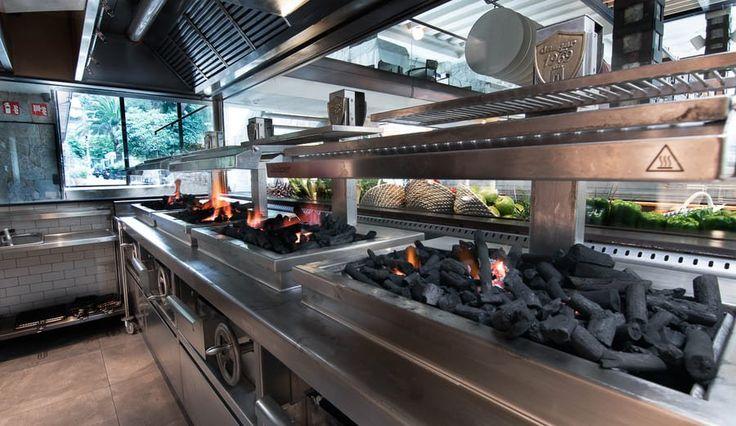
Restaurant and commercial grilling are among the applications served by the BBQ charcoal supply chain. ALT: BBQ Charcoal Demand 2026 – restaurant charcoal applications.
BBQ Charcoal Demand 2026 differs across regions, customer groups and product applications.
According to WITS, major importers of HS 4402 products in 2025 included:
-
China: Approximately 376,356 metric tons, valued at US$164.28 million.
-
Saudi Arabia: Approximately 202,006 metric tons, valued at US$124.73 million.
-
United States: Approximately 145,699 metric tons, valued at US$115.21 million.
-
Japan: Approximately 131,097 metric tons, valued at US$128.98 million.
These figures represent total imports within the stated tariff category, not exclusively charcoal used for BBQ.
Demand conditions can differ between retail grilling products, restaurant supplies and other applications of charcoal.
Seasonal outdoor grilling may influence purchasing schedules in some markets, while restaurants and foodservice distributors may place greater emphasis on predictable product performance and supply continuity.
Consequently, BBQ Charcoal Import Trends should be assessed alongside local consumption patterns and the intended customer segment.
A high national import volume does not automatically indicate strong demand for every charcoal product type.
BBQ Charcoal Suppliers and International Sourcing Competition
The BBQ Charcoal Export Market includes suppliers operating across different raw material regions and production systems.
WITS identifies Ukraine, Namibia, Cuba, Indonesia and Nigeria among the leading suppliers of HS 4402 charcoal products to the European Union in 2025.
However, these exporters do not necessarily supply equivalent products.
International BBQ Charcoal Suppliers may specialize in natural hardwood lump charcoal, coconut shell charcoal, sawdust charcoal briquettes or other manufactured charcoal products.
Each category can differ in fixed carbon, ash content, moisture, dimensions and physical characteristics.
For importers, supplier selection should therefore begin with product specifications rather than country of origin alone.
When evaluating BBQ Charcoal Suppliers, it is also important to distinguish manufacturers from trading companies and export intermediaries.
The supplier’s ability to document product specifications and maintain consistent deliveries can be as important as the initial quotation.
BBQ Charcoal Price Trends and Wholesale Purchasing Costs
Charcoal quotations should be evaluated together with product specifications and logistics costs. ALT: BBQ Charcoal Price Trends – charcoal wholesale export inventory.
BBQ Charcoal Price Trends are influenced by several factors, including raw material availability, manufacturing costs, product specifications and international freight.
Buyers must also distinguish between the product quotation and the total cost of importing the goods.
A Free on Board (FOB) quotation and a Cost, Insurance and Freight (CIF) quotation do not cover identical seller responsibilities and costs.
Customs duties, dangerous goods handling charges and destination-related expenses may further affect the landed cost.
WITS data shows that the value of EU imports under HS 4402 increased faster than imported volume between 2024 and 2025. This indicates an increase in the aggregate import unit value, but does not establish that every category of BBQ charcoal became more expensive.
Reliable BBQ Charcoal Price Trends analysis should compare quotations for equivalent products, quantities, delivery terms and time periods.
For the BBQ Charcoal Wholesale Market, product consistency and supply reliability may influence long-term purchasing costs as much as the quoted price.
Why Product Quality Matters in Bulk BBQ Charcoal Sourcing
Different charcoal types serve different commercial requirements.
Natural hardwood lump charcoal, mangrove charcoal, coconut shell charcoal and sawdust charcoal briquettes should not automatically be evaluated using identical specifications.
For Bulk BBQ Charcoal Sourcing, common quality parameters include fixed carbon, moisture, ash content, volatile matter, particle size distribution and physical integrity.
These characteristics help buyers assess whether products meet the requirements of their intended applications.
A Certificate of Analysis (COA) can provide useful laboratory findings, but its reliability depends on the sample, testing method and relationship to the actual shipment.
The Global BBQ Charcoal Market 2026 therefore presents an important distinction between products with documented specifications and products promoted mainly through general quality claims.
For international wholesalers, consistent quality between shipments is particularly relevant to inventory planning and customer expectations.
How Maritime Shipping Regulations Affect the 2026 Market
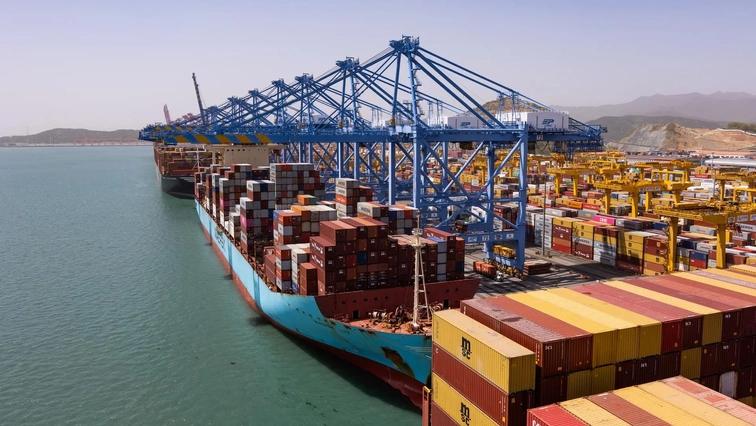
Changes in dangerous goods requirements can affect international charcoal transport arrangements. ALT: BBQ Charcoal Import Trends – container shipping and export logistics in 2026.
One significant development affecting the Global BBQ Charcoal Market 2026 is the mandatory implementation of Amendment 42-24 to the International Maritime Dangerous Goods (IMDG) Code.
The International Maritime Organization confirms that the revised provisions became mandatory on January 1, 2026.
MSC explains that the revision removed previous charcoal exemptions and introduced Special Provision 978 for charcoal classified under UN1361, with stricter requirements concerning declaration, packaging, traceability and safe transport.
Hapag-Lloyd also confirms the dangerous goods declaration requirements for charcoal falling under UN1361, Class 4.2.
These requirements can affect booking arrangements, shipping documents, freight expenses and carrier acceptance.
For importers studying BBQ Charcoal Import Trends, maritime compliance is therefore an important consideration alongside product demand and price.
Regulatory compliance should be assessed with qualified freight and dangerous goods professionals rather than relying on previous shipping practices.
Sustainable BBQ Charcoal Market and Raw Material Traceability
The Sustainable BBQ Charcoal Market is increasingly relevant to businesses sourcing wood-derived and other biomass charcoal products.
Environmental considerations extend beyond whether charcoal is produced from wood, coconut shells or agricultural residues.
Raw material legality, sourcing transparency and manufacturing practices also matter.
In the European Union, the Deforestation Regulation (EUDR) establishes obligations for certain wood-derived products, including wood charcoal products within its legal scope.
The European Council confirms application dates of December 30, 2026, for most large and medium-sized operators, and June 30, 2027, for most micro and small operators.
The exact obligations depend on product scope and the operator’s legal role.
For the Sustainable BBQ Charcoal Market, sourcing records and traceability information can help buyers evaluate compliance requirements.
However, a sustainability claim should not be treated as proof of legal compliance without supporting documentation.
What Should Importers Watch During the Rest of 2026?
Looking ahead, the Global Charcoal Market Outlook should be evaluated through actual import activity, shipping conditions and sourcing requirements.
Three developments deserve particular attention: demand changes in major importing markets, the commercial impact of updated maritime rules and the availability of reliable raw material documentation.
Within the BBQ Charcoal Wholesale Market, inventory planning and product consistency remain important for businesses supplying retail and foodservice customers.
Effective Bulk BBQ Charcoal Sourcing requires comparisons based on equivalent product specifications, credible quality information and total landed costs.
Vietargo operates in Vietnam’s charcoal export sector. As with other suppliers, purchasing decisions should be supported by product-specific specifications, relevant documents and verified commercial arrangements rather than brand claims alone.
The wider BBQ Charcoal Export Market offers different sourcing options, but their suitability depends on the intended customer and destination requirements.
Conclusion
The Global BBQ Charcoal Market 2026 continues to reflect substantial international trade activity, while shipping compliance and supply chain traceability are becoming more important considerations.
Key BBQ Charcoal Market Trends include differences in regional demand, supplier diversity, product quality expectations, logistics requirements and sourcing transparency.
Historical trade data provides valuable context for BBQ Charcoal Demand 2026, but it does not independently establish the growth rate of the worldwide barbecue charcoal segment.
For importers, the most useful approach is to combine verified market data with product testing, supplier assessment and accurate cost comparisons.
Understanding these developments can help businesses navigate the Global BBQ Charcoal Market 2026 with stronger purchasing information and more reliable sourcing decisions.
Sources & References
VIETARGO – THE BEST CHARCOAL OF THE WORLD TO YOUR SHELF
Website : https://vietargo.com/
Facebook : Vietargo
địa chỉ : 10 Nguyen Hien Street, 91B Residential Area, Can Tho, Vietnam
☎: 0939364888