

EU Packaging Rules 2026: What Charcoal Exporters Should Review
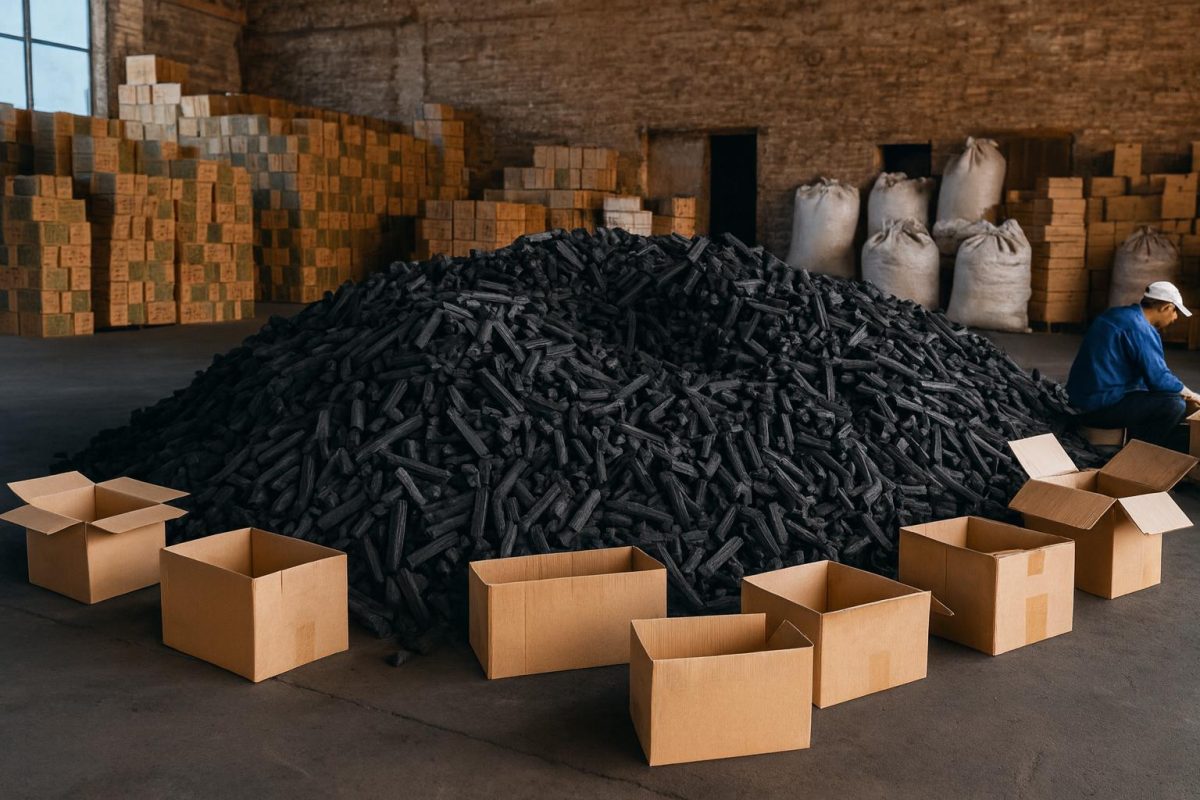
Charcoal exporters need to evaluate packaging materials and related documentation for EU-bound products. ALT: EU Packaging Regulations 2026 – charcoal packaging for European importers.
EU Packaging Regulations 2026 have introduced a significant regulatory framework for businesses manufacturing, importing and distributing packaged goods across the European Union. For charcoal exporters, these developments affect more than retail bag design. They may also involve secondary cartons, woven sacks, plastic wrapping, pallet-related packaging and the documentation used to demonstrate packaging conformity.
The central legislation is Regulation (EU) 2025/40, commonly known as the Packaging and Packaging Waste Regulation (PPWR).
The PPWR entered into force on February 11, 2025, and began applying on August 12, 2026.
Its objectives include reducing packaging waste, improving recyclability, supporting circular material use and establishing more harmonized requirements across the European Single Market.
However, exporters should understand one essential distinction: the PPWR’s application date does not mean every new packaging obligation became mandatory in August 2026.
The European Commission confirms that several major requirements, including harmonized sorting labels and recyclability-related measures, are being introduced through later implementation stages.
For international charcoal businesses, understanding these timelines is essential when evaluating EU Packaging Compliance, negotiating packaging specifications and preparing future private-label product ranges.
What Is EU PPWR 2026?
EU PPWR 2026 refers to the implementation of Regulation (EU) 2025/40 on Packaging and Packaging Waste.
The regulation establishes requirements covering packaging and packaging waste across different materials and economic sectors.
Unlike a directive that generally requires national implementation, an EU regulation applies directly according to its provisions.
The PPWR is intended to create a more harmonized legal environment for companies operating across the EU.
Its scope covers packaging made from paper, plastics, metals, glass and other materials, subject to the definitions and specific obligations within the regulation.
This broad scope matters to charcoal businesses because commercial charcoal products can involve several packaging components.
A single retail charcoal bag may be combined with cardboard grouping cartons, pallet wrapping or other protective materials during distribution.
Each component may require separate assessment.
The EU Packaging Waste Regulation therefore affects not only manufacturers of packaging materials but also companies involved in making packaged products available within the European market.
The European Commission describes the reform as part of its efforts to reduce packaging waste and strengthen the market for secondary raw materials.
For charcoal importers, the key question is not simply whether the fuel itself meets the customer’s requirements.
The packaging used to bring the product to market must also be considered.
Why EU Packaging Requirements Matter to Charcoal Exporters
Charcoal packaging can contain several materials and packaging formats. ALT: EU Packaging Requirements – charcoal retail bags, woven sacks and transport cartons.
EU Packaging Requirements may influence decisions about packaging construction, material selection, labeling and supplier documentation.
For exporters from Vietnam, charcoal is commonly marketed in different product forms, such as natural hardwood lump charcoal, mangrove charcoal and manufactured charcoal briquettes.
These products may be packed in paper bags, woven plastic sacks, plastic-lined packaging or other formats.
The PPWR does not require exporters to treat all of these packaging types identically.
Instead, businesses need to determine which materials and packaging functions are involved.
The regulation distinguishes different packaging categories, including sales packaging, grouped packaging and transport packaging.
Sales packaging generally forms a unit supplied to the end user or consumer.
Grouped packaging brings together multiple sales units.
Transport packaging supports handling and distribution while helping to prevent damage during transport.
These distinctions are relevant because different requirements can apply depending on the packaging category.
For example, a consumer sorting label may be relevant to a retail bag, while a transport packaging component may fall within an exception to that particular labeling requirement.
A successful EU Packaging Compliance review should therefore begin with a packaging inventory rather than a general statement that the product uses recyclable packaging.
EU Packaging Regulations 2026: Which Requirements Apply Now?
One of the most common misunderstandings surrounding EU Packaging Regulations 2026 concerns their effective dates.
The PPWR began applying on August 12, 2026, but numerous provisions contain later implementation dates or transitional arrangements.
The regulation introduces requirements relating to packaging composition, substances of concern, conformity procedures, labeling, recyclability and waste management.
Not every provision applies to every packaging type in the same way.
For example, the PPWR establishes restrictions involving PFAS in certain food-contact packaging.
However, a bag containing barbecue charcoal is not automatically classified as food-contact packaging merely because the charcoal is intended for preparing food.
Its actual intended purpose and the applicable legal definition must be considered.
Other important requirements, including packaging recyclability and recycled plastic content, are subject to later implementation stages.
The European Commission confirmed in August 2026 that harmonized labeling measures will follow from 2028, while significant recyclability and packaging reduction measures are scheduled from 2030.
Consequently, companies should avoid describing every future PPWR requirement as an immediate obligation.
A compliant preparation strategy identifies the provisions already applicable and the future requirements relevant to planned packaging designs.
Recyclable Packaging Requirements and Material Design
Recyclable Packaging Requirements are a central feature of the PPWR.
The regulation establishes a framework under which packaging placed on the EU market will increasingly need to meet defined recyclability criteria.
However, recyclable packaging should not be evaluated by raw material names alone.
A paper bag may contain coatings, adhesives, plastic liners or other components that influence its treatment in recycling systems.
Similarly, a woven polypropylene sack containing several attached materials may require a different assessment from a simpler single-material structure.
Material combinations, coatings, labels and other components can affect recycling compatibility.
The PPWR provides for design-for-recycling criteria and recyclability performance assessment, with major requirements beginning from 2030.
Therefore, the term Recyclable Packaging Requirements should not be interpreted as an obligation for every charcoal packaging product to obtain one universal recycling certificate immediately in 2026.
Instead, exporters should focus on identifying the actual packaging materials and understanding their characteristics.
Documentation from packaging manufacturers may help buyers determine how the materials should be evaluated.
For companies developing new charcoal product lines, understanding material composition early can also reduce uncertainty when future implementing provisions become applicable.
EU Packaging Labeling Requirements: What Changes After 2026?

EU packaging labeling requirements involve material information and implementation timelines. ALT: EU Packaging Labeling Requirements – recycling labels and charcoal packaging design.
EU Packaging Labeling Requirements are especially relevant to charcoal businesses selling retail products under their own brands.
The PPWR introduces harmonized packaging labeling intended to make material identification and waste sorting easier across Member States.
However, the harmonized material-composition labeling obligation is not universally effective from August 2026.
Under Article 12, the relevant starting date is August 12, 2028, or 24 months after the applicable implementing acts enter into force, whichever is later.
The legislation also contains exceptions for certain categories of packaging.
For example, the material-sorting label obligation generally does not apply to transport packaging, except for relevant e-commerce packaging.
Consequently, a charcoal retail bag and an outer transport carton should not automatically be assigned identical labels without assessing their legal classification.
Exporters should also distinguish mandatory labels from voluntary environmental statements.
Claims such as “recyclable,” “made from recycled materials” or “bio-based” should have adequate supporting evidence.
The European Commission’s 2026 guidance clarifies that certain harmonized labels for recycled or bio-based content are voluntary, although their use must follow the relevant harmonized specifications once applicable.
For OEM and private-label charcoal products, this creates an important coordination issue.
Packaging artwork may be designed in Vietnam, but the requirements relevant to its placement on the EU market depend on the legal framework and the specific roles of the businesses involved.
EU Packaging EPR Requirements: Who Pays and Who Registers?
EU Packaging EPR Requirements concern Extended Producer Responsibility, a framework under which qualifying producers take financial or organizational responsibility for packaging waste management.
The term producer under EPR does not necessarily refer to the physical factory manufacturing a packaging bag.
Depending on the supply chain and applicable provisions, the producer may be a manufacturer, importer or distributor.
The Swedish Environmental Protection Agency explains that, for many packaged products, the main rule identifies the economic operator established in a Member State that first makes the packaging available in that Member State.
The PPWR also establishes obligations concerning producer registration and reporting in relevant Member States.
For a Vietnamese charcoal exporter, this does not mean that every shipment automatically creates a direct EPR registration obligation in every EU country.
However, it is equally inappropriate to assume that all EPR responsibilities always belong to the importer.
The correct allocation depends on the parties’ legal roles, where products are placed on the market and the relevant national arrangements.
Different responsibilities may also apply when a company sells directly to customers across borders rather than supplying a local importer.
For commercial purposes, importers and exporters should identify who provides packaging material information, who is responsible for registration where required and who handles applicable EPR-related costs.
The contract should reflect the agreed commercial allocation without attempting to override statutory responsibilities.
Understanding Manufacturer and Producer Responsibilities
A particularly important distinction under EU Packaging Rules for Exporters is the difference between a manufacturer and a producer.
These terms can describe different responsibilities under the same regulatory framework.
The manufacturer is associated with packaging conformity obligations.
The producer is associated with extended producer responsibility for packaging waste.
The German Central Agency Packaging Register explains that an economic operator can fall within both roles, but this is not always the case in cross-border supply chains.
The European Commission’s June 2026 guidance also explains that the brand owner may be considered the manufacturer in certain circumstances because it determines the packaging design and relevant specifications.
This distinction can be particularly important for private-label charcoal.
Consider an EU distributor ordering charcoal from a Vietnamese supplier under the distributor’s own brand.
The parties may agree that the exporter fills and packs the product, while the brand owner controls the artwork and packaging specifications.
That arrangement requires a careful assessment of the relevant legal roles.
Commercial trade terms such as FOB or CIF do not automatically determine who is the manufacturer or producer under PPWR.
Those trade terms primarily address defined delivery responsibilities, costs and risks rather than all environmental compliance obligations.
Therefore, the correct approach is to examine the actual supply arrangement and applicable legal definitions.
Charcoal Packaging Requirements for Paper, PP and PE Bags

Packaging material identification helps businesses assess relevant EU requirements. ALT: Charcoal Packaging Requirements – kraft paper, polypropylene, polyethylene and cardboard samples.
Different charcoal markets use different packaging formats.
Paper bags are commonly associated with retail charcoal products, while woven PP or PE sacks may be used for larger commercial quantities.
Cartons, wrapping films and strapping materials can provide additional protection during distribution.
The EU Packaging Regulations 2026 do not establish a blanket prohibition on all polypropylene, polyethylene or paper-based charcoal packaging.
The relevant assessment depends on the specific material, packaging category, legal provision and implementation date.
For paper packaging, the presence of liners or coatings may affect its material characteristics.
For plastic packaging, exporters should identify the polymer composition and any additional layers or components.
For cardboard packaging, both its function and construction may be relevant.
Packaging redesign should not compromise the protective performance required for the product or its safe transportation.
For businesses developing new packaging for 2027–2030, maintaining clear material specifications can support future regulatory assessments.
Technical Documentation and EU Packaging Compliance
EU Packaging Compliance also involves documentation demonstrating that packaging meets the relevant requirements.
Article 15 of the PPWR establishes obligations for manufacturers concerning conformity assessment, technical documentation and the EU declaration of conformity.
The regulation specifies documentation retention periods of five years for single-use packaging and ten years for reusable packaging, calculated from the date the packaging is placed on the market.
However, identifying the responsible manufacturer remains necessary before assigning these duties to a particular company.
For charcoal exporters, packaging information may include material composition, packaging specifications, construction details and records supplied by packaging manufacturers.
Depending on the transaction and applicable requirements, additional documents may be necessary.
A charcoal laboratory Certificate of Analysis cannot automatically substitute for packaging conformity documentation.
These documents serve different purposes.
The Certificate of Analysis describes tested fuel characteristics, while packaging compliance documentation addresses requirements applicable to the packaging itself.
EU Packaging Import Rules and Commercial Costs
EU Packaging Import Rules may influence the total commercial cost of importing packaged charcoal.
Potential costs include material evaluation, artwork changes, technical documentation and EPR-related obligations where applicable.
However, there is no single EU-wide compliance cost that can be applied to every charcoal shipment.
The amount depends on the packaging materials, business responsibilities, importing country and applicable requirements.
For example, a retail charcoal product distributed to consumers may involve a different packaging structure from industrial charcoal supplied to a business customer.
Importers should therefore avoid comparing packaging compliance costs without considering the actual product and distribution arrangement.
Early access to accurate packaging information from exporters can support more efficient regulatory preparation.
What Vietnamese Charcoal Exporters Should Review

Clear packaging specifications help buyers and suppliers coordinate EU-bound charcoal orders. ALT: EU Packaging Rules for Exporters – charcoal export packaging documentation and material review.
For Vietnamese charcoal exporters, preparation for EU Packaging Regulations 2026 should focus on understanding actual packaging materials and the responsibilities of the parties involved.
Vietargo operates in Vietnam’s charcoal export industry.
For products supplied by Vietargo or other exporters, buyers should evaluate packaging specifications and supporting documentation rather than assume that a supplier’s general environmental statements establish PPWR conformity.
In private-label transactions, packaging artwork, bag construction and legal responsibilities should be discussed before commercial production.
Exporters should also distinguish PPWR requirements from the separate dangerous goods transport rules that may apply to charcoal shipments.
Compliance with packaging waste legislation does not replace maritime transport obligations under the relevant safety framework.
Conclusion
EU Packaging Regulations 2026 represent an important development in the regulation of packaging and packaging waste across the European Union.
For charcoal exporters and importers, relevant issues include packaging material identification, labeling requirements, recyclability, EPR responsibilities and technical documentation.
However, the implementation timeline is critical.
The PPWR began applying on August 12, 2026, while major harmonized labeling and recyclability requirements follow later implementation schedules.
Businesses should therefore distinguish current obligations from future requirements rather than assume that all packaging must be redesigned immediately.
For international charcoal suppliers, the most reliable approach is to maintain accurate packaging specifications, identify the legally responsible parties and assess each packaging component against the requirements applicable to its market and implementation date.
Sources & References
VIETARGO – THE BEST CHARCOAL OF THE WORLD TO YOUR SHELF
Website : https://vietargo.com/
Facebook : Vietargo
địa chỉ : 10 Nguyen Hien Street, 91B Residential Area, Can Tho, Vietnam
☎: 0939364888