

How to Verify Charcoal Quality Before Placing a Bulk Order
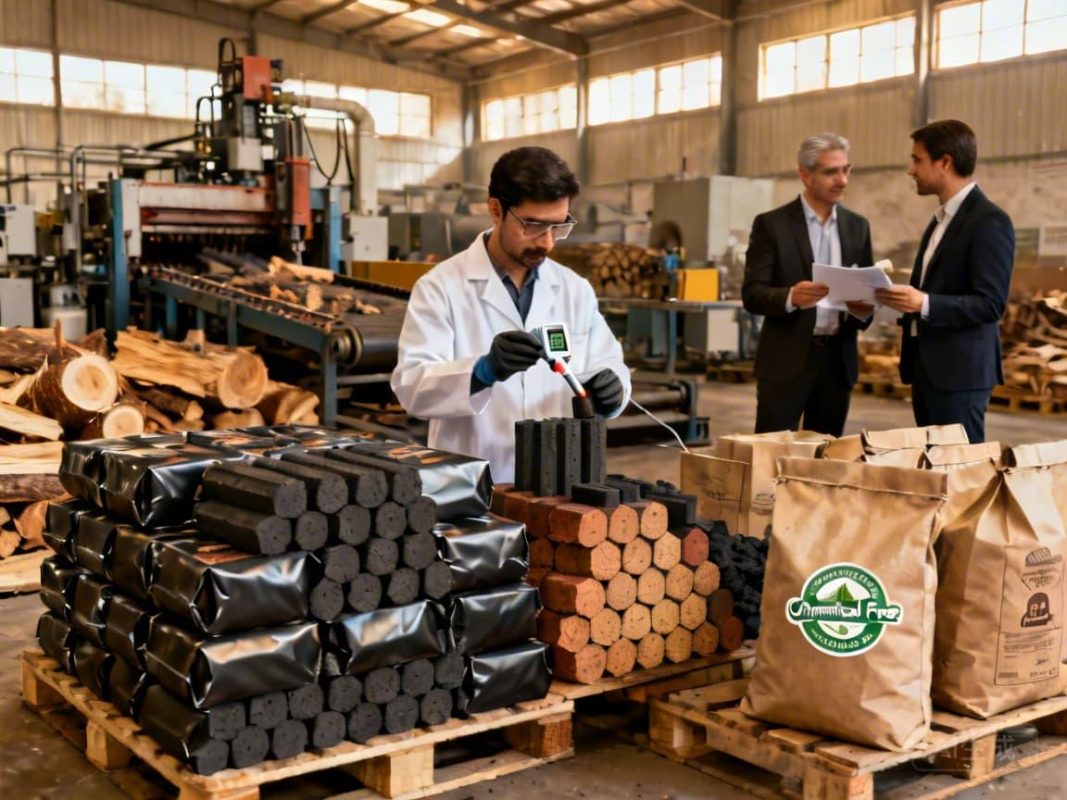
Check Charcoal Quality is an essential step before purchasing charcoal in bulk. For international importers, wholesale distributors and commercial buyers, product quality affects usability, purchasing costs and the reliability of long-term supply arrangements.
Natural hardwood charcoal, mangrove charcoal, coconut shell charcoal and sawdust charcoal briquettes have different characteristics. Their specifications should therefore be evaluated according to the product type, intended application and relevant testing standards.
A reliable Charcoal Quality Inspection process helps buyers identify potential problems before placing large orders and provides a stronger basis for comparing suppliers.
Why Checking Charcoal Quality Matters Before Bulk Purchasing
Purchasing a large shipment without sufficient quality verification may expose importers to inconsistent product characteristics, unsuitable moisture levels, excessive ash or unexpected differences between samples and delivered goods.
These issues can affect distribution, commercial costs and customer expectations.
When buyers Check Charcoal Quality, product appearance alone is not enough to determine technical performance.
Charcoal Quality Testing provides measurable information that can be compared against agreed specifications.
For international B2B transactions, reliable test results can also support product acceptance decisions and help resolve potential quality disputes.
Quality verification should therefore be considered part of the purchasing process rather than an optional activity after an order has been confirmed.
Key Parameters Used in Charcoal Quality Inspection
According to the Food and Agriculture Organization (FAO), charcoal quality can be evaluated using several physical and chemical characteristics, including fixed carbon, moisture, ash, volatile matter and particle size.
Charcoal Fixed Carbon Content
Charcoal Fixed Carbon Content refers to the proportion of fixed carbon remaining after accounting for moisture, volatile matter and ash on a consistent analytical basis.
It is an important parameter for evaluating charcoal as a solid fuel.
Higher fixed carbon levels generally indicate lower volatile matter content, although fixed carbon alone does not determine the overall suitability of a product.
When buyers Check Charcoal Quality, they should determine whether the reported fixed carbon percentage is expressed on a dry basis or an as-received basis.
Comparing results calculated using different reporting bases can lead to misleading conclusions.
Charcoal Moisture Content
Charcoal Moisture Content represents the amount of water contained in the product at the time of testing.
Moisture can influence shipment weight, storage conditions and the effective performance of charcoal as a fuel.
FAO technical guidance describes moisture levels of approximately 5–10% as common for commercial charcoal. However, this range is a general reference rather than a universal contractual limit.
For international buyers, monitoring Charcoal Moisture Content helps establish whether delivered products meet agreed specifications.
Moisture should be assessed using an appropriate recognized testing method instead of relying on visual estimates.
Charcoal Ash Content Test
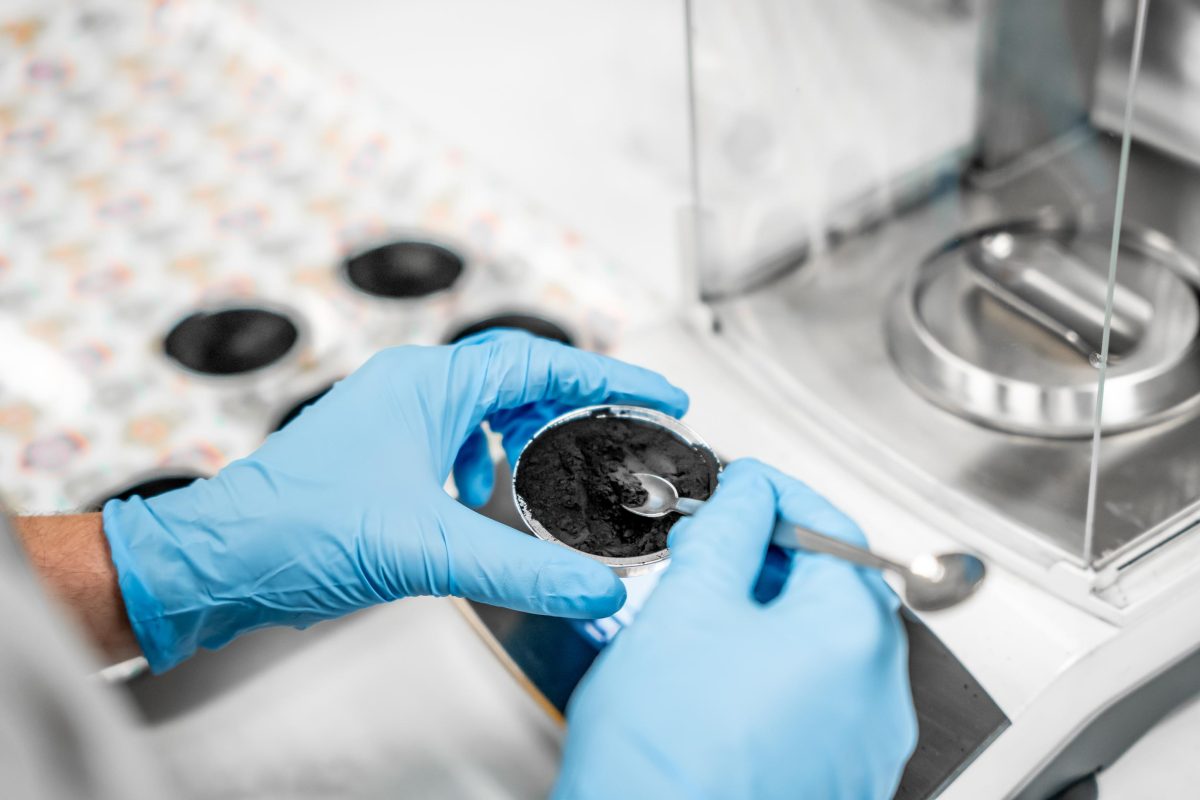
Ash content refers to the inorganic residue measured after a charcoal sample is analyzed using an applicable test method.
A Charcoal Ash Content Test helps determine the proportion of mineral residue in the product.
According to FAO, ash may contain mineral matter originating from the raw material as well as contamination introduced during handling and processing.
High ash content may be undesirable for applications requiring limited residual material.
However, the acceptable ash level depends on the product category, relevant standard and intended use.
During Charcoal Quality Testing, ash results should be compared using consistent reporting bases and suitable testing procedures.
Understanding Charcoal Quality Standards
Charcoal Quality Standards provide technical requirements and recognized methods for evaluating charcoal products.
One important reference is ASTM D1762-84(2026), which covers chemical analysis of wood charcoal, including the determination of moisture, volatile matter and ash. Its scope includes wood charcoal in lump and briquette forms.
Another reference is EN 1860-2:2023, which specifies requirements and test methods for barbecue charcoal and barbecue charcoal briquettes.
For lump barbecue charcoal, EN 1860-2:2023 specifies at least 75% fixed carbon on a dry basis, no more than 8% ash on a dry basis and no more than 8% total moisture. These requirements should not automatically be applied to every biomass charcoal product or industrial fuel.
The selection of Charcoal Quality Standards should reflect the product and the applicable market requirements.
Buyers should also distinguish between products tested according to a standard and products formally certified by an authorized certification organization.
Why Charcoal Sample Testing Is Important
Charcoal Sample Testing allows buyers to examine product characteristics before committing to a bulk purchase.
Samples can provide initial information about quality, physical appearance, size consistency and chemical specifications.
However, an approved sample does not automatically guarantee that every subsequent shipment will have identical characteristics.
When buyers Check Charcoal Quality, they should consider whether the sample can be traced to an identifiable production batch and whether it represents the goods intended for commercial delivery.
Charcoal Sample Testing becomes more useful when test results are linked to clearly defined contractual specifications.
Keeping records of approved samples and their corresponding test results can support later comparisons with delivered products.
How to Evaluate a Charcoal Certificate of Analysis
A Charcoal Certificate of Analysis (COA) is a document reporting the results of specified tests performed on a charcoal sample.
Depending on its scope, a COA may include sample identification, testing dates, analytical methods, units of measurement, test results and laboratory information.
When reviewing a Charcoal Certificate of Analysis, buyers should verify whether the reported sample is associated with the actual shipment or an earlier reference sample.
They should also examine the testing methods and the basis on which results are reported.
A COA containing acceptable values does not automatically prove that an entire shipment meets the agreed specifications if the tested sample is not representative.
For this reason, buyers who Check Charcoal Quality should consider laboratory results alongside traceability and shipment-specific inspection evidence.
The Role of Pre-Shipment Charcoal Inspection
Pre-Shipment Charcoal Inspection helps evaluate whether products are consistent with the agreed purchase specifications before dispatch.
Depending on the inspection scope, this may include packaging conditions, shipment markings, quantity checks, product appearance and comparisons with approved samples.
SGS describes cargo visual inspection services that can verify packaging, product descriptions and shipment condition during loading or unloading.
However, chemical properties cannot be fully verified through visual inspection alone.
Therefore, Pre-Shipment Charcoal Inspection may need to be supported by laboratory test results when technical specifications form part of the purchase agreement.
This process is particularly relevant for international buyers who cannot directly observe the goods before shipment.
A Practical Charcoal Quality Checklist for Bulk Buyers
A structured Charcoal Quality Checklist helps buyers review important technical and commercial information consistently.
Before confirming a bulk charcoal order, relevant items include:
-
Charcoal type, raw material and intended application.
-
Fixed carbon, moisture, ash and volatile matter specifications.
-
Product dimensions, size consistency and fines content.
-
Applicable Charcoal Quality Standards and testing methods.
-
Results from Charcoal Sample Testing.
-
Validity and traceability of the Charcoal Certificate of Analysis.
-
Packaging and storage conditions.
-
Scope of Pre-Shipment Charcoal Inspection.
-
Agreed acceptance criteria and arrangements for nonconforming goods.
The exact checklist should be adjusted to the product category and commercial requirements.
A Charcoal Quality Checklist is not a substitute for technical testing. Instead, it helps ensure that important information is reviewed before a purchasing decision.
Conclusion
Check Charcoal Quality before placing a bulk order to support informed purchasing decisions and reduce the risk of receiving products that do not meet agreed specifications.
Reliable verification combines Charcoal Quality Testing, representative sample evaluation, appropriate standards, COA review and shipment-specific inspection.
Parameters such as Charcoal Fixed Carbon Content, Charcoal Moisture Content and results from a Charcoal Ash Content Test should always be interpreted according to the product type and testing method.
Reliable charcoal quality is demonstrated not only by an attractive sample or competitive price, but by consistent technical evidence connecting agreed specifications with the products actually delivered.
Sources & References
VIETARGO – THE BEST CHARCOAL OF THE WORLD TO YOUR SHELF
Website : https://vietargo.com/
Facebook : Vietargo
địa chỉ : 10 Nguyen Hien Street, 91B Residential Area, Can Tho, Vietnam
☎: 0939364888