

Importing Charcoal from Vietnam: 7 Common Mistakes Buyers Should Avoid
Charcoal Import Mistakes can lead to unexpected expenses, inconsistent product quality, shipment delays and commercial disputes. For international businesses, Importing Charcoal from Vietnam requires more than finding competitive quotations. Buyers must also understand supplier reliability, technical specifications, shipping regulations and customs procedures.
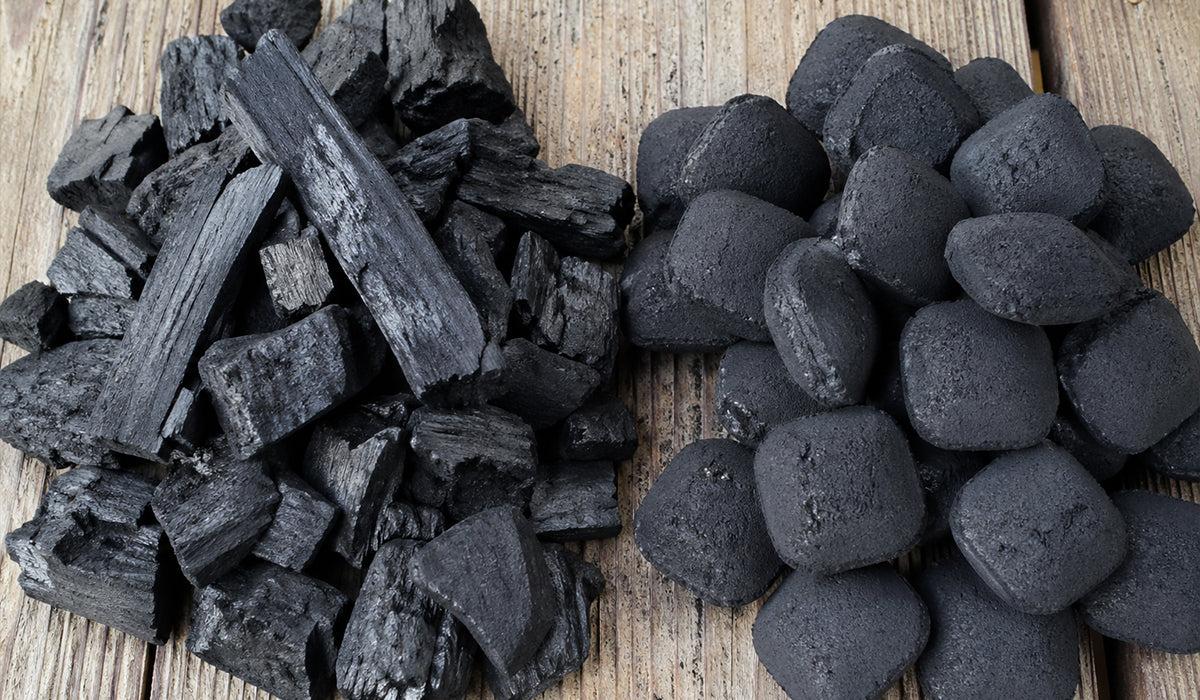
Vietnam supplies different charcoal products, including mangrove charcoal, natural hardwood lump charcoal, coconut shell charcoal and sawdust charcoal briquettes. These products serve different markets and may require different quality standards.
However, many Common Charcoal Import Mistakes occur because buyers overlook essential commercial details. Understanding these risks can support better decisions and more reliable international trade.
Choosing a Supplier Without Proper Verification
One of the most common Charcoal Import Mistakes is selecting a supplier based only on product photographs, promotional materials or an attractive quotation.
The Vietnamese charcoal industry includes manufacturers, trading companies and export intermediaries. These businesses may have different responsibilities, sourcing arrangements and operational capabilities.
Vietnam Charcoal Supplier Verification involves evaluating the supplier’s legal identity, business activities, supply capabilities and the reliability of supporting information.
A professional website does not necessarily prove factory ownership. Similarly, warehouse photographs alone cannot demonstrate consistent production capacity or product quality.
Supplier verification should focus on reliable evidence rather than unverified claims.
For long-term commercial relationships, transparency and the ability to provide consistent documentation are important considerations when assessing potential supply arrangements.
Focusing on Low Prices Instead of Product Quality
A low product price does not always represent the best commercial value.
Charcoal with excessive moisture, unsuitable ash content or inconsistent physical characteristics may affect product performance and distribution.
These issues are among the important Charcoal Import Risks faced by international buyers.
Charcoal Quality Inspection generally considers several technical parameters, including fixed carbon, moisture content, ash content, volatile matter and size distribution.
The Food and Agriculture Organization (FAO) identifies these characteristics as important factors in assessing charcoal quality and suitability for different applications.
For example, charcoal intended for restaurant grilling may require different characteristics from charcoal used in industrial applications.
Therefore, Charcoal Quality Inspection should reflect the intended use and agreed product specifications.
Focusing exclusively on price without considering these factors is one of the Common Charcoal Import Mistakes that can create problems after delivery.
Assuming Approved Samples Represent Every Shipment
An approved sample does not automatically guarantee that every production batch will have identical characteristics.
Raw material differences, production conditions and storage practices can influence the quality of commercial charcoal shipments.
Consequently, Charcoal Quality Inspection should include consideration of sample representativeness and the relationship between laboratory results and the actual goods.
A Certificate of Analysis (COA) can provide valuable technical information. However, the reliability of the results depends on the sampling process, analytical methods and testing organization.
When specifications are not clearly defined, disagreements may arise over whether delivered products meet contractual requirements.
This creates additional Charcoal Import Risks, particularly in transactions involving significant quantities or strict product requirements.
Clearly established quality criteria can provide a stronger basis for commercial evaluation.
Overlooking Import Documents and Customs Clearance Requirements
Incomplete documentation can delay shipments even when the products themselves meet agreed specifications.
When researching How to Import Charcoal from Vietnam, understanding commercial paperwork and destination-country rules is an essential part of evaluating import arrangements.
Typical Charcoal Import Documents include the Commercial Invoice, Packing List, Bill of Lading and applicable customs declarations.
Depending on the market, a Certificate of Origin (C/O), Certificate of Analysis (COA) or additional regulatory documents may also be relevant.
Vietnam’s National Trade Repository publishes information about customs procedures for exported goods. However, export documentation rules in Vietnam do not replace the import requirements of the destination country.
Charcoal Import Customs Clearance can involve product classification, customs valuation, origin verification and compliance with applicable import controls.
Requirements may differ between countries and product categories.
For this reason, Charcoal Import Documents should be evaluated according to the actual transaction rather than assuming that every market follows the same procedures.
Ignoring Updated Charcoal Shipping Requirements

Shipping compliance is one of the most significant Charcoal Import Mistakes to consider in 2026.
According to the International Maritime Organization (IMO), Amendment 42-24 to the International Maritime Dangerous Goods (IMDG) Code became mandatory on January 1, 2026.
The updated Charcoal Shipping Requirements affect the classification, declaration, packaging and documentation of charcoal covered by UN1361, Class 4.2.
Hapag-Lloyd has confirmed that charcoal falling within this classification must be declared as dangerous goods under the applicable IMDG requirements.
Individual carriers may also establish additional acceptance policies.
For example, Hapag-Lloyd introduced specific requirements for UN1361 charcoal shipments originating in Vietnam, including thermal protection and container-loading inspection documentation. These requirements represent the carrier’s acceptance policy and should not be presented as universal obligations imposed by every shipping company.
For international buyers, updated Charcoal Shipping Requirements can affect shipment acceptance, documentation costs and delivery schedules.
Relying on outdated shipping information may create serious commercial delays.
Underestimating Total Charcoal Import Costs
Another frequent mistake involves comparing quotations without considering the total cost of importing goods.
Charcoal Import Costs may include the product price, international freight, insurance, dangerous goods surcharges, port handling charges, customs clearance expenses and applicable import duties.
The selected Incoterms rule also affects how responsibilities, costs and risks are allocated.
Under Incoterms 2020, Cost, Insurance and Freight (CIF) requires the seller to arrange and pay for the agreed freight and insurance to the named destination port. However, the risk of loss or damage generally transfers to the buyer when the goods are loaded on board the vessel at the shipment port.
For containerized shipments delivered to a carrier before loading onto a vessel, the ICC notes that Free Carrier (FCA) is often more suitable than Free on Board (FOB), depending on the delivery arrangement.
Understanding these distinctions is important when assessing Charcoal Import Costs and contractual responsibilities.
A lower quoted price does not necessarily result in a lower total landed cost.
Import expenses should therefore be evaluated using equivalent product specifications and comparable commercial conditions.
Failing to Consider Shipment Delays and Supply Chain Risks
The final mistake is overlooking the possibility of delivery delays and supply interruptions.
International charcoal shipments can be affected by vessel schedules, carrier acceptance policies, documentation discrepancies and production availability.
For businesses relying on regular deliveries, unexpected disruptions may affect inventory planning and distribution commitments.
When Importing Charcoal from Vietnam, buyers should recognize that completing production does not automatically mean cargo has been accepted for maritime transportation.
Vietnam Charcoal Supplier Verification should therefore consider supply consistency, communication reliability and the accuracy of shipment information.
Contractual clarity regarding delivery expectations, product acceptance and commercial responsibilities can help reduce misunderstandings.
These considerations are particularly important for importers managing recurring orders or long-term supply relationships.
How to Avoid Common Charcoal Import Mistakes
Understanding How to Import Charcoal from Vietnam requires a balanced evaluation of commercial, technical and regulatory factors.
Reliable supplier information, appropriate Charcoal Quality Inspection, accurate Charcoal Import Documents and updated Charcoal Shipping Requirements all contribute to informed import decisions.
Buyers should also recognize that natural lump charcoal, coconut shell charcoal and sawdust charcoal briquettes are different product categories. They should not automatically be evaluated using identical technical specifications.
When assessing Charcoal Import Customs Clearance and overall Charcoal Import Costs, the destination country, product classification and agreed commercial terms remain important.
Many Common Charcoal Import Mistakes arise when only one aspect of a transaction is considered while other supply chain risks are overlooked.
Conclusion
Charcoal Import Mistakes can arise from inadequate supplier verification, inconsistent quality, incomplete documentation, outdated shipping information and inaccurate cost assessments.
For businesses involved in Importing Charcoal from Vietnam, effective commercial evaluation requires reliable information, appropriate quality standards and a clear understanding of applicable regulations.
Supplier transparency, technical verification and awareness of international transport requirements are particularly important in 2026.
Avoiding common Charcoal Import Mistakes helps reduce Charcoal Import Risks and supports more reliable international charcoal supply chains.
Sources & References
VIETARGO – THE BEST CHARCOAL OF THE WORLD TO YOUR SHELF
Website : https://vietargo.com/
Facebook : Vietargo
địa chỉ : 10 Nguyen Hien Street, 91B Residential Area, Can Tho, Vietnam
☎: 0939364888