

Why Does Charcoal Break During Shipping? What Importers Should Know
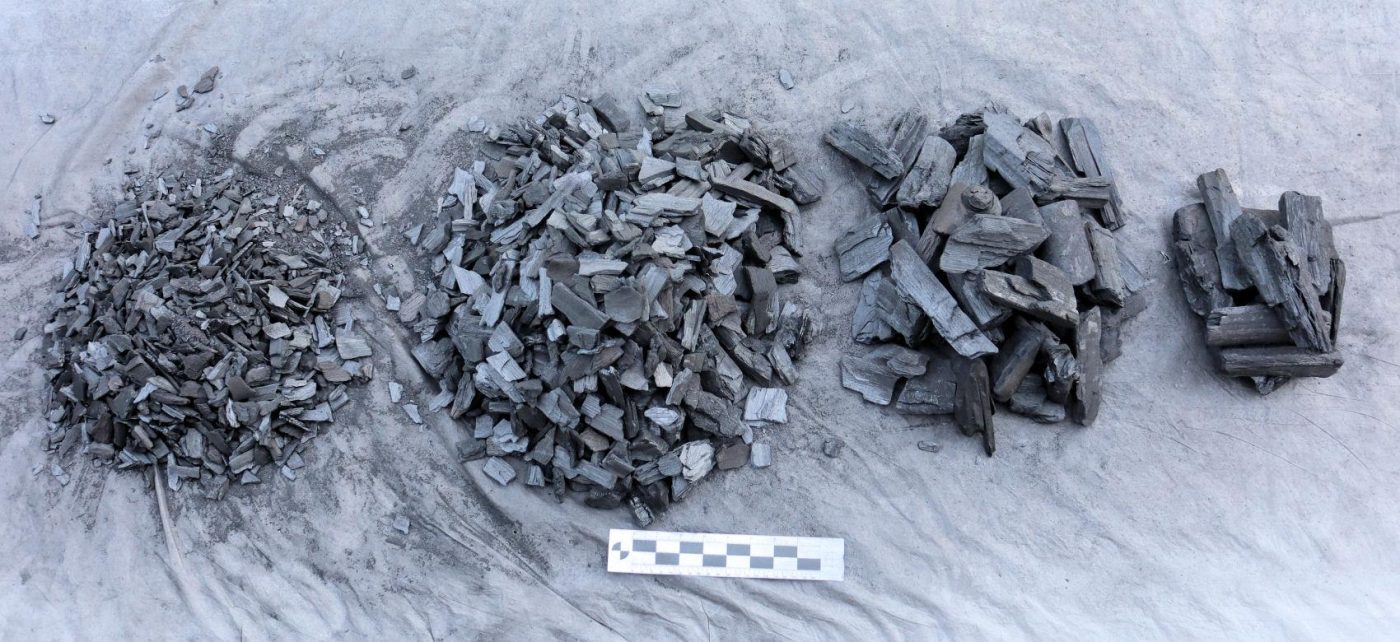
A charcoal shipment leaves the supplier’s warehouse with large, carefully sorted pieces. When it reaches the importer’s destination, some bags contain shorter pieces, broken edges and charcoal dust.
The shipment may still contain the correct net weight, yet the buyer may find that a portion of the product no longer meets customer expectations.
This is one of the most frustrating problems in international charcoal trading.
Charcoal Breakage During Shipping can affect resale value, customer satisfaction and the percentage of material that meets a particular commercial grade.
However, broken charcoal is not always evidence of poor manufacturing or supplier misconduct.
Charcoal is naturally brittle. During international distribution, physical stresses can arise from repeated handling, movement inside packages, transportation conditions and unloading.
According to the Food and Agriculture Organization (FAO), charcoal’s friability—its tendency to fracture and turn into smaller particles—is a major characteristic affecting transportation and distribution.
For importers, the commercial challenge is understanding which factors contribute to breakage, what constitutes an unacceptable level of damage and how to evaluate shipments fairly.
This guide examines the physical causes of charcoal breakage, compares the vulnerability of different product types and explains how wholesale buyers can manage shipment quality expectations.
A Container Can Arrive on Time—and Still Create a Quality Problem
Imagine a distributor ordering 15 metric tons of natural lump charcoal for restaurant customers.
The supplier prepares the goods according to an agreed product specification. The shipment departs on schedule and arrives at the destination port without a significant delay.
However, the buyer discovers that several bags contain more broken material than expected.
From a transportation perspective, the delivery was successful.
From a commercial perspective, the situation may be more complicated.
Restaurant customers might require charcoal pieces within a defined size range. Smaller fragments could be less suitable for those particular contracts, even though they remain charcoal.
This illustrates an important distinction between Charcoal Shipping Damage and simple shipment quantity.
A container’s arrival does not establish that every package has retained its original physical condition.
Similarly, a correct net weight does not guarantee that the product meets an agreed size distribution.
Importers should therefore evaluate charcoal deliveries using both quantity records and relevant physical-quality specifications.
Why Charcoal Breaks During Shipping: The Science of a Brittle Material
Charcoal is produced through thermal decomposition of organic material, which changes its internal structure.
The finished material can be relatively fragile when subjected to mechanical forces.
Unlike flexible packaging materials, charcoal pieces may fracture rather than deform when stressed.
The FAO identifies breakage and the generation of small charcoal particles as recurring problems during handling and transportation. It also explains that a charcoal product’s physical behavior can differ according to its production characteristics.
This does not mean that all charcoal products have identical durability.
Natural lump charcoal can vary significantly in shape and structure.
Manufactured charcoal briquettes may have different mechanical characteristics, depending on their composition and manufacturing process.
A peer-reviewed study published in Biomass Conversion and Biorefinery in 2025 reported differences in physical integrity between the lump charcoal and briquette products it examined. It associated greater fine-particle generation in the studied lump charcoal with its relatively fragile structure.
Those results should not be generalized to every charcoal product.
The appropriate conclusion is that Charcoal Durability should be evaluated for the specific material being purchased, rather than inferred solely from its category.
Four Commercial Sources of Charcoal Breakage
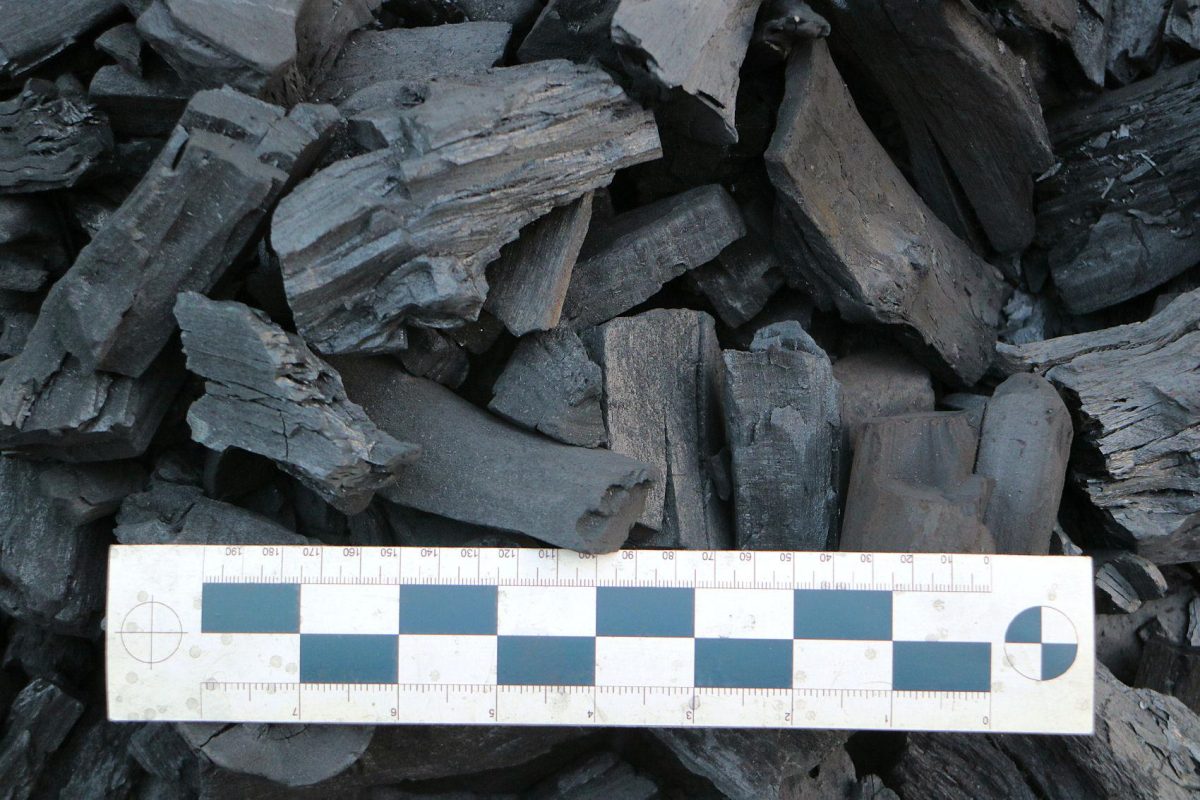
Understanding Charcoal Breakage Causes requires looking at the movement of goods across the supply chain.
Repeated handling
Charcoal may be handled at several points between production and final distribution.
Each handling stage introduces opportunities for physical stress.
The FAO identifies loading and unloading as significant contributors to the production of charcoal fines and notes that additional handling stages can increase breakage.
For buyers, this means the number and nature of handling stages can be relevant when investigating a damaged shipment.
Compression
Compression occurs when charcoal pieces or their packaging experience pressure from surrounding material.
Its effect depends on the product’s physical strength and the overall packaging system.
A research paper examining charcoal briquette mechanical properties identifies compression and contact between briquettes as contributors to degradation during transportation.
Impact
Sudden mechanical impacts can cause charcoal pieces to fracture.
The same study identifies impact-related breakage as one of the mechanisms relevant to charcoal briquette durability.
Not every impact results in visible damage, and the effect depends on the product’s characteristics.
Abrasion and repeated contact
Charcoal pieces can rub against each other or against the packaging interior during transportation.
Over time, this can contribute to chipped edges, smaller particles and dust.
For Charcoal Handling Damage, the important point is that breakage may develop progressively.
A shipment does not necessarily experience one major incident that explains every damaged piece.
Instead, small physical changes can accumulate across the distribution process.
What Counts as Broken Charcoal?
Not every small charcoal piece should automatically be classified as shipping damage.
Different commercial products contain different size distributions.
For example, a natural hardwood charcoal bag may legitimately include irregular pieces of several sizes.
Manufactured briquettes, meanwhile, may be sold in defined lengths or shapes.
A useful inspection must therefore distinguish the product’s intended size distribution from material that falls outside the agreed specification.
Some markets and production processes can use smaller charcoal material.
However, the resale value of fragments depends on their cleanliness, dimensions, specifications and the intended buyer.
A shipment intended for large-piece restaurant charcoal cannot automatically be treated as equivalent when a significant portion becomes undersized.
The commercial issue is conformity with the purchase agreement.
Charcoal Packaging for Shipping: Why the Entire Package Matters
Packaging can influence the physical condition of charcoal during distribution.
However, Charcoal Packaging for Shipping should not be judged only by the appearance or thickness of an empty bag.
A commercial packaging system includes the outer material, package dimensions, closure, product arrangement and the conditions under which the package is transported.
Kraft paper bags, woven sacks and cartons are all encountered in charcoal markets, but their suitability depends on the application and technical requirements.
For manufactured briquettes, a supplier’s packaging system may have been developed for products with relatively uniform dimensions.
Irregular natural charcoal pieces can create different contact points and stresses.
A packaging format that performs acceptably for one charcoal category may therefore produce different results with another.
The practical question for importers is whether the complete packaged product has been evaluated for its intended distribution conditions.
A supplier’s marketing claim that its packaging is “strong” does not independently establish that the charcoal inside will remain intact.
Packaging specifications should be documented, and any proposed changes should be reviewed against the purchasing agreement.
Charcoal Container Loading and Transport-Related Damage
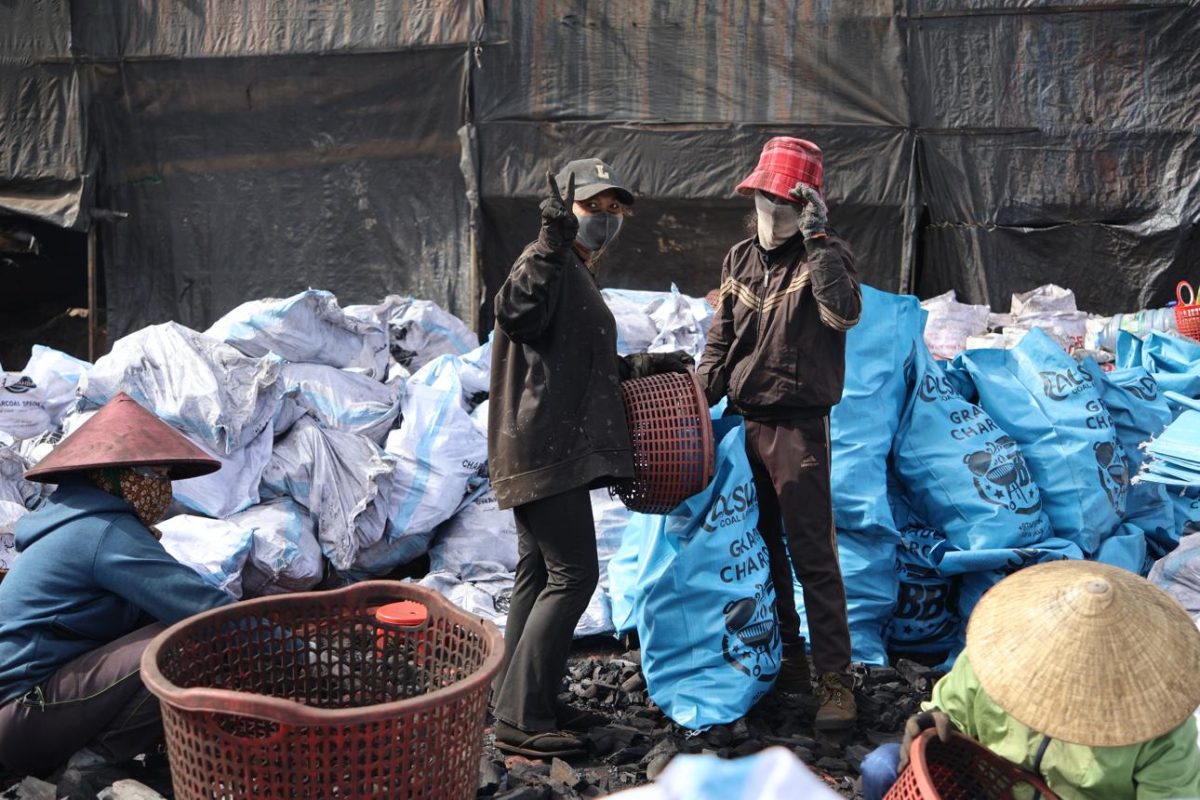
Charcoal Container Loading is another factor relevant to assessing physical damage.
The distribution journey may involve multiple transport providers, terminal movements and warehouse transfers.
Each stage introduces potential handling stresses.
However, container loading must also comply with applicable dangerous-goods requirements.
Charcoal has specific hazards associated with self-heating, and packaging arrangements cannot be selected solely to minimize breakage.
The International Maritime Organization confirms that IMDG Code Amendment 42-24 became mandatory on January 1, 2026.
The updated framework applies dangerous-goods requirements to charcoal under UN1361, Class 4.2.
Hapag-Lloyd’s published guidance also identifies specific charcoal acceptance conditions related to compliant packaging, documentation and carriage.
For international buyers, this creates two separate requirements:
Physical product protection: The packaged charcoal should meet the commercial condition expected by the buyer.
Transport safety and compliance: The shipment must meet the applicable regulations and carrier acceptance requirements.
A packaging method that appears to reduce breakage should not be adopted if it conflicts with dangerous-goods rules.
Container preparation and loading arrangements should be handled by appropriately qualified professionals.
How Much Broken Charcoal Is Acceptable?
There is no single universal breakage percentage appropriate for every commercial charcoal shipment.
The acceptable level depends on the product, destination market and contractual specification.
Some buyers require relatively large natural pieces, while others purchase manufactured charcoal in specific shapes.
A small amount of broken material may be commercially acceptable in one transaction and problematic in another.
For this reason, buyers should distinguish between an observed percentage and an agreed maximum.
Consider the following hypothetical example.
A buyer receives 1,000kg of charcoal. A representative inspection identifies 60kg of material below the contractual minimum size.
The observed undersized proportion is:
Whether 6% constitutes a shipment failure depends on the actual contract and how the inspection samples were selected and measured.
The calculation alone does not determine compliance.
If the purchasing agreement permits a maximum of 5% undersized material using the same measurement basis, the result would exceed that illustrative limit.
If the agreement has no defined tolerance, the parties may face a more complicated dispute over expectations.
A breakage percentage is meaningful only when the size threshold, sampling method and acceptance criteria are clearly defined.
How Shipping Damage Can Affect Import Costs
A broken charcoal piece may retain some commercial value, but it may no longer be suitable for its intended customer.
This is why Broken Charcoal in Shipment can affect the economics of wholesale purchasing.
Consider two hypothetical deliveries of the same charcoal grade.
| Commercial factor | Shipment A | Shipment B |
|---|---|---|
| Purchased net weight | 10,000kg | 10,000kg |
| Total purchase cost | $6,000 | $6,000 |
| Contract-conforming share | 97% | 90% |
| Conforming quantity | 9,700kg | 9,000kg |
| Cost per conforming kg | $0.619 | $0.667 |
Illustrative example only. The nonconforming portion is assumed to have no recovery value. Actual prices, damage rates and recovery values will differ.
Shipment B has the same original purchase cost but a higher effective cost per kilogram of contract-conforming material.
The buyer may also face additional expenses related to sorting, inspection or customer disputes.
However, the commercial impact should not automatically be described as a total loss.
Some fragments may have recoverable value in another product category or sales channel.
The appropriate calculation depends on the actual condition and available market.
For importers, the key lesson is that a competitive price per metric ton does not necessarily translate into the lowest cost of saleable product.
Charcoal Quality Inspection: What Can Be Verified at Arrival?
Charcoal Quality Inspection can help establish whether the goods meet their agreed physical specifications.
However, not every visible irregularity is evidence of transportation damage.
An inspection should distinguish the observed condition of the shipment from the cause of any discrepancy.
For example, a large quantity of short charcoal pieces may result from breakage, sorting practices or a mixture of both.
An arrival photograph can show what the product looks like, but it does not automatically establish when the pieces became smaller.
Likewise, a pre-shipment inspection report can document earlier conditions without guaranteeing that the goods will remain physically unchanged during transportation.
When commercial disagreements arise, relevant evidence may include packaging records, inspection results, product specifications, shipment identification and appropriately documented arrival observations.
Importers should also distinguish commercial quality inspection from dangerous-goods safety inspection.
These processes address different requirements.
What If the Shipment Contains More Broken Charcoal Than Expected?
A buyer who discovers an apparent discrepancy should first evaluate it against the purchase agreement.
The relevant question is not whether some charcoal is broken, but whether the delivered material exceeds the agreed tolerances or otherwise fails the contractual specification.
The buyer should establish the nature and extent of the difference through appropriate evidence.
The supplier, freight provider or insurer may need to be involved depending on the relevant circumstances and contractual arrangements.
It is important not to assume that responsibility always belongs to the exporter.
Likewise, a carrier should not automatically be blamed without evidence linking the damage to the transportation period.
Commercial remedies depend on the sales agreement, applicable legal rules, insurance coverage and any valid claim procedures.
Timely communication is important because notification requirements may apply.
For international buyers, objective evidence and clearly defined contractual criteria provide a stronger basis for resolving disputes than a collection of photographs alone.
How to Prevent Charcoal Breakage: A Buyer-Focused Approach
The question of How to Prevent Charcoal Breakage is best approached as a combination of commercial specification, product suitability and professional logistics management.
No supplier can reasonably guarantee that every natural charcoal piece will remain identical through every stage of distribution.
However, buyers can reduce uncertainty by requesting clear information before placing an order.
The most useful considerations include the product’s documented physical characteristics, an agreed definition of undersized material, packaging suitability, applicable transport requirements and the point at which product condition is assessed.
For repeat orders, importers may also compare historical inspection findings to identify whether variations are isolated incidents or recurring commercial issues.
Research on charcoal briquettes shows that impact, compression and abrasion can contribute to mechanical degradation during transportation. Consequently, the entire product and packaging system matters—not simply the strength of one piece of charcoal.
Any changes to transportation packaging or cargo arrangements must be reviewed for compliance with applicable dangerous-goods rules.
The realistic objective is to reduce avoidable physical damage while maintaining lawful, safe transportation and meeting the agreed customer specification.
A Practical Purchasing Scenario: Large Charcoal vs Smaller Pieces
Suppose two restaurant distributors purchase the same category of natural hardwood charcoal.
The first sells mixed-size charcoal to customers who accept a relatively broad size distribution.
The second supplies restaurants that require larger, intact pieces.
Both distributors receive shipments containing some broken charcoal.
Their commercial reactions may be different.
The first distributor may find the goods acceptable because the material remains within its agreed product range.
The second may determine that the shipment contains too much undersized material for its customers.
Neither conclusion can be established by the product name alone.
This demonstrates why charcoal size distribution, durability and acceptance criteria must be evaluated according to the actual market.
A supplier cannot identify the right commercial tolerance without understanding the buyer’s requirements.
Working With Vietargo on Charcoal Import Requirements
Vietargo operates in Vietnam’s charcoal export sector.
For international buyers considering charcoal supplied by Vietargo, a purchasing inquiry should describe the intended charcoal type, preferred dimensions, packaging and commercial quality requirements.
Importers concerned about breakage can also clarify the acceptable size distribution and the inspection arrangements relevant to their transaction.
Specific product grades, packaging availability, test documentation and supplier capabilities must be confirmed directly.
The purpose of these discussions is to establish a clear commercial understanding before the order is finalized.
Conclusion: Not All Broken Charcoal Means a Failed Shipment
Charcoal Breakage During Shipping is a genuine challenge in international charcoal distribution because charcoal is naturally brittle and can be affected by mechanical forces.
Repeated handling, compression, impact and abrasion can contribute to changes in piece size and the generation of fragments.
However, not every broken piece represents a commercial defect.
For importers, the important distinction is between normal product variation and material that fails the agreed specification.
The goal is not to promise zero breakage. It is to define acceptable product condition, assess shipments consistently and understand the financial impact when delivered charcoal falls outside those requirements.
Clear specifications, suitable packaging, reliable inspection evidence and professionally managed logistics can help buyers make more informed purchasing decisions.
VIETARGO – THE BEST CHARCOAL OF THE WORLD TO YOUR SHELF
Website : https://vietargo.com/
Facebook : Vietargo
địa chỉ : 10 Nguyen Hien Street, 91B Residential Area, Can Tho, Vietnam
☎: 0939364888