

Hexagonal Sawdust Charcoal: Understanding Shapes and Specifications
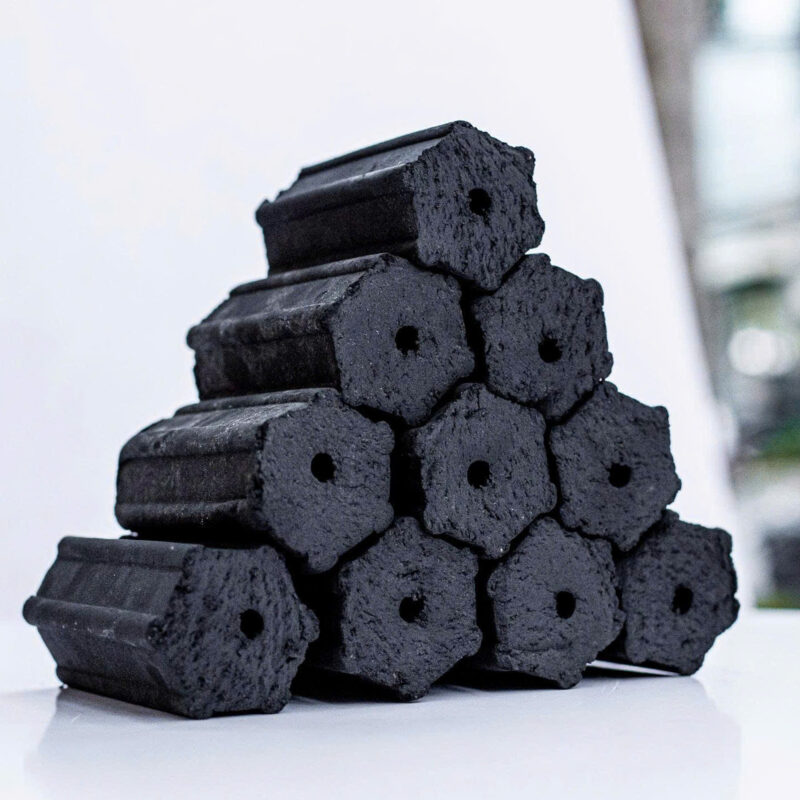
Hexagonal Sawdust Charcoal is a manufactured charcoal product recognized for its six-sided profile, elongated structure and distinctive central opening. Unlike natural lump charcoal, which retains irregular characteristics of carbonized wood, this product is formed into a more consistent physical shape.
For international buyers, these differences are important because charcoal dimensions and structural integrity can influence product selection, packaging specifications and commercial inspection.
Hexagonal briquettes are marketed in different lengths, diameters and quality categories. Some suppliers offer relatively long sticks, while others provide shorter segments for particular buyers.
However, the term hexagonal sawdust charcoal does not describe a single internationally standardized size or quality level.
Manufacturers may use different dimensions, raw materials, technical specifications and commercial grade names.
For importers purchasing Hexagonal Sawdust Charcoal Briquettes, understanding these variations is essential when comparing quotations and approving samples.
This guide examines the product’s defining characteristics, common size ranges, dimensional measurements, structural quality and the information buyers should review before placing wholesale orders.
What Is Hexagonal Sawdust Charcoal?
Hexagonal Sawdust Charcoal is a form of manufactured charcoal commonly associated with compressed sawdust that has been carbonized into a finished fuel product.
It is also marketed under names such as sawdust charcoal briquettes and, in some markets, Ogatan charcoal.
The defining commercial characteristics are its elongated shape, six-sided exterior and, in many products, a longitudinal hole through the center.
These features distinguish it from irregular hardwood lump charcoal or charcoal made from naturally shaped wood pieces.
Vietnamese supplier DaVieGo describes sawdust charcoal produced from compressed hardwood sawdust, offered in hexagonal or square bars with a central opening.
The shape is manufactured rather than inherited directly from a natural wood log.
As a result, buyers can request dimensions and physical consistency that may be more difficult to specify for irregular lump charcoal.
Nevertheless, Hexagonal Charcoal Briquettes are not all identical.
The raw material, compaction characteristics, carbonization results and final product sorting can differ between manufacturers.
Importers should therefore evaluate the actual specification instead of assuming every six-sided briquette provides the same performance.
Why Does Hexagonal Charcoal Have Six Sides?
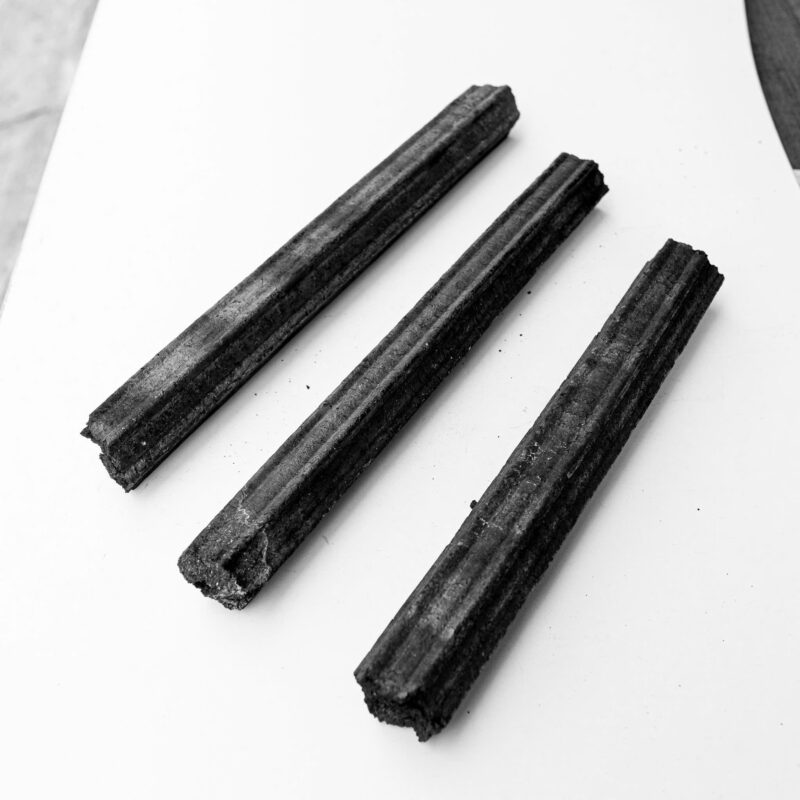
One of the most recognizable Sawdust Charcoal Shapes is the six-sided bar.
A hexagonal profile creates a product with defined flat surfaces and visible edges. Compared with irregular charcoal pieces, this geometry can make dimensional descriptions and product inspection more consistent.
Buyers can evaluate the width of a sample, the shape of its cross-section and the percentage of pieces that retain their intended form.
The flat surfaces may also influence the way pieces fit together inside cartons.
However, hexagonal geometry does not guarantee a particular loading efficiency because actual packing results depend on length, size distribution, arrangement and packaging dimensions.
Manufacturers also offer other profiles, including square and round briquettes.
For example, Natenco lists several manufactured sawdust charcoal forms, including hexagonal, square and solid-stick products.
This highlights an important distinction: shape is a product specification, not a universally accepted measure of fuel quality.
A buyer should choose a hexagonal profile because it meets the intended market’s requirements, not simply because it appears more uniform than other forms.
Understanding the Central Hole in Hexagonal Charcoal Briquettes
Many Hexagonal Sawdust Charcoal Briquettes contain a continuous opening running through the center.
This is commonly called the central hole, center bore or hollow core.
The opening is a deliberate physical feature of the finished product.
It can influence airflow around the fuel and the amount of material contained within a piece of a given external size.
However, a central hole does not automatically guarantee higher temperature, longer burning duration or superior quality.
Those characteristics depend on multiple variables, including fuel composition, density, moisture and testing conditions.
The hole also reduces the volume of material within the same external dimensions.
Therefore, two hexagonal briquettes with identical exterior measurements but different center-hole diameters may have different masses.
This is important when evaluating Hexagonal Charcoal Dimensions.
A product described only as 40mm in diameter may still vary considerably depending on the size of the hollow center.
For commercial orders, the center-hole dimension should be specified separately when it matters to the buyer.
Hexagonal Charcoal Sizes: Common Commercial Dimensions
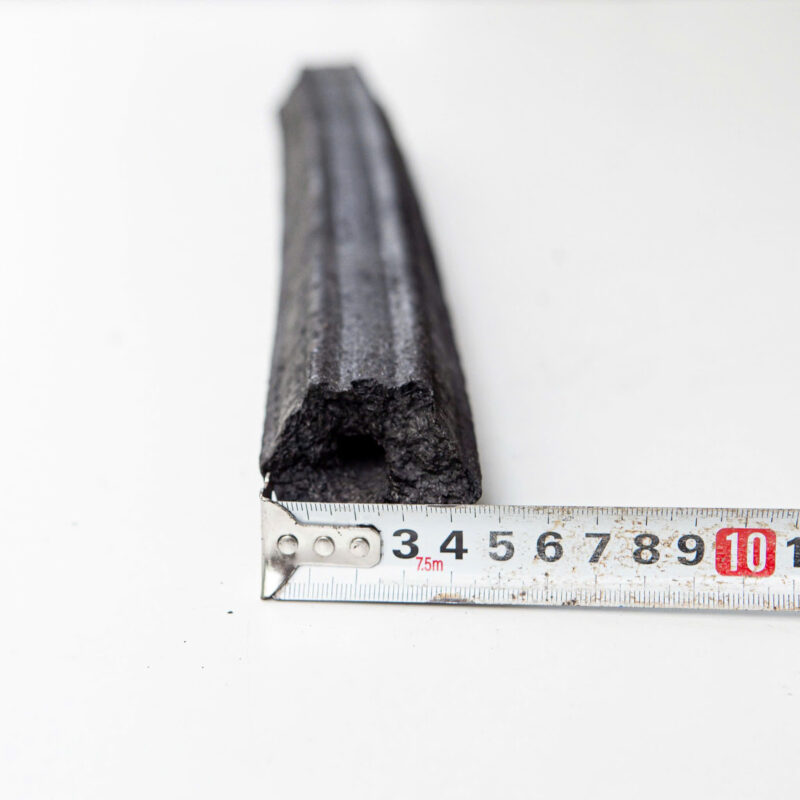
Hexagonal Charcoal Sizes vary among suppliers.
Some manufacturers produce longer sticks, while others offer shorter cut lengths to meet different commercial requirements.
Published examples from Vietnamese suppliers illustrate this variation.
For Sawdust Charcoal Briquette Sizes, the most useful purchasing approach is to specify actual measurements rather than request a generic medium or large grade.
Hexagonal Charcoal Dimensions: What Should Buyers Measure?
Hexagonal Charcoal Dimensions should be defined using a consistent measurement method.
A complete product description may include the exterior width, bar length, center-hole diameter and allowable deviations.
For a regular hexagonal profile, buyers may measure across two opposite flat faces or across two opposite corners.
These dimensions are not identical.
Therefore, the word diameter can be ambiguous when applied to a six-sided product.
If one supplier measures across flats and another measures across corners, their quoted dimensions may appear different even when their products have similar overall proportions.
For international purchasing documents, buyers should state the measurement method explicitly.
A physical sample or technical drawing can help clarify these requirements.
Commercial tolerances should also account for the fact that charcoal is a brittle material and its finished surfaces may not be perfectly geometric.
A nominal 40mm product, for example, should not automatically be interpreted as having zero allowable dimensional variation.
The relevant tolerances must be agreed between buyer and supplier.
Sawdust Charcoal Shapes: Hexagonal, Square and Round
Although this article focuses on hexagonal products, buyers may encounter several Sawdust Charcoal Shapes when comparing manufacturers.
Square briquettes have a different exterior profile and may be supplied with or without an internal opening.
Round briquettes can feature cylindrical shapes, while solid-stick products omit the central hole.
Each form should be evaluated according to its actual dimensions, product integrity and intended commercial application.
No single shape automatically guarantees the highest fixed carbon, lowest ash content or longest burning duration.
For buyers comparing Hexagonal Charcoal Wholesale offers, requesting samples of the specified form is more useful than assuming that all manufactured charcoal is interchangeable.
Long Sticks vs Short-Cut Hexagonal Charcoal
The length of a hexagonal briquette is an important commercial characteristic.
Long sticks may be suitable for product ranges where intact elongated pieces are preferred.
Short-cut briquettes may be appropriate for customers requiring smaller pieces or more compact packaging.
However, there is no universal international grading system that assigns the same length ranges to every manufacturer.
For example, Yellow Star Industrial Fuel lists sawdust charcoal categories of 5–10cm, 10–20cm and 20–27cm.
These ranges are useful examples, but they should not be described as mandatory industry specifications.
Buyers should also distinguish intentionally cut pieces from charcoal that breaks during handling.
A cleanly cut short product and an irregular broken fragment may have similar lengths but different physical characteristics.
This distinction can matter when the contract specifies appearance or the percentage of intact pieces.
A professional specification should therefore define the acceptable product length, shape and breakage tolerance rather than relying on grade names alone.
Hexagonal Charcoal Quality: Physical Integrity and Consistency
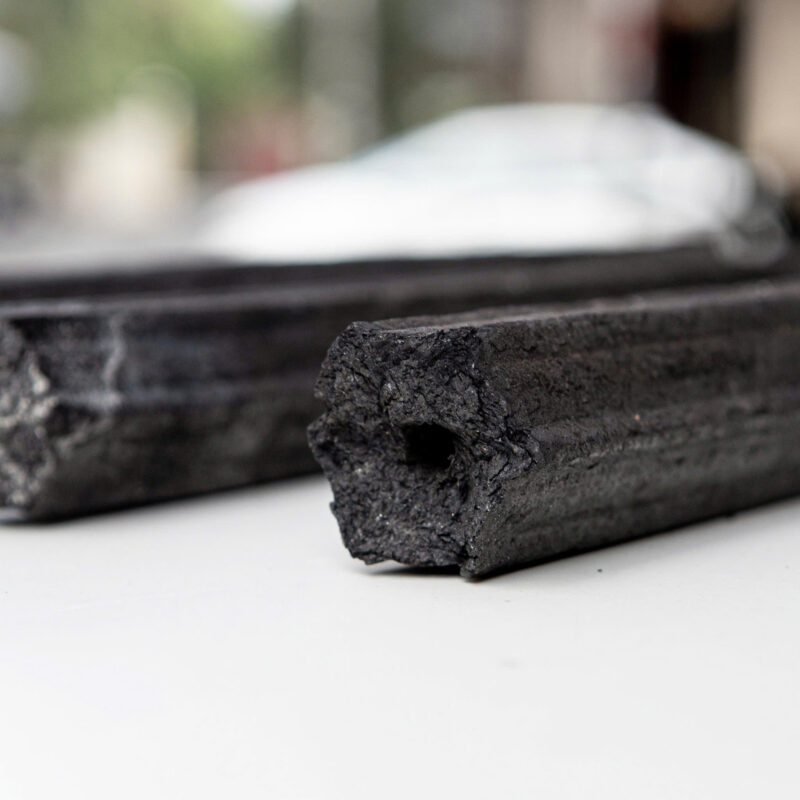
Hexagonal Charcoal Quality includes both measurable fuel characteristics and the physical condition of the finished product.
For this product category, buyers may inspect surface consistency, structural integrity, visible cracks and the proportion of broken pieces.
A relatively uniform exterior can make products easier to categorize commercially, but appearance alone cannot establish their chemical quality.
Supplier specifications commonly include moisture content, ash content, fixed carbon, volatile matter and calorific value.
These values are supplier claims, not universal specifications.
Buyers should ask for suitable laboratory results and ensure the testing method, reporting basis and product batch are identified.
They should also avoid using the appearance of the briquette’s surface as proof of fuel performance.
Surface Cracks, Broken Ends and Product Sorting
Some hexagonal briquettes develop visible cracks or broken edges.
These features may affect whether pieces satisfy the purchaser’s physical specification, particularly when the buyer requires a high percentage of intact sticks.
However, a small surface crack does not automatically mean a product fails every relevant quality requirement.
A distinction should be made between cosmetic variation and structural damage that causes the product to fall outside the agreed dimensions.
For Hexagonal Sawdust Charcoal Briquettes, an inspection agreement can define the allowable proportion of broken ends, shortened pieces and fines.
This is especially useful when goods are evaluated after transport rather than immediately after manufacture.
Charcoal is brittle, so handling and distribution can change the size distribution of a shipment.
The Food and Agriculture Organization discusses charcoal breakage and the generation of fines during commercial handling and transportation. FAO – Transport, Storage and Distribution of Charcoal.
A buyer should therefore evaluate the condition required at delivery, not only the appearance of an initial product sample.
Hexagonal Charcoal Specifications for Export
For international buyers, Hexagonal Charcoal Specifications should combine physical dimensions with fuel-quality requirements.
The following table illustrates the information that may be included in a purchasing specification.
| Parameter | What the importer should define |
|---|---|
| Product | Carbonized sawdust charcoal briquettes |
| Shape | Hexagonal, with or without agreed central opening |
| Exterior width | Nominal dimension and measurement method |
| Center hole | Nominal diameter or approved range |
| Length | Required range and tolerance |
| Broken pieces | Maximum acceptable proportion |
| Fines | Agreed maximum or inspection method |
| Fixed carbon | Contractual minimum and testing basis |
| Moisture | Contractual maximum |
| Ash | Contractual maximum |
| Packaging | Net weight, bag or carton type |
| Quality documents | Agreed testing and inspection records |
A sample-based approval process may help identify acceptable shapes and dimensions.
However, one approved photograph or sample should not be treated as proof that an entire commercial shipment will be identical.
Where consistency matters, the buyer should agree on how samples are selected and how conformity is assessed.
Packaging Hexagonal Sawdust Charcoal for Wholesale Markets
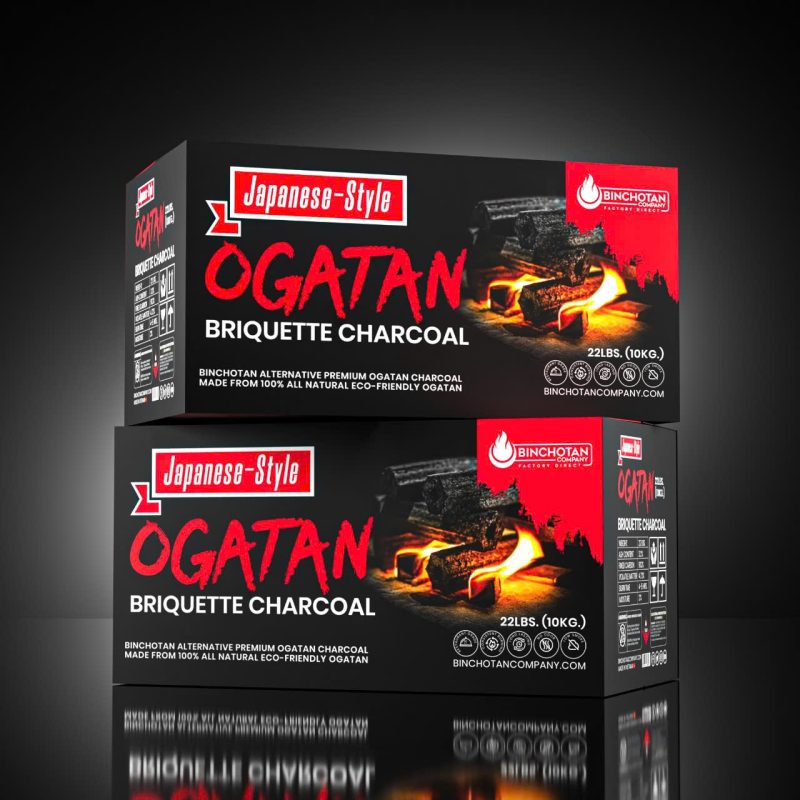
Hexagonal Charcoal Wholesale orders may use cartons, woven bags or other packaging formats depending on supplier arrangements and buyer requirements.
Other suppliers publish 10kg, 15kg or 20kg packaging options, depending on the product.
These published examples illustrate market availability, not confirmed packaging options from Vietargo.
Packaging selection should take account of product length, the desired proportion of intact sticks and the destination customer’s distribution requirements.
Long sticks may require different packaging dimensions from shorter pieces.
Custom packaging may also involve branding, artwork approval and separate minimum order quantities.
Importers should specify whether the quoted weight refers to the net charcoal weight or includes packaging.
Commercial packaging decisions must also remain consistent with the applicable maritime transport requirements for charcoal.
Choosing a Hexagonal Sawdust Charcoal Supplier
When selecting a Hexagonal Sawdust Charcoal Supplier, buyers should compare more than the quoted price per metric ton.
The most useful comparison includes product dimensions, chemical specifications, physical integrity, packaging and commercial terms.
Suppliers should be able to clarify the actual dimensions of their products and identify which values are standard ranges versus customer-specific options.
Importers should also distinguish advertised production capability from confirmed availability for a particular order.
A company’s marketing materials may describe its product range, but that does not automatically establish available inventory, MOQ or delivery dates.
For an export transaction, buyers may request product samples, technical specifications, relevant test reports and a formal quotation.
If several suppliers offer products described as hexagonal charcoal, the buyer should normalize the specifications before comparing prices.
A longer, heavier stick should not automatically be compared directly with a shorter product on a per-piece basis.
Likewise, apparent visual similarity does not establish equal fuel quality.
Vietargo and Hexagonal Charcoal Sourcing from Vietnam
Vietargo operates in Vietnam’s charcoal export industry.
For importers considering hexagonal sawdust charcoal, a structured inquiry should identify the product shape, exterior dimensions, center-hole requirements, length range, quality targets and packaging preferences.
These details provide a clearer basis for discussing products and obtaining quotations.
However, specific product grades, production capabilities and technical performance figures must be confirmed directly for the goods being offered.
It would be inappropriate to treat a specification published by another Vietnamese supplier as an official Vietargo product specification.
For buyers, the objective is to obtain a commercially accurate description of the available product before approving a purchase.
Frequently Asked Questions About Hexagonal Sawdust Charcoal
What is the standard size of hexagonal sawdust charcoal?
There is no single international commercial size. Published supplier examples commonly include exterior dimensions around 4–5cm, with lengths that vary by product and manufacturer.
Why do hexagonal charcoal briquettes have a hole in the center?
The center opening is part of the manufactured briquette geometry. It affects the product’s internal space and airflow characteristics, but does not by itself guarantee a particular burning duration or heat output.
Is longer hexagonal charcoal better quality?
Not necessarily. Length describes the product’s physical dimensions. Fuel quality must be evaluated using appropriate technical specifications and testing.
Is hexagonal charcoal the same as natural lump charcoal?
No. Hexagonal sawdust charcoal is a manufactured, shaped product, while natural lump charcoal generally retains irregular characteristics of carbonized wood.
Can importers request custom hexagonal charcoal dimensions?
Some suppliers advertise customized dimensions or cut lengths. Buyers should confirm availability, tolerances, minimum orders and packaging requirements with the selected supplier.
Conclusion
Hexagonal Sawdust Charcoal is a manufactured charcoal product distinguished by its six-sided shape, elongated structure and commonly used central opening.
For international buyers, the important considerations extend beyond appearance.
Hexagonal Charcoal Sizes, exterior width, center-hole diameter, length and physical integrity help define the commercial product.
Meanwhile, fixed carbon, moisture, ash and other laboratory measurements provide separate information about fuel quality.
Suppliers may offer different dimensions and packaging formats, but their published specifications should not be treated as universal industry standards.
For businesses sourcing Hexagonal Sawdust Charcoal Briquettes from Vietnam, a clear technical specification and an agreed inspection approach can reduce misunderstandings between product samples and commercial shipments.
The right hexagonal charcoal product is the one whose verified dimensions, physical condition and quality specifications match the requirements of the intended buyer—not simply the one with the longest stick or most uniform appearance.
VIETARGO – THE BEST CHARCOAL OF THE WORLD TO YOUR SHELF
Website : https://vietargo.com/
Facebook : Vietargo
địa chỉ : 10 Nguyen Hien Street, 91B Residential Area, Can Tho, Vietnam
☎: 0939364888