

Can You Reuse Charcoal? What to Know About Quality, Safety and Storage
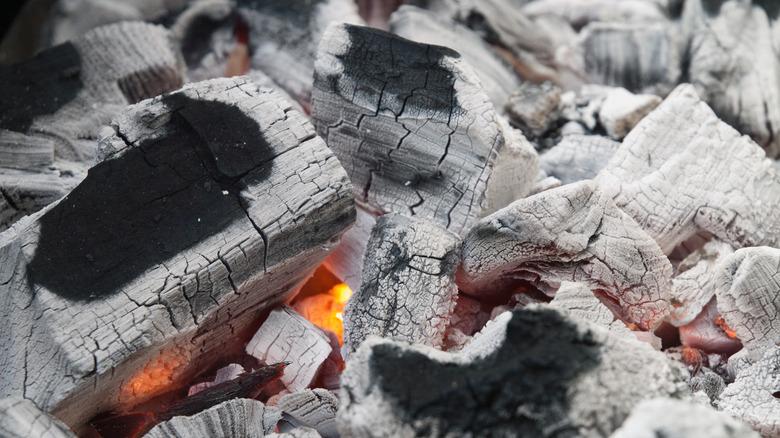
Can You Reuse Charcoal after a barbecue session? This is a common question among home grilling enthusiasts, restaurant operators and businesses looking to reduce charcoal waste. After cooking, some charcoal pieces may remain partially unburned, raising questions about whether they still have useful fuel value.
In certain circumstances, leftover charcoal can be reused. However, its suitability depends on the amount of unburned material, physical condition, moisture exposure and safe handling.
Understanding How to Reuse Charcoal, the differences between lump charcoal and briquettes, and the limitations of previously burned fuel can support more informed decisions.
Can You Reuse Charcoal After Grilling?
The short answer is yes, some partially burned charcoal can be reused, provided it is completely cool, dry, suitable for reuse and permitted by the grill manufacturer’s instructions.
Charcoal releases heat as its carbonaceous material is consumed during combustion. Depending on the duration and conditions of use, part of a charcoal piece may remain unburned.
Kingsford confirms that partially burned briquettes that remain intact, dry and fully cooled can be saved for future grilling. The City of San José also recognizes that leftover charcoal may be reusable.
However, charcoal that has largely turned into ash no longer has the same useful fuel value.
When considering Can You Reuse BBQ Charcoal, it is important to distinguish between partially burned charcoal and combustion residue.
Can You Reuse Lump Charcoal and Charcoal Briquettes?
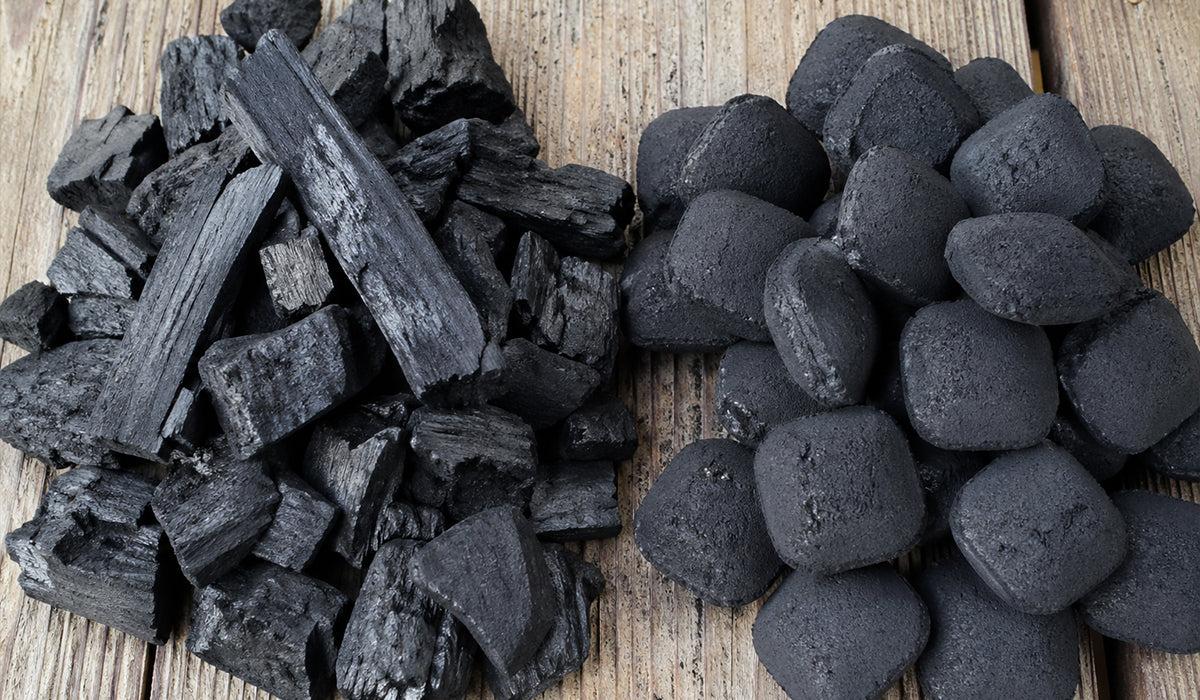
Different charcoal products may retain different amounts of usable material after grilling.
Can You Reuse Lump Charcoal?
Natural lump charcoal consists of carbonized wood pieces with irregular shapes and sizes.
Some larger pieces may retain a significant amount of unburned material after a grilling session.
This means Can You Reuse Lump Charcoal can be answered positively for certain pieces that remain intact and suitable for continued use.
However, small fragments, excessive ash and visible contamination can make leftover charcoal less suitable for cooking.
The remaining fuel value depends on how much charcoal was consumed during the previous session.
Reusing Charcoal Briquettes
Reusing Charcoal Briquettes is another common consideration.
Charcoal briquettes are manufactured from carbon-based materials formed into relatively consistent shapes. Their physical characteristics depend on the ingredients and manufacturing process.
Some briquettes remain intact after partial combustion, while others become fragile or crumble into ash.
According to Kingsford, dry, fully cooled briquettes that have not completely turned to ash may be retained for later use.
However, Reusing Charcoal Briquettes does not guarantee the same heat output or burning duration as new products.
The condition of the remaining briquettes should always be considered before determining whether they are suitable for reuse.
How Many Times Can You Reuse Charcoal?
How Many Times Can You Reuse Charcoal does not have a universal numerical answer.
The number of potential uses depends on the amount of fuel remaining after each combustion cycle.
Important variables include charcoal type, original piece size, previous burning duration, storage conditions and the extent of material consumption.
As a result, it would be misleading to claim that all charcoal can be reused two, three or four times.
For commercial barbecue operations, the practical question is not simply How Many Times Can You Reuse Charcoal, but whether the remaining fuel can deliver acceptable performance.
A partially burned piece may retain useful carbon, while another piece of the same original size may have already lost most of its fuel value.
How Long Does Charcoal Last?
How Long Does Charcoal Last can refer to burning duration during cooking or the storage life of unused and partially used charcoal.
During combustion, charcoal longevity depends on its physical characteristics, size and the operating conditions of the grill.
Partially burned charcoal generally contains less remaining combustible material than an equivalent new piece.
Storage conditions also matter.
According to the Food and Agriculture Organization (FAO), charcoal can absorb moisture from the surrounding atmosphere. Even properly carbonized charcoal may reach moisture contents of approximately 5–10% under ordinary environmental conditions.
Moisture reduces useful fuel energy on an as-received mass basis and can influence storage performance.
For this reason, evaluating How Long Does Charcoal Last requires considering both the remaining carbonaceous material and the charcoal’s physical condition.
How to Reuse Unburned Charcoal
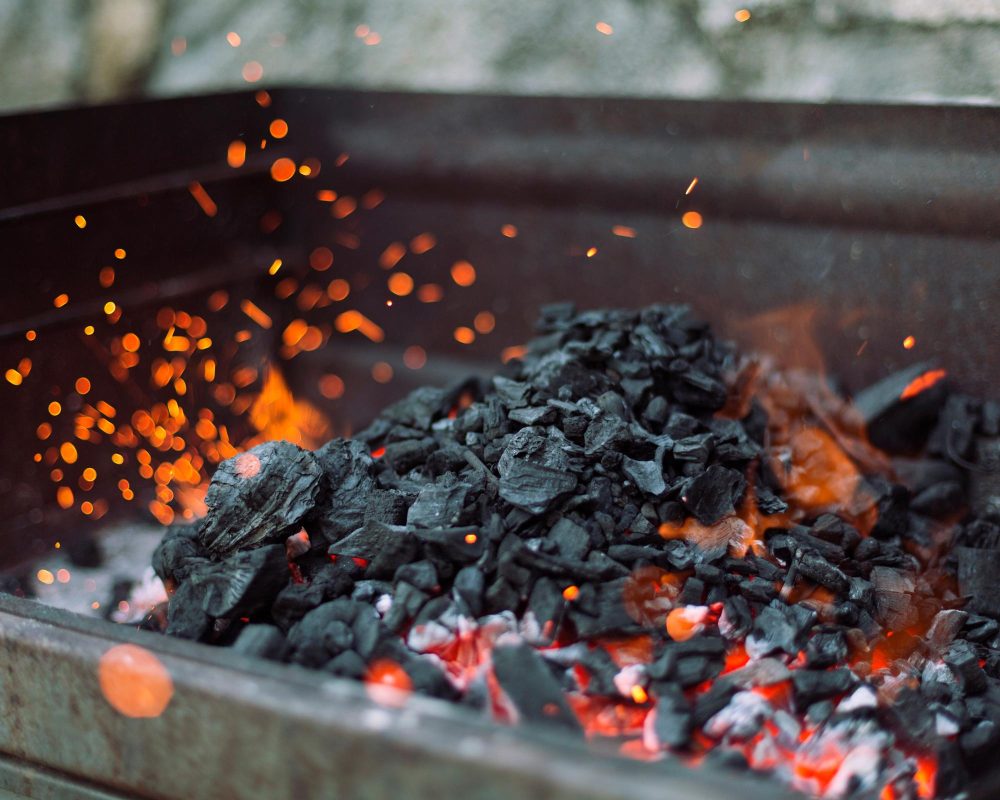
How to Reuse Unburned Charcoal begins with determining whether the remaining material is suitable for future use.
Once charcoal has fully cooled, relevant quality characteristics include the size of the remaining pieces, structural integrity, ash accumulation and signs of moisture or contamination.
Larger, intact pieces may retain more useful fuel than material that has largely crumbled into small fragments.
However, appearance alone cannot accurately establish the remaining energy content.
When evaluating How to Reuse Charcoal, it is important to recognize that previously burned charcoal may behave differently from new charcoal.
For restaurants and commercial buyers, consistent cooking performance is often more important than recovering every possible piece of leftover fuel.
Is Reused Charcoal Safe?
Is Reused Charcoal Safe is an essential consideration because charcoal can retain heat for a considerable period after visible flames disappear.
Ash-covered pieces may still contain hot material that is difficult to identify through appearance alone.
Massachusetts government grilling guidance recommends allowing charcoal and ashes to cool completely, citing a 48-hour cooling period before disposal.
Equipment manufacturers may provide additional or different instructions for their products.
Charcoal also produces carbon monoxide during combustion, including when material continues to smolder.
The U.S. Consumer Product Safety Commission warns against burning charcoal inside homes, garages, tents, vehicles and other enclosed environments because carbon monoxide exposure can be fatal.
Therefore, the question Is Reused Charcoal Safe depends not only on the quality of the remaining material but also on the condition of the equipment and safe handling practices.
Inexperienced users should follow the manufacturer’s guidance and seek assistance from an experienced adult when dealing with recently used charcoal.
How to Store Used Charcoal
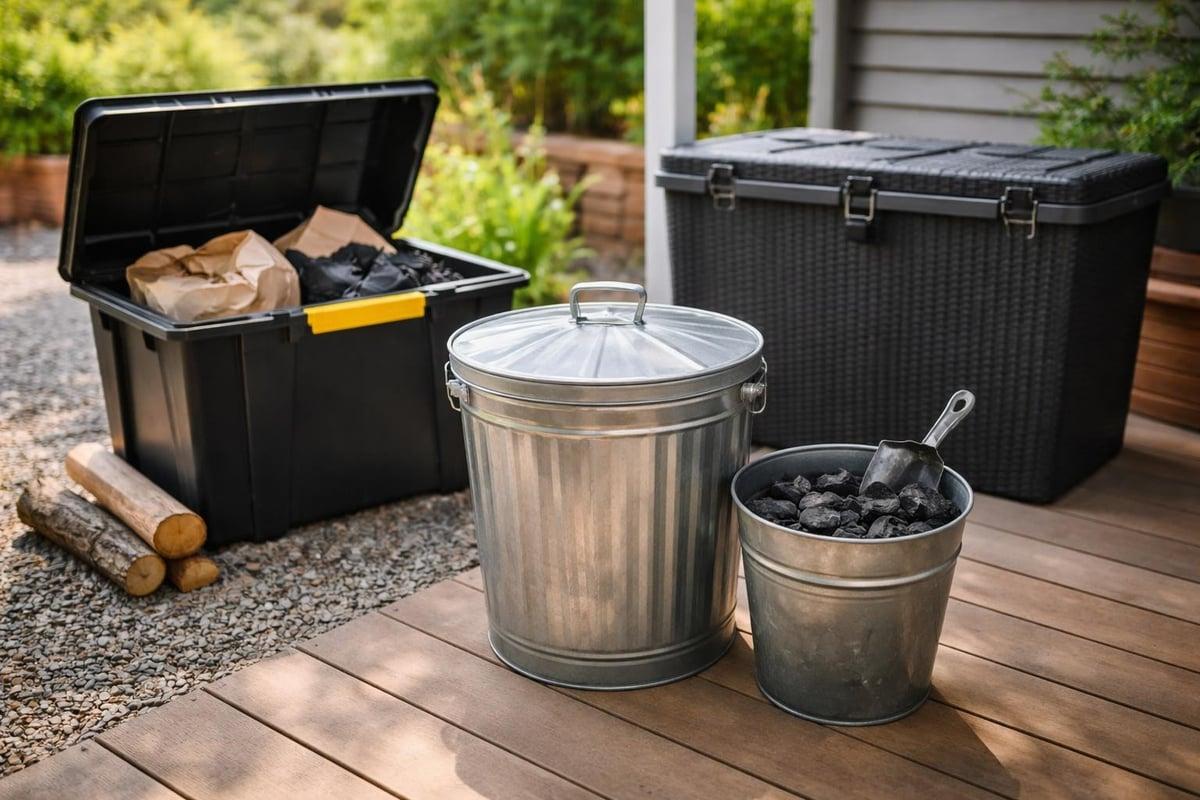
How to Store Used Charcoal is important for both safety and fuel quality.
Previously burned charcoal should only be considered for storage after it has cooled completely and is no longer smoldering.
Charcoal exposed to excessive moisture, grease, chemicals or unknown contaminants may not be suitable for reuse in food preparation.
Appropriate storage conditions should limit moisture exposure and follow the grill manufacturer’s recommendations.
Some manufacturers support keeping suitable leftover charcoal for later use, while others recommend against reuse for their particular equipment.
When reviewing How to Store Used Charcoal, users should prioritize fire prevention and suitable storage conditions rather than focusing exclusively on recovering fuel.
For commercial operations, leftover charcoal management should form part of established equipment safety and maintenance procedures.
Is Reusable Charcoal for BBQ Worth Considering?
Reusable Charcoal for BBQ may help reduce fuel waste when significant portions of charcoal remain unburned after cooking.
However, the economic benefits depend on the amount of usable material remaining and its performance during subsequent use.
For restaurants, inconsistent charcoal characteristics can make cooking performance less predictable.
Buyers should therefore distinguish between a charcoal product’s original quality and its ability to retain usable fuel after partial combustion.
A high-quality charcoal product is not automatically designed for repeated use.
Similarly, marketing descriptions such as Reusable Charcoal for BBQ should be evaluated against documented performance rather than treated as a guarantee of multiple uses.
Can You Reuse BBQ Charcoal Without Affecting Cooking Performance?
The question Can You Reuse BBQ Charcoal is also relevant to cooking consistency.
Previously burned charcoal may contain different proportions of unburned carbon, ash and fractured material compared with a new product.
These differences can influence its remaining fuel value and practical cooking performance.
For commercial users, maintaining predictable product characteristics is particularly important.
Before treating leftover charcoal as equivalent to new fuel, businesses should consider the remaining material, product condition and relevant operational requirements.
Understanding How to Reuse Unburned Charcoal is therefore about evaluating suitability, not assuming that all leftover fuel will perform identically.
Conclusion
Can You Reuse Charcoal? Yes, certain partially burned pieces may be reusable when they remain intact, dry, fully cooled and suitable under the applicable equipment guidance.
The potential for Reusing Charcoal Briquettes or natural lump charcoal depends on the remaining fuel, physical condition and storage history.
There is no universal answer to How Many Times Can You Reuse Charcoal, because each use consumes part of the available material.
Responsible charcoal reuse depends on balancing remaining fuel value, cooking consistency and safety rather than maximizing the number of uses.
Sources & References
VIETARGO – THE BEST CHARCOAL OF THE WORLD TO YOUR SHELF
Website : https://vietargo.com/
Facebook : Vietargo
địa chỉ : 10 Nguyen Hien Street, 91B Residential Area, Can Tho, Vietnam
☎: 0939364888