

Mangrove Charcoal vs Coconut Shell Charcoal: Key Differences Explained
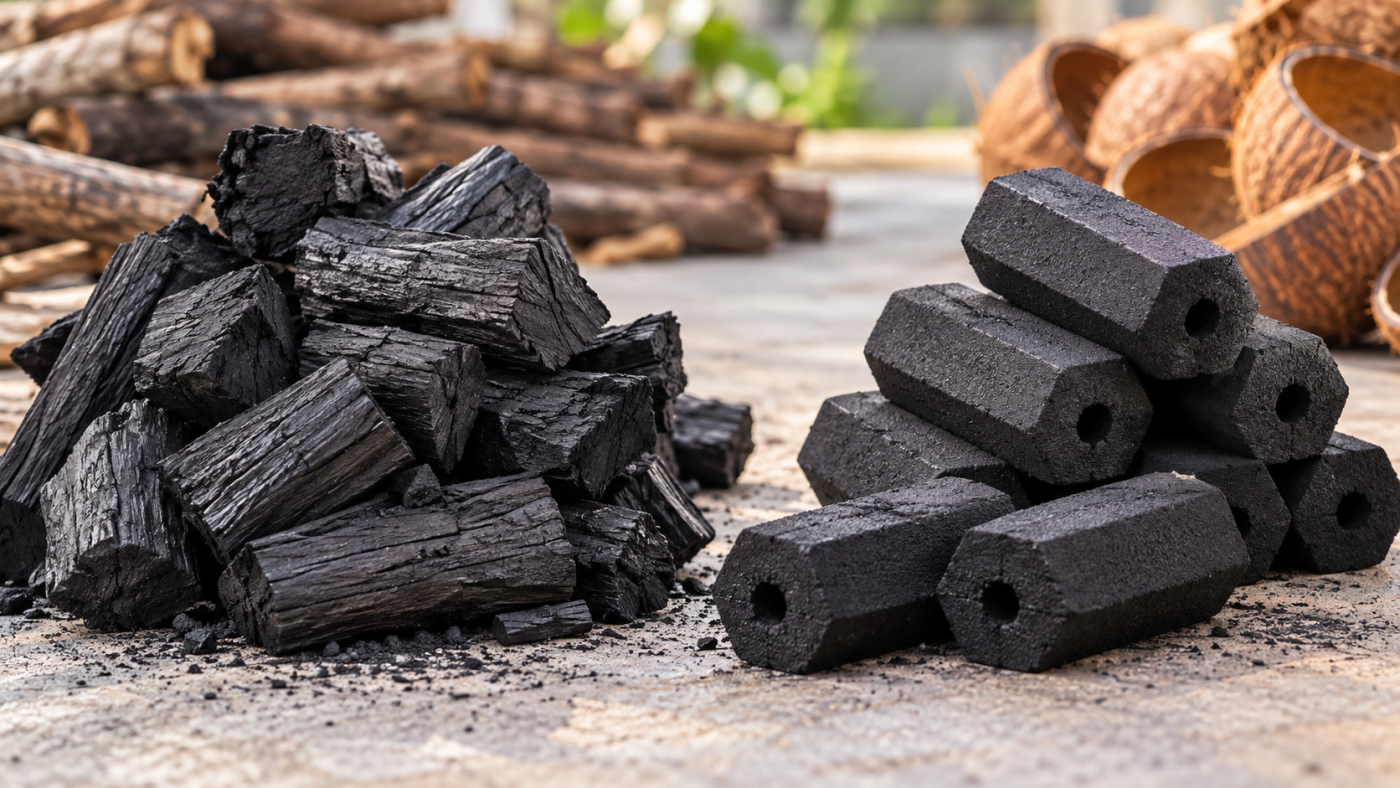
Mangrove Charcoal vs Coconut Shell Charcoal is an important comparison for international charcoal importers, restaurant operators and wholesale distributors. Both products are biomass-based fuels, but they differ in raw material origin, physical structure, available product forms and commercial applications.
When evaluating Mangrove vs Coconut Charcoal, buyers often focus on burning time, heat output, ash content, product consistency and cost.
However, these characteristics depend on more than the raw material alone. Carbonization conditions, moisture content, piece size and product formulation can significantly influence charcoal performance.
Understanding these differences helps buyers select products based on verified specifications rather than general marketing claims.
What Is the Difference Between Mangrove Charcoal and Coconut Shell Charcoal?
Mangrove charcoal is produced by carbonizing wood from suitable mangrove tree species. It is commonly sold as natural lump charcoal, with pieces that retain some of the original wood structure.
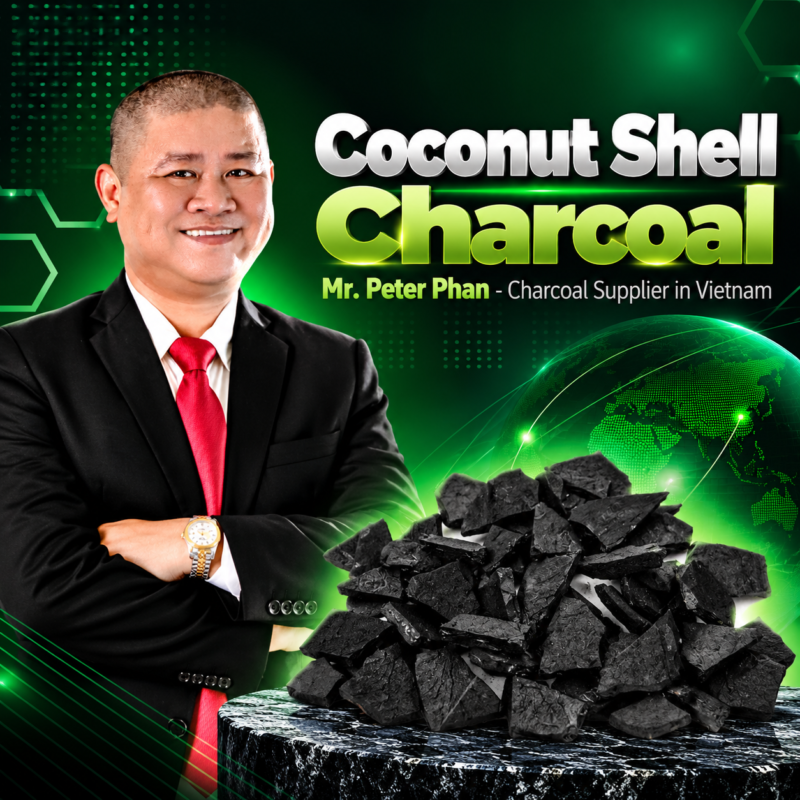
Coconut shell charcoal is produced from carbonized coconut shells. It can be supplied as irregular charcoal pieces or processed into manufactured charcoal briquettes.
A fundamental difference in Mangrove Charcoal vs Coconut Shell Charcoal is therefore the physical form in which the products are supplied.
Mangrove lump charcoal and coconut shell charcoal briquettes may behave differently because one retains a natural wood structure while the other may have been crushed, mixed with binding materials and compressed.
For meaningful comparisons, buyers should identify whether they are evaluating natural charcoal pieces or manufactured briquettes.
Mangrove Charcoal Benefits for BBQ Applications
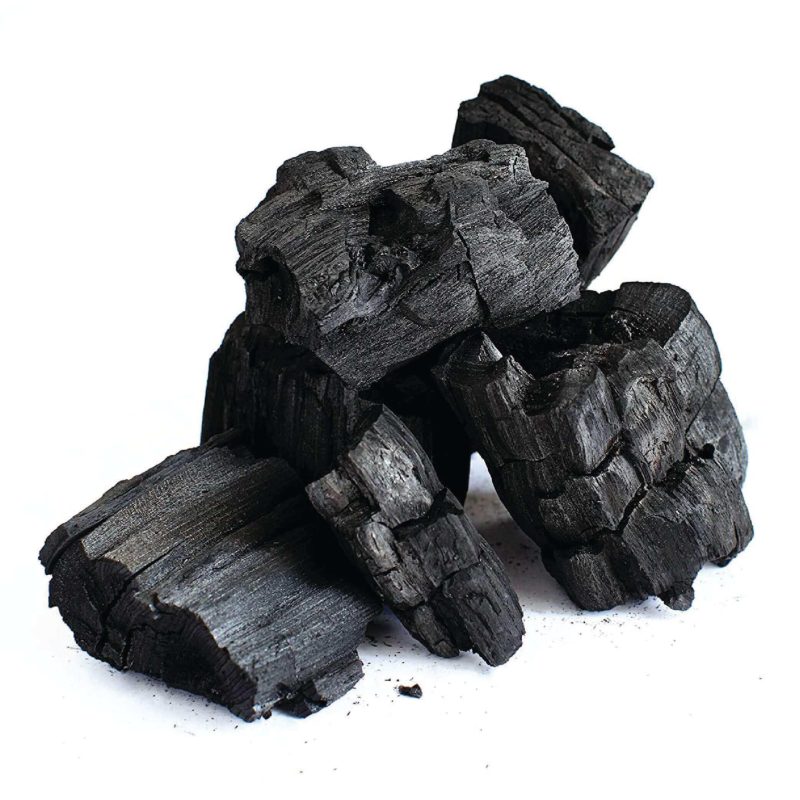
Mangrove Charcoal Benefits are often associated with its use as a natural hardwood charcoal fuel.
Mangrove lump charcoal retains a relatively natural shape, making it relevant to traditional charcoal grilling applications.
For restaurants already equipped to use hardwood lump charcoal, this product form may fit established equipment and operational requirements.
Mangrove Charcoal for BBQ should be evaluated using product size, fixed carbon content, moisture, ash content and consistency between shipments.
However, not every mangrove charcoal product delivers identical combustion performance.
Differences in raw material characteristics, carbonization and storage can influence results.
Consequently, Mangrove Charcoal Benefits should be supported by product-specific testing rather than generalized claims about high heat or exceptionally long burning duration.
Coconut Shell Charcoal Benefits and Product Applications
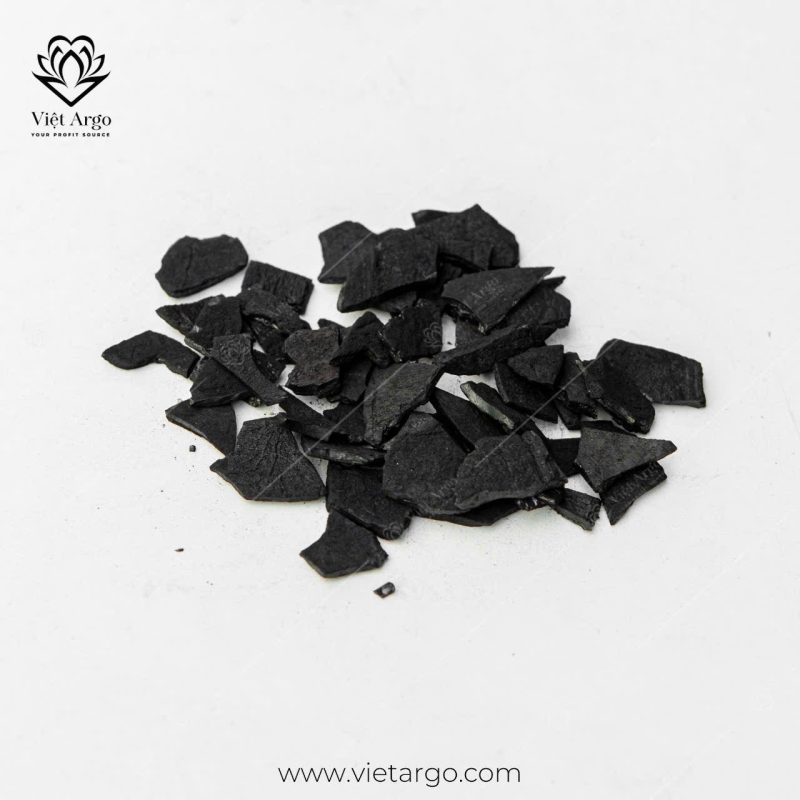
Coconut Shell Charcoal Benefits include the utilization of coconut-processing residues and the possibility of manufacturing charcoal products in different shapes.
Coconut shells can be carbonized and supplied as charcoal material or processed into uniform briquettes.
For applications requiring consistent dimensions, manufactured coconut shell charcoal briquettes may provide advantages in packaging, handling and product standardization.
Coconut Shell Charcoal for BBQ is commonly evaluated according to fixed carbon, ash, moisture, physical integrity and applicable product requirements.
Where binders are used, their composition and suitability for the intended application should also be considered.
Using agricultural residues can offer resource-efficiency benefits. However, UNEP emphasizes that the environmental performance of charcoal depends on raw material sourcing and production practices.
Therefore, Coconut Shell Charcoal Benefits should not automatically be interpreted as proof that every coconut-based charcoal product is environmentally superior.
Mangrove Charcoal Burning Time vs Coconut Shell Charcoal Burning Time
Burning duration is one of the most frequently discussed factors in Mangrove Charcoal vs Coconut Shell Charcoal comparisons.
Mangrove Charcoal Burning Time depends on the physical size of the charcoal pieces, remaining combustible material, density, moisture and combustion conditions.
Similarly, Coconut Shell Charcoal Burning Time depends on product form, briquette composition, dimensions and test conditions.
A charcoal briquette and a natural lump charcoal piece may have different burning rates even when their initial weights are similar.
A 2026 study examining briquettes made from mangrove wood charcoal and coconut shell charcoal reported that one blended formulation, containing 60% mangrove charcoal and 40% coconut shell charcoal, reached a burn-to-ash time of 223 minutes under the study’s experimental conditions.
This result is specific to the tested formulation and should not be treated as a general burning time for either material.
For commercial buyers, claims about Mangrove Charcoal Burning Time or Coconut Shell Charcoal Burning Time are more meaningful when supported by comparable testing methods.
Without standardized test conditions, it is not possible to conclude that one material always burns longer.
Mangrove Charcoal vs Coconut Charcoal Heat: Which Produces More Heat?
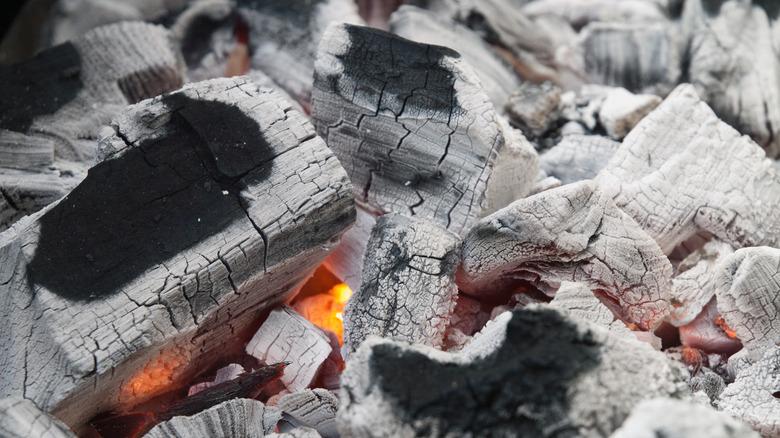
Mangrove Charcoal vs Coconut Charcoal Heat is another important consideration for wholesale buyers.
Heat performance should be evaluated carefully because calorific value and operating temperature are not the same measurement.
Calorific value describes the energy released per unit mass of fuel and is commonly expressed in kcal/kg or MJ/kg.
The temperature achieved in a barbecue grill also depends on the equipment and operating conditions.
In the 2026 study of blended mangrove wood and coconut shell charcoal briquettes, gross calorific values ranged from approximately 5,897 to 6,886 kcal/kg across the tested formulations.
A greater coconut shell charcoal proportion generally increased calorific value within that experimental set.
However, these findings do not establish that all coconut shell charcoal produces higher heat than all mangrove charcoal.
For reliable Mangrove Charcoal vs Coconut Charcoal Heat comparisons, buyers should evaluate product-specific calorific values, moisture and physical properties under comparable testing conditions.
Charcoal Ash Content Comparison
Charcoal Ash Content Comparison helps buyers understand the amount of inorganic residue remaining after charcoal combustion.
Ash content may be affected by mineral constituents in the original biomass, bark, soil contamination and additional materials used in manufactured briquettes.
According to FAO, ash content varies among wood charcoal products because of raw material characteristics and processing conditions.
For coconut shell charcoal briquettes, formulation and binding materials may also influence the final ash percentage.
Therefore, a reliable Charcoal Ash Content Comparison requires laboratory results obtained using compatible methods and reporting bases.
EN 1860-2:2023 specifies a maximum ash content of 8% on a dry basis for lump barbecue charcoal within its scope. Barbecue charcoal briquettes are subject to their own requirements.
Buyers should avoid assuming that mangrove charcoal always produces less ash than coconut shell charcoal, or vice versa.
The most useful comparison is based on actual products and their intended applications.
Mangrove Charcoal for BBQ vs Coconut Shell Charcoal for BBQ
The choice between Mangrove Charcoal for BBQ and Coconut Shell Charcoal for BBQ depends on the operating requirements of the customer.
Mangrove lump charcoal may be suitable for restaurants and commercial kitchens that prefer natural hardwood charcoal pieces.
Coconut shell charcoal briquettes may suit businesses seeking products with consistent manufactured dimensions.
Nevertheless, product appearance alone cannot establish which option provides the best performance.
Buyers should consider technical specifications, physical characteristics, product consistency, relevant testing standards and total purchasing costs.
For international importers, delivery reliability and packaging requirements may also influence purchasing decisions.
When comparing Mangrove vs Coconut Charcoal, the objective should be identifying the product that matches the intended market rather than assuming one category is universally superior.
Best Charcoal for Restaurants: What Should Buyers Consider?
The Best Charcoal for Restaurants depends on the type of grill, cooking requirements and operating priorities.
Some restaurants prefer natural lump charcoal because it fits their existing equipment and cooking practices.
Others may value the consistent dimensions of manufactured briquettes.
For restaurant suppliers, important evaluation factors include product specifications, ash generation, size consistency, reliable availability and the cost of usable fuel.
Burning duration is relevant, but it should not be considered independently of actual fuel consumption and performance requirements.
A product with a longer reported burning time does not automatically provide better value for every restaurant.
The Best Charcoal for Restaurants should therefore be selected using realistic operating requirements and product-specific quality data.
Raw Material Origin and Sustainability Considerations
Raw material sourcing is another important difference between Mangrove Charcoal vs Coconut Shell Charcoal.
Mangrove forests provide significant ecological services, including coastal protection, habitat support and benefits to local communities.
FAO notes that mangrove wood has historically been used for charcoal production, but mangrove ecosystem management must also consider the forests’ environmental functions.
For mangrove charcoal, buyers should pay particular attention to legal wood sourcing and traceability.
Coconut shell charcoal is produced from a residue of the coconut industry, offering an opportunity to utilize agricultural by-products.
However, its environmental impact still depends on sourcing, manufacturing, transport and other lifecycle considerations.
Neither product should automatically be described as sustainable without appropriate supporting evidence.
Conclusion
Mangrove Charcoal vs Coconut Shell Charcoal involves more than a comparison of two raw materials.
Mangrove Charcoal Benefits often relate to natural hardwood charcoal applications, while Coconut Shell Charcoal Benefits include the use of coconut-processing residues and the availability of manufactured briquette products.
Factors such as Mangrove Charcoal Burning Time, Coconut Shell Charcoal Burning Time, heat output and ash content vary depending on product specifications and testing conditions.
For restaurant operators and international buyers, the Best Charcoal for Restaurants is the product that meets actual performance needs, quality expectations and sourcing requirements.
Reliable purchasing decisions should be based on verified technical data, product consistency and raw material traceability rather than unsupported claims about which charcoal is always better
 .
Sources & References
VIETARGO – THE BEST CHARCOAL OF THE WORLD TO YOUR SHELF
Website : https://vietargo.com/
Facebook : Vietargo
địa chỉ : 10 Nguyen Hien Street, 91B Residential Area, Can Tho, Vietnam
☎: 0939364888