

Paper Bag or Woven Bag: Which Charcoal Packaging Would You Choose?
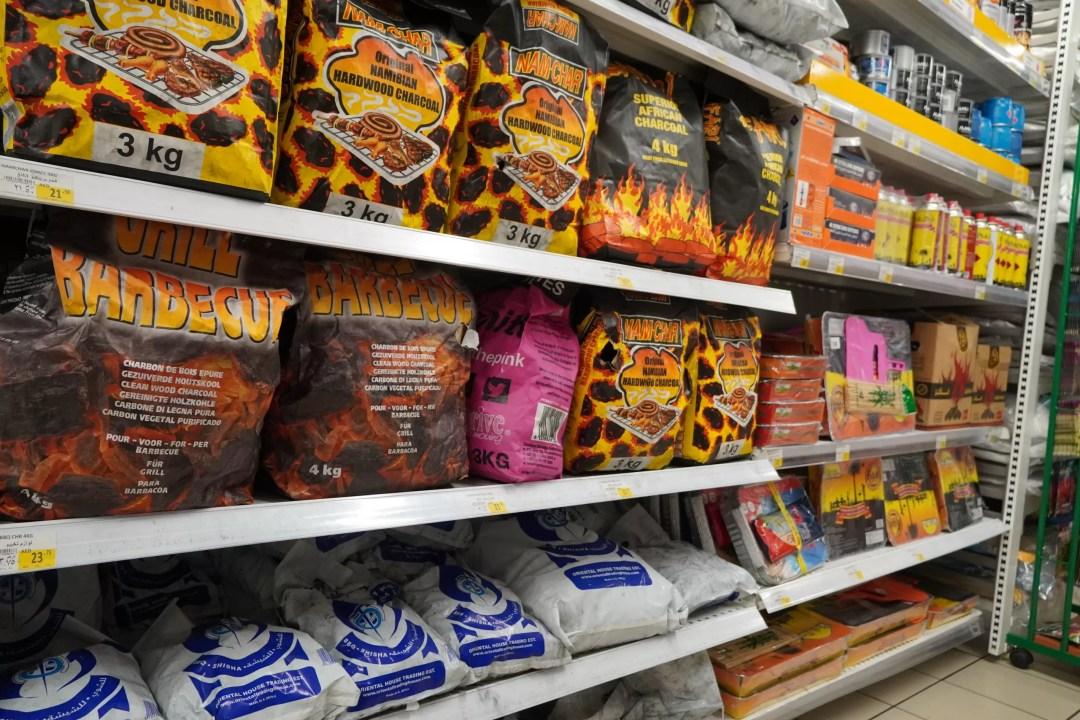
Paper bag or woven bag—which would you choose for your charcoal business?
For international charcoal buyers, packaging is more than a container. It affects product presentation, handling, distribution costs and the experience customers have when purchasing charcoal.
A kraft paper bag may communicate a clean, natural-looking retail identity. A woven polypropylene bag may appeal to distributors looking for a flexible packaging format suited to repeated handling.
But which one delivers better value?
The Charcoal Paper Bag vs Woven Bag comparison is not as straightforward as choosing between paper and plastic.
Modern paper bags can contain multiple layers, coatings or liners. Woven bags may be uncoated, laminated or combined with additional materials to achieve specific packaging characteristics.
These structural differences can affect strength, moisture resistance, print quality and recyclability.
Packaging supplier NNZ, for example, offers both multi-wall paper and polypropylene woven solutions for charcoal products, demonstrating that both material categories have established commercial applications.
For importers, the best packaging choice depends on where the charcoal will be sold, how it will be distributed and which requirements must be satisfied.
In this article, we compare the two options from a buyer’s perspective—and invite you to share which format works best in your market.
Charcoal Paper Bag vs Woven Bag: The Key Differences
Before examining individual materials, consider how the two packaging categories compare.
| Buying factor | Kraft paper bag | PP woven bag |
|---|---|---|
| Main material | Paper fibers | Woven polypropylene |
| Typical appearance | Natural or printed retail finish | Woven, coated or laminated finish |
| Retail branding | Strong potential | Strong potential, especially when laminated |
| Mechanical strength | Depends on paper layers and construction | Often suitable for demanding handling |
| Moisture resistance | Depends on coatings and liners | Depends on coating, lamination and closure |
| Custom printing | Available | Available |
| Recycling | Depends on material composition and local facilities | Depends on composition and local PP collection |
| Common positioning | Retail and branded products | Wholesale, retail and commercial distribution |
General comparison only. Actual performance depends on the finished bag’s construction, testing and distribution conditions.
A common mistake is assuming that one material always performs better.
For instance, a well-designed multi-wall paper bag may be more appropriate for a particular charcoal product than a poorly constructed woven bag.
Likewise, a laminated woven bag can provide branding opportunities that compete with printed paper packaging.
Therefore, Charcoal Packaging Types should be compared using actual bag specifications rather than material names alone.
Option A: Paper Bags for Charcoal
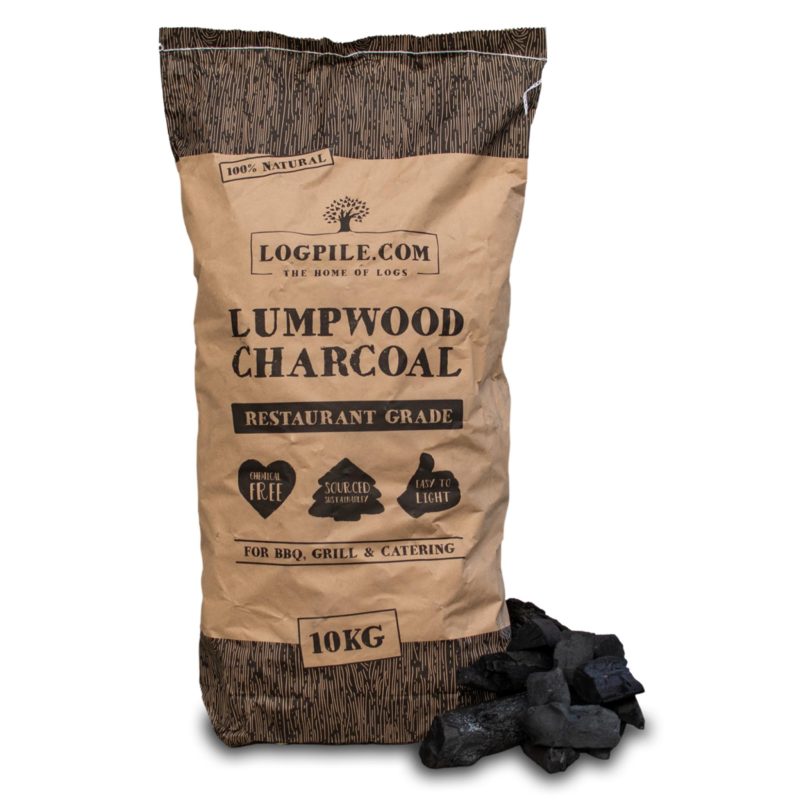
Paper Bags for Charcoal are commonly associated with retail packaging and branded BBQ fuel products.
Kraft paper offers a recognizable appearance that can support minimalist packaging designs, natural color palettes and traditional product branding.
For some retailers, this presentation aligns with the visual identity they want on supermarket shelves.
However, paper packaging is not limited to simple single-layer bags.
Commercial designs may use several paper plies, reinforced seams or additional barrier layers.
NNZ describes multi-wall charcoal paper bags with open-mouth and valve-style formats, including additional coatings where required.
These structural options are relevant when evaluating durability and filling requirements.
Where Charcoal Paper Packaging Can Work Well
Paper packaging may be attractive for retail-oriented charcoal brands, particularly when visual presentation is important.
A private-label company might choose a natural brown finish with limited printing to establish a recognizable identity.
Another retailer might use full-color artwork to distinguish its charcoal product from competing brands.
The format can also support different packaging dimensions and consumer-facing information layouts.
However, paper appearance should not be confused with an environmental certification.
A paper bag may contain plastic liners, coatings, adhesives or other materials that affect its end-of-life treatment.
For buyers, the correct approach is to request information about the complete packaging composition.
What Are the Limitations?
An uncoated paper bag can be more vulnerable to moisture exposure than certain protected packaging structures.
Its performance also depends on the number of layers, material strength and closure design.
This does not mean that every paper charcoal bag is fragile.
Multi-wall constructions may offer considerably different properties from lightweight paper packaging.
Importers should evaluate the actual bag rather than make purchasing decisions based on appearance alone.
Option B: Woven Bags for Charcoal
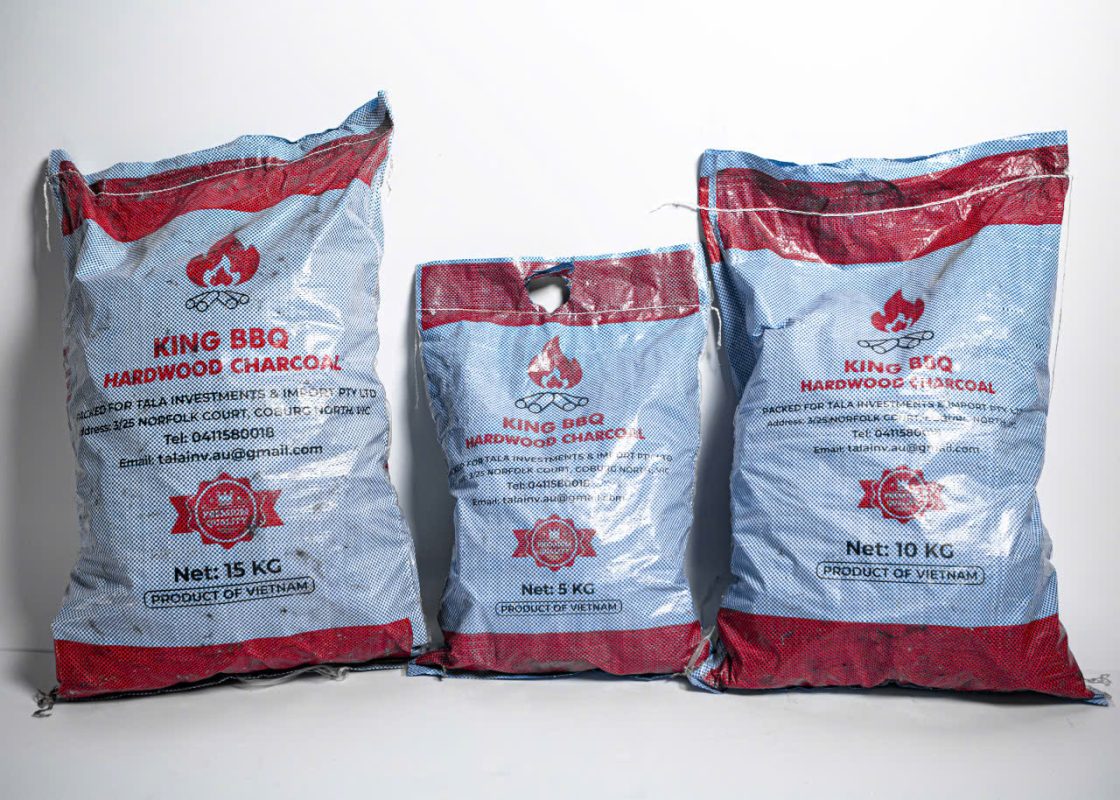
Woven Bags for Charcoal are commonly manufactured from polypropylene strips woven into a flexible fabric.
The resulting material can be used in commercial sacks intended for substantial product quantities.
These bags may be supplied in different constructions, including open-top sacks, sewn-bottom bags and more structured block-bottom formats.
Some woven packaging also includes laminated surfaces or printed films.
This means woven packaging is not necessarily visually basic.
A laminated bag can feature detailed product artwork and strong brand identification.
Packaging-industry guidance published in October 2026 distinguishes plain woven PP, laminated BOPP and paper-poly constructions according to printing, strength and moisture-protection characteristics.
Why Do Wholesale Buyers Consider Woven Bags?
One potential advantage is their ability to support commercial handling requirements through a relatively strong woven structure.
This can be relevant for distributors managing larger quantities of packaged products.
The construction may also offer flexibility in bag dimensions and printing arrangements.
However, PP Woven Charcoal Bags are not automatically waterproof.
An uncoated woven structure can allow moisture movement through gaps in the fabric.
Coatings, liners and closures may affect the finished package’s protection.
Therefore, buyers should avoid accepting generic claims such as “100% moisture-proof” without suitable technical evidence.
Are Woven Bags Only for Bulk Sales?
No.
Although woven packaging is familiar in commercial distribution, it can also be used for branded retail products.
The decision depends on the appearance required, packaging construction and retailer expectations.
A private-label charcoal company may evaluate woven bags for a larger pack size while using paper packaging for a smaller retail product.
A mixed-material packaging strategy can make sense when the products serve different customer segments.
How Charcoal Packaging Changes the Customer Experience
Imagine two charcoal brands competing for attention in the same supermarket.
Brand A uses a brown paper bag with simple black printing. Brand B uses a fully printed laminated woven bag with bold graphics.
Both contain charcoal meeting the same agreed product specifications.
Which brand will sell better?
The answer cannot be established from packaging material alone.
Customer preferences, retail pricing, brand recognition and product positioning all influence purchasing decisions.
A minimalist paper bag may appeal to customers looking for a traditional product presentation.
A colorful woven bag may attract customers who respond to prominent graphics and detailed branding.
Neither approach is universally superior.
For international buyers, the question is whether the packaging communicates the product clearly to the intended customer.
A good Charcoal Bag Comparison should therefore consider the actual retail environment.
Packaging that works well in a specialty BBQ store may not be the ideal choice for a wholesale restaurant supplier.
The Importance of Clear Product Information
Regardless of material, retail packaging should provide the information required for the destination market.
This may include product identity, net quantity, responsible business information and appropriate safety warnings.
Retail distribution can also require accurate product barcodes.
GS1 Australia, for example, explains that major retailers impose packaging and barcode requirements for consumer units, outer cartons and pallet labels.
The exact requirements differ across markets and retailers.
A well-designed charcoal bag should combine attractive branding with correct, legible information.
Paper Bag vs Woven Bag: Which Offers Better Moisture Protection?
Moisture exposure is an important consideration when choosing Charcoal Export Packaging.
However, material comparisons can be misleading if buyers ignore the finished packaging structure.
For instance, ordinary kraft paper and paper packaging with a protective liner may behave differently.
Likewise, uncoated woven PP and laminated woven PP are not equivalent barriers.
Packaging supplier SITONG explains that woven polypropylene can provide high mechanical strength and low water absorption, but additional coatings or liners may be needed for effective moisture-barrier performance.
For charcoal buyers, this creates an important purchasing question:
What protection does the complete packaging system provide under the intended storage and distribution conditions?
A supplier’s answer should ideally refer to relevant materials and packaging specifications.
It is also important to distinguish resistance to external moisture from the moisture already present in the charcoal.
Packaging cannot correct a product that fails its agreed moisture specification before filling.
For export orders, packaging performance should be considered alongside the actual charcoal quality requirements.
Which Charcoal Packaging Is More Economical?
The price of an empty bag is only one part of the total packaging cost.
Importers should also consider printing, packaging quantities, storage, handling and the number of selling units in a shipment.
A customized bag may require a larger print run or additional setup charges.
A more complex laminated structure may have a different cost profile from a simpler construction.
For example, a buyer ordering 20,000 retail bags may evaluate a completely different pricing arrangement from a distributor requiring 2,000 large sacks.
However, there is no universal rule that paper packaging is always more expensive than woven packaging, or vice versa.
The result depends on technical specifications and supplier quotations.
For Wholesale Charcoal Bags, a meaningful comparison should use equivalent net capacity and commercial requirements.
Buyers should request quotations covering the following details:
-
Bag material and construction
-
Dimensions and intended net capacity
-
Printing method and number of colors
-
Closure and additional components
-
Minimum order quantity
-
Packaging-unit price and applicable setup costs
-
Required compliance documentation
This allows a more accurate comparison than evaluating bags based only on their material category.
Is Paper Always the More Sustainable Choice?
Sustainability is an important consideration in modern packaging decisions.
However, the environmental performance of paper and polypropylene packaging depends on more than whether a material is plant-based or plastic-based.
Relevant factors include raw materials, production impacts, package weight, durability and end-of-life treatment.
Paper can be recycled through established paper-recovery systems when its composition is compatible with the local process.
Polypropylene can also be recycled where suitable collection and processing systems exist.
However, real-world collection rates and recycling options vary substantially.
A research review published by VTT Technical Research Centre of Finland explains that paper and plastic use different recycling processes and each has advantages and limitations depending on the application.
Multi-material structures can create additional challenges.
For example, paper combined with plastic laminates may be more difficult to process in conventional paper recycling systems.
The use of the word “recyclable” should therefore be supported by the actual bag composition and the relevant destination-market recycling infrastructure.
A brown paper bag is not automatically environmentally superior to every woven PP bag, and a technically recyclable bag is not necessarily recycled after use.
For B2B buyers, environmental claims should be specific, evidence-based and relevant to the market where the packaging will be sold.
EU Packaging Rules: What Buyers Should Consider in 2026
For importers supplying European markets, packaging selection also involves regulatory compliance.
The European Union’s Packaging and Packaging Waste Regulation, Regulation (EU) 2025/40, began applying on August 12, 2026.
The European Commission confirms that the regulation establishes requirements covering packaging placed on the EU market, including manufacturing, composition and waste-related obligations.
Additional requirements, including important recyclability obligations, are being introduced in later stages, with major measures applying from 2030.
This is relevant to both paper and woven plastic packaging.
However, the regulation does not establish a simple universal rule that all charcoal packaging must be paper.
Buyers should review the actual packaging construction, intended market and applicable obligations.
A bag that combines paper and plastic components may need a different compliance assessment from a predominantly single-material structure.
Likewise, packaging labeling and environmental claims should be checked against the applicable legal requirements.
For importers considering a packaging change, early evaluation may help reduce the risk of investing in an unsuitable design.
An Important Distinction: Retail Bags vs Dangerous-Goods Transport Packaging
One issue that charcoal buyers should not overlook is the difference between commercial packaging and packaging approved for maritime transportation.
Charcoal shipped by sea is subject to relevant dangerous-goods provisions.
Under IMDG Code Amendment 42-24, mandatory from January 1, 2026, charcoal classified as UN1361, Class 4.2, must comply with the applicable dangerous-goods requirements.
Hapag-Lloyd identifies requirements including certified packaging, appropriate documentation and package marking and labeling.
Therefore, choosing a visually attractive paper or woven bag does not establish that the completed shipment complies with maritime transport rules.
The suitability of the actual packaging arrangement must be confirmed through qualified dangerous-goods and logistics professionals.
This is particularly important for buyers planning Charcoal Export Packaging for containerized international shipments.
Retail presentation and transport compliance must both be addressed.
Best Charcoal Packaging: Which Should Your Market Choose?
The Best Charcoal Packaging is the format that meets the requirements of the intended customers and distribution system.
For a supermarket-focused brand, printed paper bags may be worth evaluating when visual presentation and retail convenience are priorities.
For wholesale distribution, woven bags may offer suitable construction options when strength and commercial handling are important.
For a business serving several market segments, using both formats may be commercially sensible.
The following scenarios illustrate possible choices rather than universal recommendations.
| Market scenario | Packaging worth evaluating | Main reason |
|---|---|---|
| Specialty BBQ retail | Printed kraft paper | Retail presentation and branding |
| Supermarket private label | Paper or laminated woven PP | Design, shelf requirements and cost |
| Restaurant supply | Commercial woven or multi-wall paper | Product quantity and handling |
| Wholesale distribution | Woven PP or suitable multi-wall paper | Packaging strength and economics |
| Environment-focused retail | Verified recyclable construction | Material composition and local recovery |
A professional purchasing decision should include physical samples, technical specifications, quotations and destination-market requirements.
Neither material should be selected solely because it is popular in another country.
Conclusion: There Is No One-Size-Fits-All Charcoal Bag
The Charcoal Paper Bag vs Woven Bag decision involves more than choosing between a natural-looking surface and a durable woven material.
Paper bags can support attractive retail presentation, while PP woven bags provide flexible construction options for commercial distribution.
However, the real performance of either format depends on its design, materials, closure, handling requirements and end-of-life considerations.
For charcoal importers, the best choice should reflect the destination market, customer expectations, total packaging cost and applicable regulations.
Paper or woven? The better option is the one that fits your product, your customers and your distribution requirements.
Recommended Internal Links
To strengthen Vietargo’s topical SEO structure, link this article to the following related content:
-
2kg, 5kg or 10kg: Which Charcoal Pack Size Fits Your Market? — helps buyers choose packaging quantities.
-
Private Label Charcoal: Building a Product Line for Your Brand — explains brand development and custom packaging.
-
EU Packaging Rules 2026: What Charcoal Exporters Should Review — provides destination-market regulatory context.
-
Why Does Charcoal Break During Shipping? What Importers Should Know — examines physical product damage during distribution.
Use the actual published article URLs on vietargo.com.
Sources & References
VIETARGO – THE BEST CHARCOAL OF THE WORLD TO YOUR SHELF
Website : https://vietargo.com/
Facebook : Vietargo
địa chỉ : 10 Nguyen Hien Street, 91B Residential Area, Can Tho, Vietnam
☎: 0939364888