

Importing Charcoal from Vietnam: What Documents Do Buyers Actually Need?
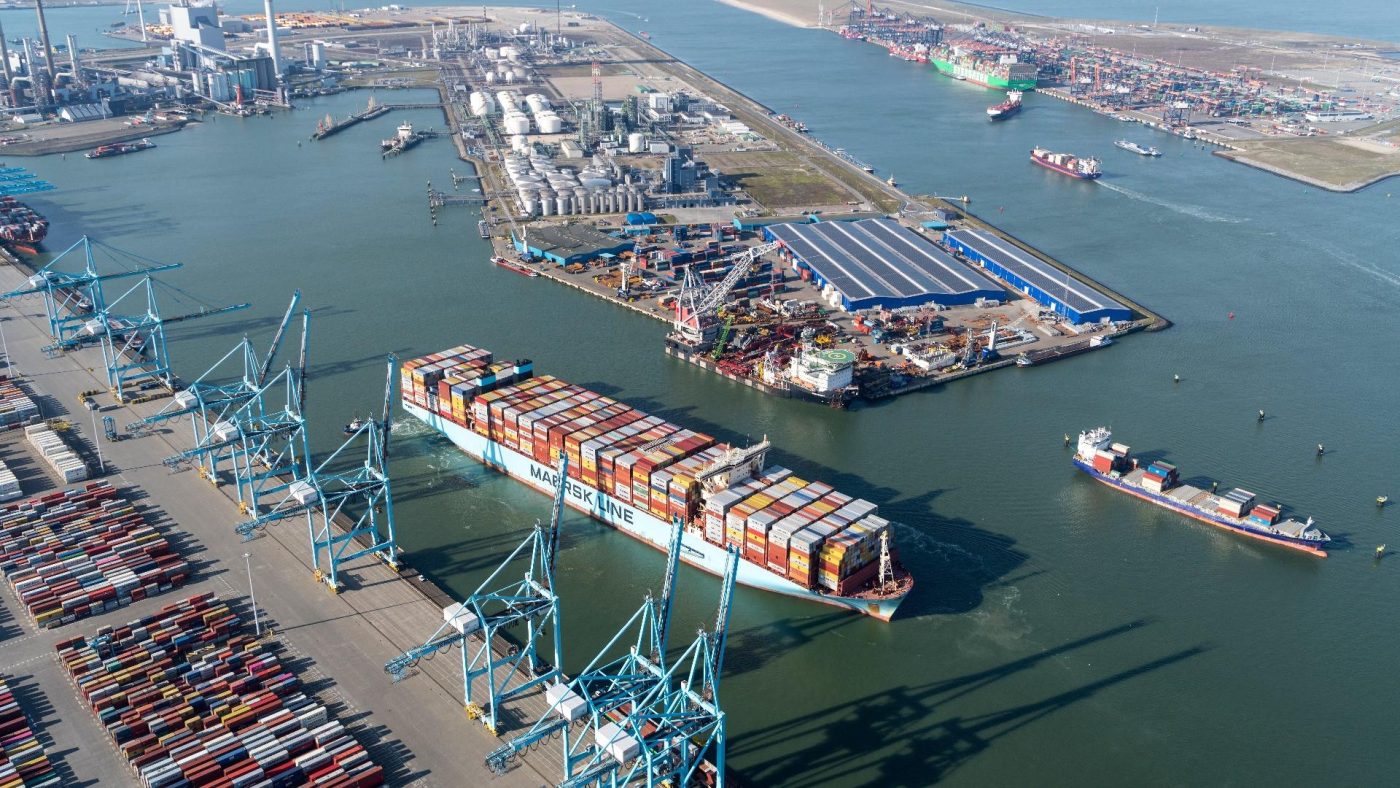
Charcoal Import Documents are an essential part of purchasing charcoal from Vietnam. For international importers, having the correct documents can make the difference between an orderly customs clearance process and a shipment delayed by incomplete information.
Vietnam exports different charcoal products, including natural hardwood charcoal, mangrove charcoal, coconut shell charcoal and manufactured sawdust briquettes. While these products may share similar commercial supply chains, their technical descriptions, customs classifications and supporting documentation can differ.
Most international charcoal shipments involve several familiar documents: a commercial invoice, packing list and transport document. Depending on the transaction, buyers may also need proof of origin, quality certificates and additional declarations.
However, not every document advertised by a supplier is legally mandatory for every shipment.
Some documents support customs clearance. Others are required under maritime dangerous-goods regulations, a particular trade agreement, a letter of credit or the importing country’s rules.
For sea shipments in 2026, one especially important consideration is the updated International Maritime Dangerous Goods (IMDG) Code, which requires charcoal covered by UN1361, Class 4.2, to be declared and transported under the applicable dangerous-goods provisions.
This guide explains the main Charcoal Import Requirements, what each document does and how buyers can prepare a practical checklist before ordering charcoal from Vietnam.
Which Charcoal Import Documents Are Essential?
A useful starting point is to separate routine commercial documents from documents required only under particular circumstances.
| Document | Purpose | When needed |
|---|---|---|
| Commercial Invoice | Product description, transaction value and seller/buyer details | Core import documentation |
| Packing List | Package count, net/gross weight and cargo configuration | Commonly required for clearance and checking |
| Bill of Lading | Evidence of sea carriage and cargo receipt | Sea freight; release arrangements vary |
| Customs Declaration | Formal customs entry | As required by export/import authorities |
| Certificate or Proof of Origin | Demonstrates qualifying origin | Where legally required or used for tariff preference |
| Dangerous Goods Declaration | Declares regulated charcoal cargo | Applicable IMDG sea shipments |
| Container Packing Certificate | Confirms container packing under IMDG rules | Applicable containerized dangerous-goods shipments |
| Quality Test Report | Supports product specification claims | Contract, buyer or authority dependent |
| Inspection/Survey Report | Documents defined inspection results | When required by carrier, contract or authority |
This distinction is important because the buyer should not simply request “all certificates” without understanding their purpose.
The U.S. International Trade Administration identifies the commercial invoice and export packing list as standard export documents, while explaining that additional documents depend on the destination and product.
Likewise, Maersk’s Vietnam customs-service guidance identifies commercial invoices and packing lists as core export documents, with certificates of origin and other documents required where applicable.
For importers, the most reliable method is to agree on a destination-specific document list before shipment.
Commercial Invoice: The Foundation of the Transaction
The commercial invoice is one of the most important Charcoal Export Documents.
It identifies the buyer and seller, describes the goods and records the commercial value of the transaction.
For a charcoal shipment, the invoice should clearly distinguish the actual product being supplied.
Descriptions such as “Charcoal” may be too broad for certain customs and commercial purposes.
A more informative description might identify natural mangrove wood charcoal or compressed sawdust charcoal briquettes, subject to the actual product characteristics.
The invoice commonly includes the quantity, unit price, total value, currency and agreed trade term.
It should also contain the relevant invoice number and date.
Customs authorities may use invoice information when determining the customs value of imported goods.
The invoice should therefore agree with other documents where they describe the same transaction.
For example, if the invoice shows 1,500 bags of charcoal, the packing list should not show a different number without a valid explanation.
Buyers should review draft commercial information before final documents are issued.
This is especially helpful when a shipment contains several charcoal products with different packaging sizes or customs codes.
3. Charcoal Packing List: Checking Bags, Cartons and Weights
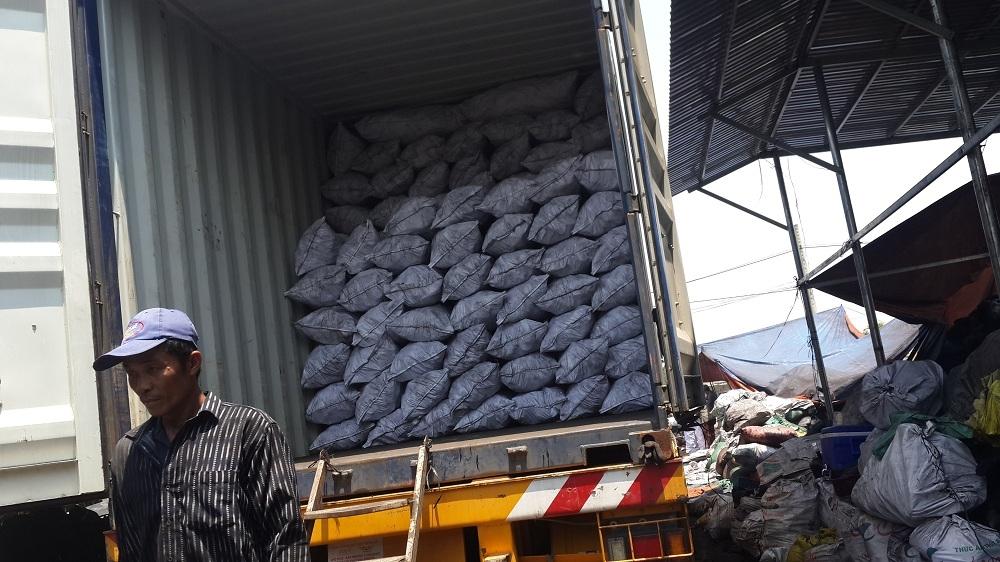
The Charcoal Packing List describes the physical contents and packing configuration of a shipment.
Unlike the commercial invoice, which emphasizes the transaction value, the packing list focuses on quantities, weights and package details.
A charcoal packing list commonly identifies the number of bags or cartons, net weight, gross weight and packaging type.
It may also include package marks, container references and relevant dimensions.
For example, a shipment containing 1,000 bags of charcoal with a net weight of 10kg per bag represents 10,000kg of net charcoal.
However, the gross shipment weight will be higher because it includes the packaging.
This distinction is relevant to cargo planning, warehouse records and customs examination.
The U.S. International Trade Administration notes that a packing list is not a substitute for a commercial invoice. Both documents serve different purposes and should contain consistent information.
When reviewing Charcoal Shipping Documents, buyers should pay particular attention to the relationship between package count and declared net weight.
Inaccurate figures can create unnecessary questions during customs clearance or warehouse receipt.
For private-label orders, product identification should also distinguish different packaging configurations.
A shipment containing both 5kg and 10kg bags should identify the quantities of each format rather than reporting only the total number of packages.
Charcoal Bill of Lading: Understanding the Transport Document
The Charcoal Bill of Lading (B/L) is a central document in international sea freight.
It is generally issued by a carrier or its authorized representative and records important information about the shipment.
A bill of lading may identify the shipper, consignee, notify party, vessel, ports of loading and discharge, container details and cargo description.
Depending on its type and terms, a bill of lading can serve as evidence of receipt, evidence of the carriage contract and a document of title.
The IMO describes these functions in its guidance on maritime transport documentation.
Buyers should distinguish a negotiable bill of lading from a non-negotiable sea waybill.
These documents can involve different cargo-release procedures.
The parties should agree on the appropriate release arrangement before shipment, particularly when payment is connected to shipping documents.
Importers should check that the transport document identifies the correct consignee and destination details.
Container numbers and seal numbers should also be checked against the relevant shipment records.
The Charcoal Bill of Lading does not replace the commercial invoice or packing list.
It serves a different function within the transportation and cargo-release process.
Charcoal Certificate of Origin: Is It Always Mandatory?
A Charcoal Certificate of Origin (C/O) identifies the origin of goods under the relevant origin rules.
However, a certificate of origin is not automatically mandatory for every charcoal import transaction.
Its necessity depends on the destination market, applicable customs requirements, trade agreement and commercial arrangements.
The International Chamber of Commerce distinguishes two broad categories of certificates of origin:
-
Non-preferential origin documents: Used to establish origin without necessarily granting reduced customs duties.
-
Preferential origin documents: Used to support tariff preferences where an applicable trade agreement provides them.
The ICC explains that the certificate’s role is to establish the nationality of the product for customs or trade purposes.
For buyers importing from Vietnam, preferential origin documentation may become relevant when claiming benefits under an applicable free trade agreement.
However, eligibility must be checked against the product’s tariff classification and the origin rules of that agreement.
The European Commission confirms that preferential origin can be demonstrated through different forms of proof depending on the specific trade arrangement.
Therefore, buyers should not request a particular C/O form solely because they have seen it used for another product.
The correct document should be determined before shipment with the importing customs representative.
A certificate of origin also does not prove that the charcoal meets every technical quality or environmental requirement.
Origin, quality and legal sourcing are separate matters.
Charcoal Dangerous Goods Declaration: The Critical 2026 Requirement
The Charcoal Dangerous Goods Declaration is particularly important for international sea shipments.
Under IMDG Code Amendment 42-24, mandatory from January 1, 2026, charcoal is subject to updated dangerous-goods requirements.
Hapag-Lloyd states that charcoal covered by the classification must be declared as UN1361, CARBON, animal or vegetable origin, Class 4.2.
For affected shipments, the dangerous-goods transport documentation must contain the required classification and consignment details.
The applicable provisions also address packaging certification, markings, labeling and documentation.
However, this does not mean a commercial invoice or standard packing list can substitute for a compliant Dangerous Goods Declaration.
Nor should an old non-dangerous-goods shipping practice be assumed valid under the 2026 framework.
The IMO’s amended IMDG provisions require a consignor’s dangerous-goods certification and, for applicable containerized shipments, a container/vehicle packing certificate. These may be incorporated into one compliant document or provided separately.
Importers should confirm that the shipper and freight forwarder have arranged the required documents and that the carrier accepts the proposed cargo.
This is a safety and legal compliance matter, not merely an optional administrative attachment.
Container Packing Certificates and Carrier-Specific Documents
In addition to the Dangerous Goods Declaration, relevant containerized shipments require a container packing certificate under the IMDG framework.
The document confirms that container packing has been carried out in accordance with the applicable provisions.
Its role differs from that of a commercial packing list.
A commercial packing list describes the goods and quantities. A container packing certificate addresses regulatory aspects of packing dangerous goods into the cargo transport unit.
Certain shipping lines also impose additional conditions.
For example, Hapag-Lloyd’s June 2026 requirements for charcoal shipments originating in Vietnam include a carrier-specified vanning survey report issued by an accepted surveyor and additional requirements for the transport arrangement.
Those conditions are specific to the carrier and applicable shipments.
They should not be described as universally required by every shipping line.
For buyers, the commercial lesson is clear: confirm the proposed carrier’s acceptance criteria before the shipping schedule is finalized.
A generic shipping document checklist may be insufficient when the carrier requires additional supporting reports.
The exporter, freight forwarder and carrier should coordinate the applicable requirements through qualified dangerous-goods personnel.
Quality Certificates and Inspection Reports: When Are They Needed?

Quality certificates are often requested in international charcoal transactions, but they should not be confused with mandatory customs documents.
A Certificate of Analysis (COA) may describe tested characteristics such as fixed carbon, moisture, ash and volatile matter.
Its relevance depends on the charcoal product, contract and intended market.
Some buyers require independent inspection reports to verify quantity, dimensions or other agreed specifications.
However, a laboratory report does not automatically prove that every unit in a shipment meets the same results.
Buyers should identify the tested sample, applicable method and relationship between the report and commercial lot.
Inspection requirements should also be distinguished from the documentation necessary for dangerous-goods carriage.
A normal charcoal quality COA cannot automatically replace the documents and certifications required under the IMDG Code.
For Charcoal Import Requirements, the most practical approach is to list contract-specific quality documents separately from legally required shipping and customs documents.
Charcoal Customs Clearance: Why Destination Rules Matter
Charcoal Customs Clearance depends on the rules of the importing country.
The documents accepted by one customs administration may not be sufficient for another.
Buyers must consider tariff classification, declared customs value, country of origin and any applicable product-specific controls.
For example, charcoal products can fall under HS heading 4402, but the appropriate subheading depends on the material.
The final national tariff code must be confirmed under the importing country’s current classification system.
Customs authorities may also require additional declarations or supporting evidence for particular goods.
Maersk advises customers that commodity-specific documents can be necessary beyond the commercial invoice, packing list and transport document.
Importers should therefore involve a qualified customs broker before shipment rather than discovering documentation gaps after arrival.
It is equally important not to assume that one country-specific environmental, origin or packaging rule automatically applies to every destination.
A buyer serving several markets may need different compliance files even when importing the same charcoal product from Vietnam.
How to Avoid Document Errors Before Shipment
Many documentation problems are caused by inconsistent or incomplete information.
For example, an invoice may describe the goods as hardwood charcoal while another document identifies coconut shell charcoal.
Such discrepancies can raise questions because these products may have different customs classifications.
Another common issue is disagreement between the package count in the packing list and the transport document.
Incorrect consignee details, inconsistent weights or missing container references can also disrupt the release process.
To reduce these risks, buyers should ask for draft documents where commercially practical.
The purchasing team can compare them against the approved purchase order before final versions are issued.
For dangerous-goods documents, the relevant authorized parties must verify the information under the applicable regulations.
A buyer should not attempt to resolve a regulatory declaration issue simply by changing a commercial product description.
The objective is accuracy and consistency, not making the shipment appear administratively simpler.
Charcoal Import Checklist for International Buyers
The following Charcoal Import Checklist can be used when coordinating with a Vietnamese charcoal supplier and customs broker.
Shipment document checklist
0/11 reviewed
Copy Import Checklist
This checklist is a purchasing aid, not a substitute for customs advice or dangerous-goods compliance verification.
Importing Charcoal from Vietnam: Who Prepares Each Document?
Real photograph: Charcoal packaging operation in Vietnam. Source: Vinacoal. ALT: Import Charcoal from Vietnam – exporter preparation and charcoal shipping documents.
When businesses Import Charcoal from Vietnam, documentation responsibilities are often divided among several parties.
The exporter generally prepares commercial information, including invoices and packing lists.
The ocean carrier or its authorized representative issues the relevant transport document.
Origin documents are obtained or issued through the procedure required by the relevant origin arrangement.
Dangerous-goods declarations and container packing certificates must be completed and certified by the legally responsible parties.
Meanwhile, the importer normally coordinates import customs clearance through its customs representative, subject to the applicable transaction and local rules.
The exact allocation of responsibilities should be confirmed in the contract and shipping instructions.
Importers should not assume that one freight forwarder automatically handles every document.
A clear division of responsibilities reduces the risk that essential paperwork is overlooked.
13. Vietargo and Charcoal Export Documentation
Vietargo operates in Vietnam’s charcoal export industry.
For buyers considering charcoal supplied by Vietargo, a practical starting point is to identify the intended charcoal product, quantity, packaging, destination country and preferred shipping arrangement.
These details help establish which documents should be discussed before an order is confirmed.
Buyers may also request information about product specifications and supporting documentation relevant to their market.
However, the availability of particular certificates, inspection services and carrier arrangements must be confirmed directly for each transaction.
A document issued for one shipment should not automatically be treated as valid evidence for another product or commercial lot.

Frequently Asked Questions
Is a Certificate of Origin mandatory for all charcoal imports?
No. The requirement depends on the destination’s customs rules, applicable trade agreement and transaction. Preferential tariff treatment may require an accepted form of proof of origin.
Can a packing list replace a commercial invoice?
No. They serve different purposes. The commercial invoice describes the transaction and value; the packing list details the physical cargo.
Is a Dangerous Goods Declaration required for charcoal shipped by sea?
For charcoal shipments subject to the applicable UN1361 classification under IMDG Code Amendment 42-24, the required dangerous-goods documentation must be provided.
Does every buyer need a charcoal quality certificate?
Not necessarily. Quality documentation may be required by the contract, buyer or relevant authority, depending on the transaction.
Who determines the final import documentation requirements?
The destination customs authority and other relevant regulators determine legal requirements. The importer should verify these through a qualified customs broker and coordinate shipping documents with the carrier and exporter.
Conclusion
Understanding Charcoal Import Documents is essential for companies purchasing charcoal from Vietnam.
A standard shipment typically involves a commercial invoice, packing list and relevant sea transport document.
Depending on the destination and transaction, buyers may also need proof of origin, quality reports and additional customs documentation.
For applicable sea shipments, the Charcoal Dangerous Goods Declaration and associated IMDG documentation are especially important under the rules mandatory from January 1, 2026.
Carrier-specific requirements may add further documentation obligations.
The best approach is to confirm the complete document list before shipment, assign responsibilities clearly and review all information for consistency before the cargo reaches the destination.
VIETARGO – THE BEST CHARCOAL OF THE WORLD TO YOUR SHELF
Website : https://vietargo.com/
Facebook : Vietargo
địa chỉ : 10 Nguyen Hien Street, 91B Residential Area, Can Tho, Vietnam
☎: 0939364888