

Fixed Carbon, Ash and Moisture: What Charcoal Test Results Mean
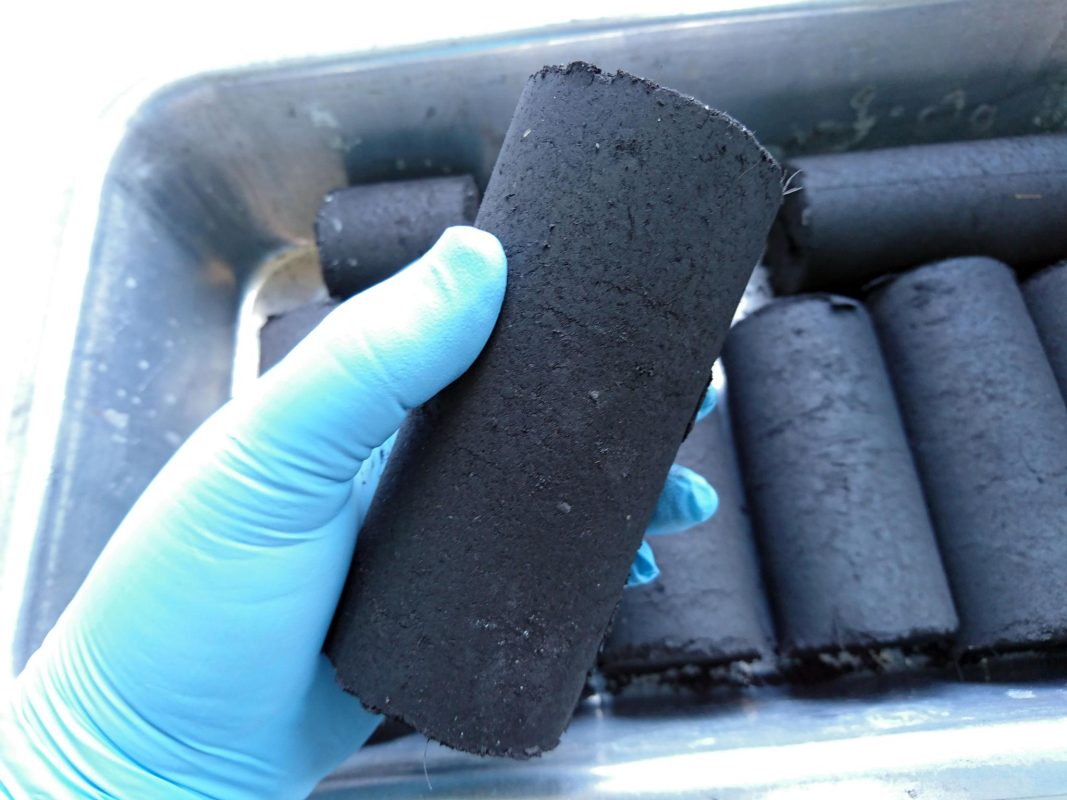
Charcoal Quality Test Results provide essential information for international importers, wholesale distributors and commercial charcoal buyers. Understanding fixed carbon, ash content and moisture helps buyers evaluate product specifications before making purchasing decisions.
However, percentages alone do not tell the complete story. Different charcoal products may require different specifications, and laboratory results must be interpreted according to the testing method and reporting basis.
Understanding Charcoal Quality Parameters is particularly important when comparing natural hardwood charcoal, coconut shell charcoal, mangrove charcoal and sawdust charcoal briquettes.
Reliable Charcoal Quality Testing helps buyers distinguish measurable product characteristics from unsupported quality claims.
What Are Charcoal Quality Test Results?
Charcoal Quality Test Results are measurements obtained from laboratory analysis of charcoal samples using specified testing methods.
One commonly used approach is Charcoal Proximate Analysis, which evaluates moisture, volatile matter, ash and fixed carbon.
According to the Food and Agriculture Organization (FAO), these characteristics provide important information about charcoal composition and can support quality control and product evaluation.
However, proximate analysis does not measure every aspect of charcoal performance.
Physical strength, particle size, calorific value and application-specific performance may require additional testing.
Therefore, interpreting Charcoal Quality Test Results requires understanding both the analytical information and the intended application.
Understanding Charcoal Fixed Carbon Content
Charcoal Fixed Carbon Content is one of the most important parameters in charcoal quality evaluation.
Fixed carbon represents the carbonaceous residue remaining after accounting for volatile matter and ash on a consistent analytical basis. In proximate analysis, it is generally calculated by difference rather than measured directly as elemental carbon.
Higher fixed carbon content often corresponds to lower volatile matter content.
However, a higher percentage does not automatically guarantee longer burning duration or superior performance under every operating condition.
Factors such as charcoal size, structure and application also influence practical results.
What Is a Good Fixed Carbon Percentage?
Under EN 1860-2:2023, lump barbecue charcoal covered by the standard must contain at least 75% fixed carbon on a dry basis.
This requirement applies to the specified product category and should not be treated as a universal minimum for all charcoal briquettes or industrial carbon products.
When evaluating Charcoal Quality Test Results, buyers must identify whether fixed carbon is reported on a dry basis or an as-received basis.
Different reporting bases can produce different percentages for the same material.
What Does Charcoal Ash Content Mean?
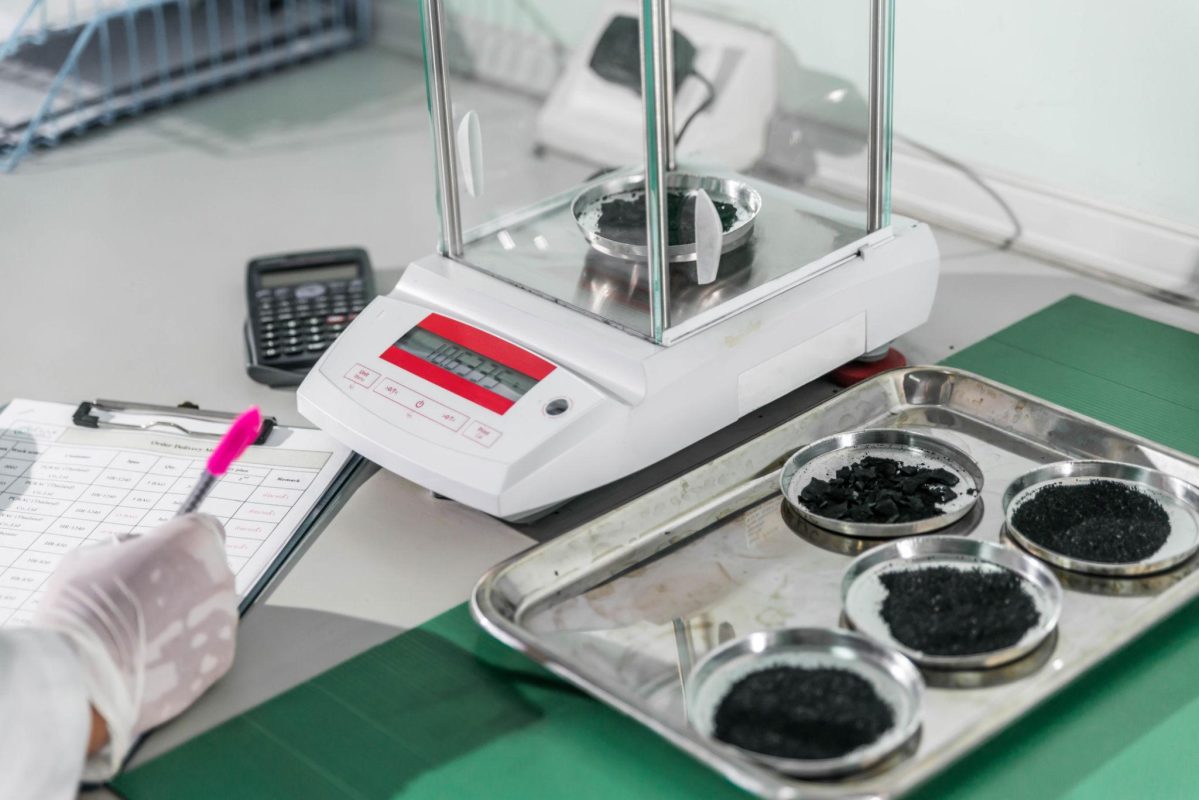
Charcoal Ash Content refers to the proportion of inorganic residue remaining after a sample is analyzed using an appropriate ash determination method.
Ash contains mineral constituents originating from the raw material and may also reflect contamination introduced during production or handling.
FAO identifies raw material characteristics, bark content and contamination as factors affecting charcoal ash levels.
Does High Ash Content Indicate Poor Quality?
High ash content may be undesirable in applications where limited residue is important.
Nevertheless, acceptable ash percentages vary depending on the product type and intended application.
For lump barbecue charcoal, EN 1860-2:2023 specifies a maximum ash content of 8% on a dry basis.
This requirement should not automatically be applied to every charcoal briquette or industrial charcoal product.
When comparing Charcoal Quality Test Results from different suppliers, buyers should verify that ash values are expressed using comparable analytical methods and reporting bases.
Charcoal Ash Content should also be considered alongside fixed carbon, moisture and other relevant quality specifications.
Why Charcoal Moisture Content Matters
Charcoal Moisture Content represents the proportion of water in a charcoal sample at the time of analysis.
Moisture influences shipment weight, storage conditions and the useful energy available from charcoal on an as-received mass basis.
When moisture increases, part of the energy released during combustion is used to evaporate water rather than contributing directly to useful heating.
For international buyers, this makes moisture an important commercial consideration.
What Moisture Level Is Acceptable?
EN 1860-2:2023 establishes a maximum total moisture content of 8% for barbecue charcoal within its scope.
However, the appropriate limit depends on the specific charcoal product, contract requirements and applicable technical standards.
Charcoal Moisture Content may change during storage or transportation because of environmental conditions and packaging characteristics.
Therefore, Charcoal Quality Testing should record the sampling date and relevant sample conditions.
A moisture result without adequate sample information may not represent the condition of the delivered shipment.
How Charcoal Proximate Analysis Works
Charcoal Proximate Analysis considers fixed carbon, moisture, ash and volatile matter as related components of a sample.
These values should be interpreted on a consistent mass basis.
For example, consider the following hypothetical laboratory results on an as-received basis:
-
Moisture: 6%.
-
Volatile Matter: 18%.
-
Ash Content: 4%.
-
Fixed Carbon: 72%.
These values are illustrative only, not verified results from a commercial charcoal sample.
Together, they account for 100% of the analyzed material on the same reporting basis.
When fixed carbon is converted from an as-received basis to a dry basis, its percentage changes because moisture is excluded from the reference mass.
This is why buyers must check whether a Charcoal Test Report uses dry basis, as-received basis or another clearly defined reporting convention.
Understanding these differences is essential for accurate comparison of Charcoal Quality Parameters.
How to Read Charcoal Test Results Correctly
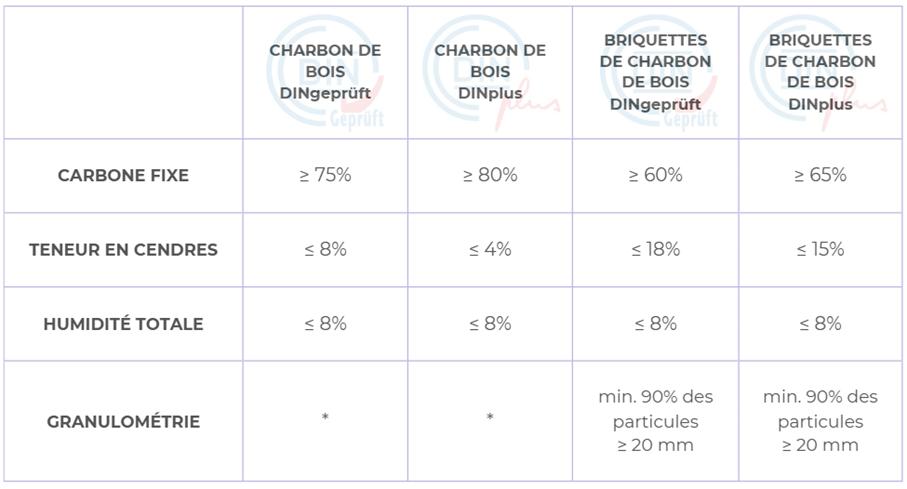
Understanding How to Read Charcoal Test Results involves more than identifying acceptable percentages.
A reliable Charcoal Test Report should provide sufficient information to identify the tested sample, testing date, analytical method, units and reported results.
Sample identification is particularly important.
Buyers should determine whether the tested material came from an approved reference sample, a specific production batch or the actual shipment.
They should also review the method used for each parameter.
Two reports may appear similar while using different analytical procedures or reporting bases.
Understanding a Charcoal Certificate of Analysis
A Charcoal Certificate of Analysis (COA) summarizes specified quality characteristics measured for a sample or batch.
A COA may include fixed carbon, moisture, ash, volatile matter and other properties relevant to the product.
However, a Charcoal Certificate of Analysis does not automatically prove that an entire container meets contractual specifications.
Its evidential value depends on sample traceability, testing methods and the relationship between the sample and the delivered goods.
When buyers review Charcoal Quality Test Results, they should consider laboratory findings together with shipment records and agreed acceptance criteria.
Important Charcoal Quality Standards
Charcoal Quality Standards establish technical requirements and testing methods for different charcoal products.
ASTM D1762-84(2026) is a standard test method for the chemical analysis of wood charcoal. It covers moisture, volatile matter and ash determination for wood charcoal in lump and briquette forms.
EN 1860-2:2023 specifies requirements and testing methods for barbecue charcoal and barbecue charcoal briquettes.
It includes requirements related to chemical composition, moisture and physical characteristics.
DIN CERTCO also refers to DIN EN 1860-2 when evaluating barbecue charcoal products under its certification program.
When selecting Charcoal Quality Standards, buyers should confirm that the standard applies to the product and intended market.
Products tested according to a recognized method should not automatically be described as certified products.
A Charcoal Test Report and a formal product certificate serve different purposes.
Why One Quality Parameter Is Not Enough
High fixed carbon alone does not establish overall charcoal quality.
Similarly, low moisture does not guarantee suitable particle size, mechanical strength or consistent performance.
A product may meet one technical requirement while failing another specification relevant to its intended use.
For this reason, Charcoal Quality Test Results should be considered as a combination of chemical and physical information.
International buyers should review Charcoal Fixed Carbon Content, Charcoal Ash Content, Charcoal Moisture Content and other agreed parameters together.
Reliable Charcoal Quality Testing also requires suitable sampling procedures and consistent analytical methods.
These considerations become particularly important when evaluating bulk shipments or comparing different suppliers.
Conclusion
Charcoal Quality Test Results help international buyers understand important characteristics of charcoal products before making commercial decisions.
Fixed carbon, ash and moisture provide valuable information about composition, but their interpretation depends on analytical methods, reporting bases and product specifications.
Understanding How to Read Charcoal Test Results, reviewing the Charcoal Certificate of Analysis and selecting appropriate Charcoal Quality Standards can support more accurate product comparisons.
Reliable charcoal evaluation depends on consistent technical evidence, representative samples and a clear connection between laboratory findings and the goods actually supplied.
Sources & References
VIETARGO – THE BEST CHARCOAL OF THE WORLD TO YOUR SHELF
Website : https://vietargo.com/
Facebook : Vietargo
địa chỉ : 10 Nguyen Hien Street, 91B Residential Area, Can Tho, Vietnam
☎: 0939364888