

Charcoal Price per Ton in Vietnam: How Much Does Wholesale Charcoal Cost?
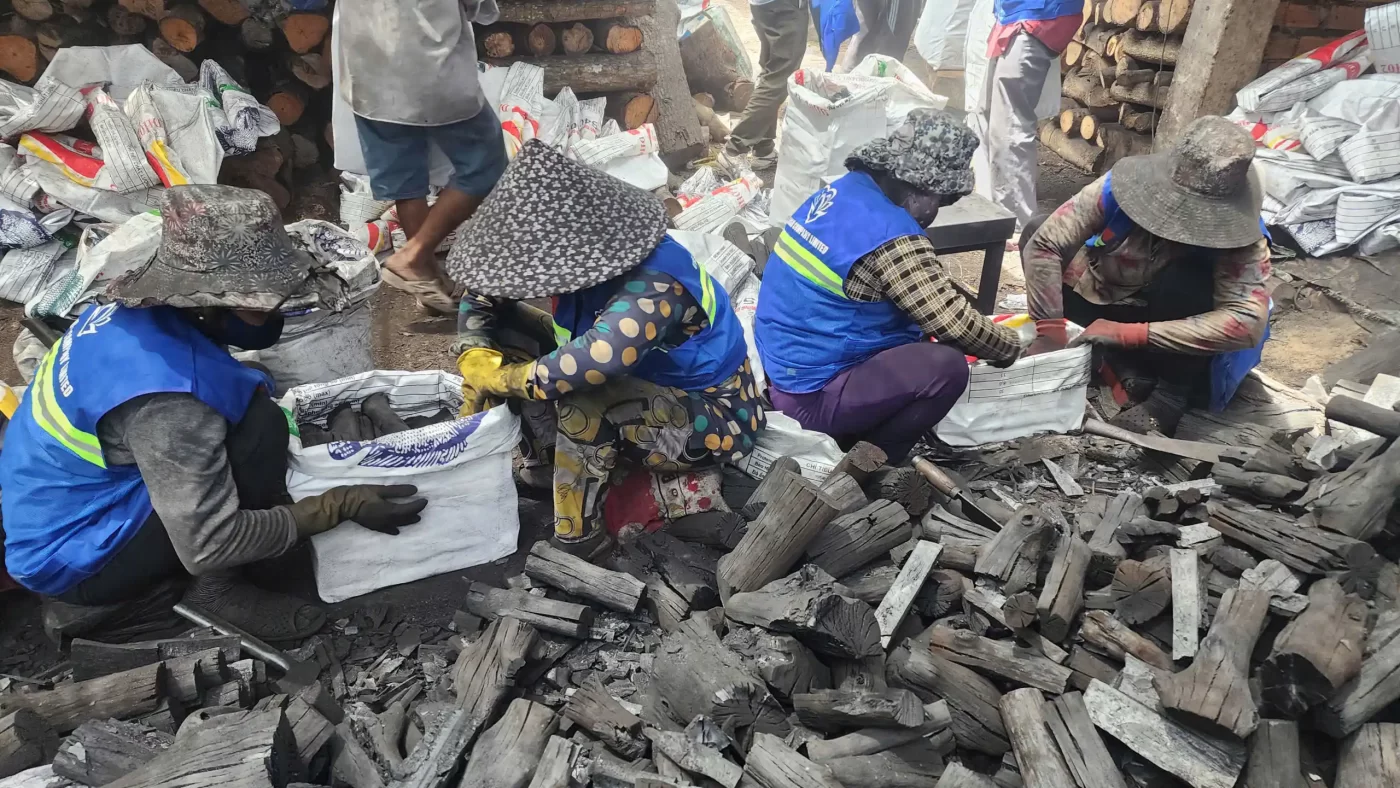
How much does wholesale charcoal cost in Vietnam in 2026?
For international importers, the answer depends on the product being purchased. Natural hardwood charcoal, mangrove charcoal, compressed sawdust briquettes and coconut shell charcoal are sold under different specifications and commercial arrangements.
The Charcoal Price per Ton in Vietnam is therefore not represented by one universal market quotation.
Publicly advertised FOB prices reviewed in October and November 2026 show substantial differences between charcoal categories. For example, Vietnam-based commodity supplier Luason publishes indicative prices of approximately USD 500–600 per metric ton for one khaya hardwood grade, compared with USD 1,050–1,250 per metric ton for a higher-fixed-carbon coconut shell charcoal grade in its October 21 price history.
These figures describe the supplier’s listed products and specifications. They should not be interpreted as an official national charcoal price index.
Other suppliers may offer different prices for comparable products, while packaging, quantity, quality requirements and shipping arrangements can change the final commercial offer.
For buyers comparing Wholesale Charcoal Price Vietnam quotations, understanding these distinctions is more useful than relying on a single headline price.
This article examines publicly available price references, explains differences between major charcoal categories and shows how international buyers can evaluate the total cost of importing charcoal from Vietnam.
Charcoal Price per Ton in Vietnam: 2026 Wholesale Price Overview
The following table summarizes selected publicly advertised prices from Luason’s Vietnam charcoal catalog.
The supplier identifies Cat Lai Port, Ho Chi Minh City, as the FOB shipment location for these listings.
| Charcoal product | Published FOB price (USD/MT) | Listed fixed carbon |
|---|---|---|
| Khaya hardwood charcoal | $500–600 | ≥75% |
| Mangrove charcoal | $550–650 | ≥60% |
| Sawdust charcoal briquettes, Grade A | $700–800 | >85% |
| Coconut shell charcoal | $850–950 | 60–65% |
| Coconut shell charcoal, higher-carbon grade | $1,050–1,250 | >75% |
| Coconut shell shisha charcoal | $1,600–1,850 | >70% |
Source: Luason’s published October 21, 2026 price history and product catalog, reviewed November 10, 2026. Seller-advertised indicative FOB ranges; packaging surcharges may apply. These are not market-wide averages, independently verified transactions or Vietargo prices.
The table demonstrates why a buyer should specify the product type when asking for a Vietnam Charcoal Price per Ton.
A quotation for mangrove charcoal cannot automatically be compared with a quotation for coconut shell briquettes.
Even within one raw-material category, different fixed carbon specifications may correspond to substantially different advertised prices.
The listed coconut shell shisha product is also a distinct commercial category. Its price should not be treated as a benchmark for ordinary BBQ charcoal.
Another Vietnamese charcoal supplier, Vietnam Charcoal, published March 2026 FOB estimates of USD 700–850 per metric ton for selected hardwood lump charcoal products and USD 700–850 for standard sawdust briquettes.
The difference between these published estimates and Luason’s listings illustrates how supplier, grade, reference date and specification can influence advertised prices.
Importers should not combine these observations into a single market average without comparable underlying transaction data.
Mangrove and Hardwood Charcoal Prices in Vietnam
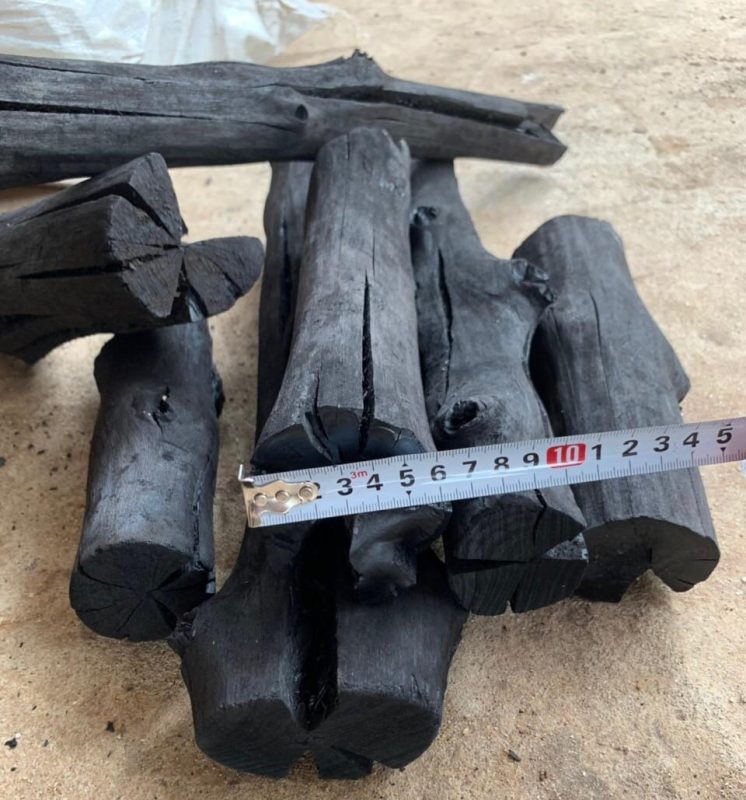
Mangrove charcoal and other natural hardwood products form an important part of Vietnam’s commercial charcoal offerings.
However, hardwood is a broad category rather than one standardized product.
Different wood species, shapes, grades and sorting requirements can influence the quotation.
Luason’s October 2026 references indicate USD 550–650 per metric ton for its listed mangrove charcoal and USD 500–600 for its khaya hardwood charcoal.
These figures are relevant as examples of supplier asking prices, not guaranteed offers available to every buyer.
Natural charcoal is often categorized according to piece dimensions and physical condition.
A buyer purchasing longer charcoal sticks may face different commercial specifications from one purchasing mixed-size lumps.
The proportion of broken pieces can also influence resale suitability.
For restaurants requiring defined dimensions, the cheapest mixed-size product may not be commercially equivalent to carefully selected material.
Importers should therefore confirm the actual charcoal grade before comparing Bulk Charcoal Price offers.
Sourcing information is another consideration, particularly for wood-derived charcoal.
Buyers may need evidence concerning the legality and origin of the raw material, depending on the destination market and contractual requirements.
A lower quoted price does not remove these obligations.
Sawdust Charcoal Briquette Price in Vietnam
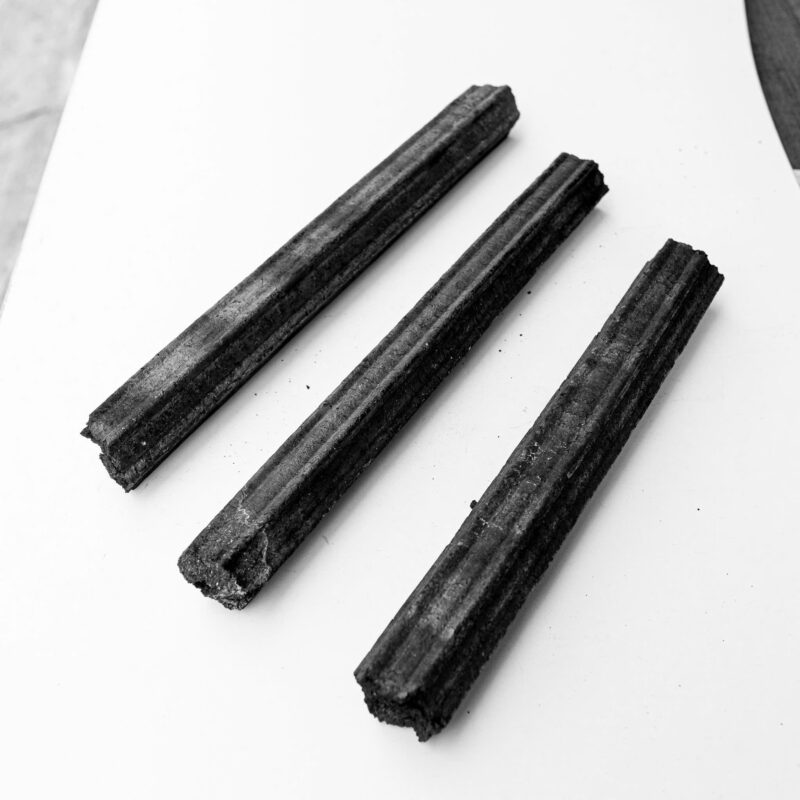
The Sawdust Charcoal Briquette Price depends on the finished product’s shape, dimensions, composition and quality specification.
Manufactured sawdust briquettes are commonly supplied as bars, including hexagonal products with central holes.
Unlike irregular natural lump charcoal, these products can be described using nominal dimensions and length ranges.
However, the same shape does not guarantee identical fuel properties.
Meanwhile, Vietnam Charcoal’s March 2026 guide lists standard sawdust briquettes at USD 700–850 per metric ton, with some differentiated products advertised at higher prices.
These ranges partly overlap, but they should not be treated as two independent confirmations of one universal market price.
The products may differ in dimensions, technical characteristics or commercial terms.
For buyers, the most relevant question is whether the briquettes meet the intended customer’s requirements.
A restaurant supplier may prioritize defined dimensions and product consistency.
A private-label retailer may place additional importance on packaging appearance and individual pack sizes.
Therefore, a meaningful quotation should identify the charcoal specification and packaging configuration rather than only a price per metric ton.
Coconut Shell Charcoal Price: Why Grades Vary
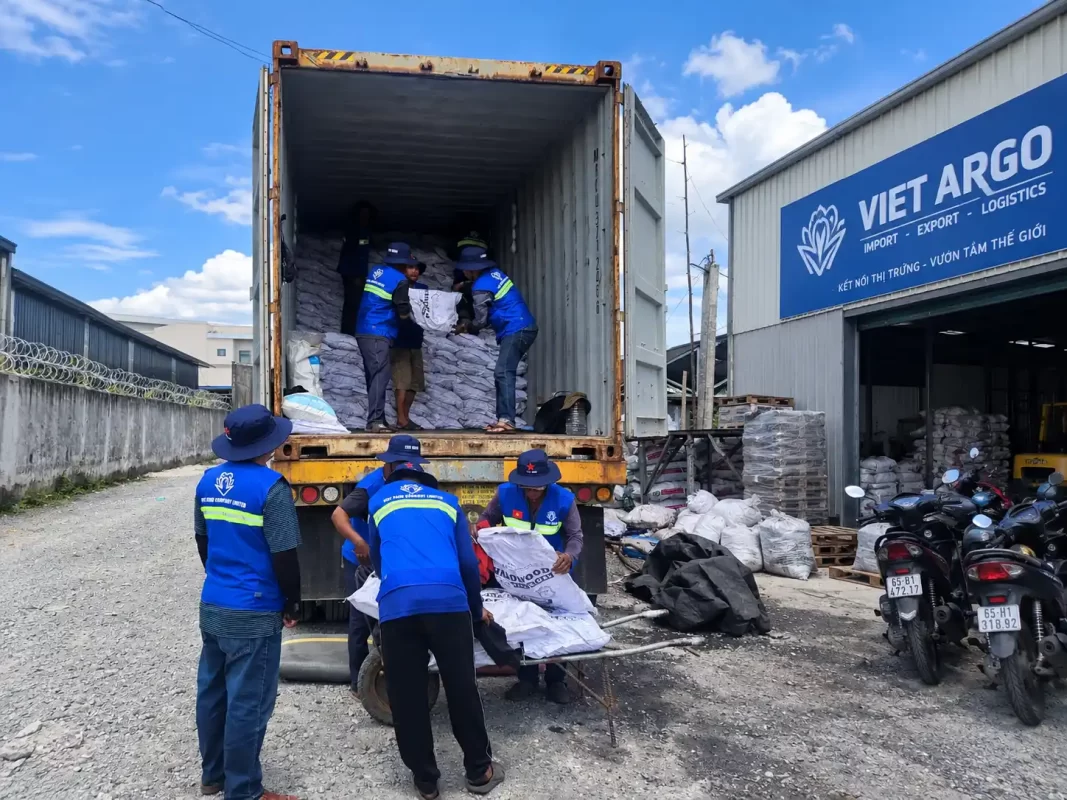
The Coconut Shell Charcoal Price varies according to the actual product being sold.
Buyers should distinguish carbonized coconut shell material from manufactured coconut shell briquettes.
They should also separate BBQ-grade products from specialized categories with different physical and technical requirements.
For example, Luason’s published October 2026 prices show USD 850–950 per metric ton for coconut shell charcoal with listed fixed carbon of 60–65%.
Its higher-carbon grade, advertised at more than 75% fixed carbon, is listed at USD 1,050–1,250 per metric ton.
These figures demonstrate variation within one supplier’s coconut charcoal catalog.
They do not prove that fixed carbon alone determines the price.
Other specifications, production requirements and commercial positioning may also differ.
Some coconut shell charcoal is sold as an input for further manufacturing, while other products are supplied in finished briquette formats.
Those products may involve different processing and packaging arrangements.
For this reason, buyers should confirm whether a quotation covers raw carbonized shell pieces, finished briquettes or another specified product.
A Vietnam BBQ Charcoal Price comparison becomes misleading when fundamentally different coconut charcoal products are grouped together.
Charcoal FOB Price Vietnam: What Is Actually Included?
One of the most important distinctions in international charcoal pricing is the difference between the supplier’s product quotation and the buyer’s final import cost.
A Charcoal FOB Price Vietnam quotation refers to the agreed Free On Board arrangement at the named shipment port under the specified Incoterms rule.
Under Incoterms® 2020, FOB generally requires the seller to deliver the goods on board the vessel nominated by the buyer at the named port of shipment.
The buyer arranges the main ocean carriage and normally bears the associated costs after the FOB delivery point.
However, the parties should confirm that FOB is appropriate for the actual shipment.
The International Chamber of Commerce explains that FCA may be more suitable when containerized goods are handed over to the carrier at a terminal before being loaded on board.
For charcoal importers, a quotation should identify the relevant trade term, named location and included services.
A price described only as “FOB Vietnam” leaves important details unresolved.
The buyer should also determine whether packaging, documentation, applicable transport-related charges and inspection arrangements have been included in the commercial price.
These details can make a substantial difference when comparing suppliers.
Charcoal Export Price Vietnam vs Total Import Cost
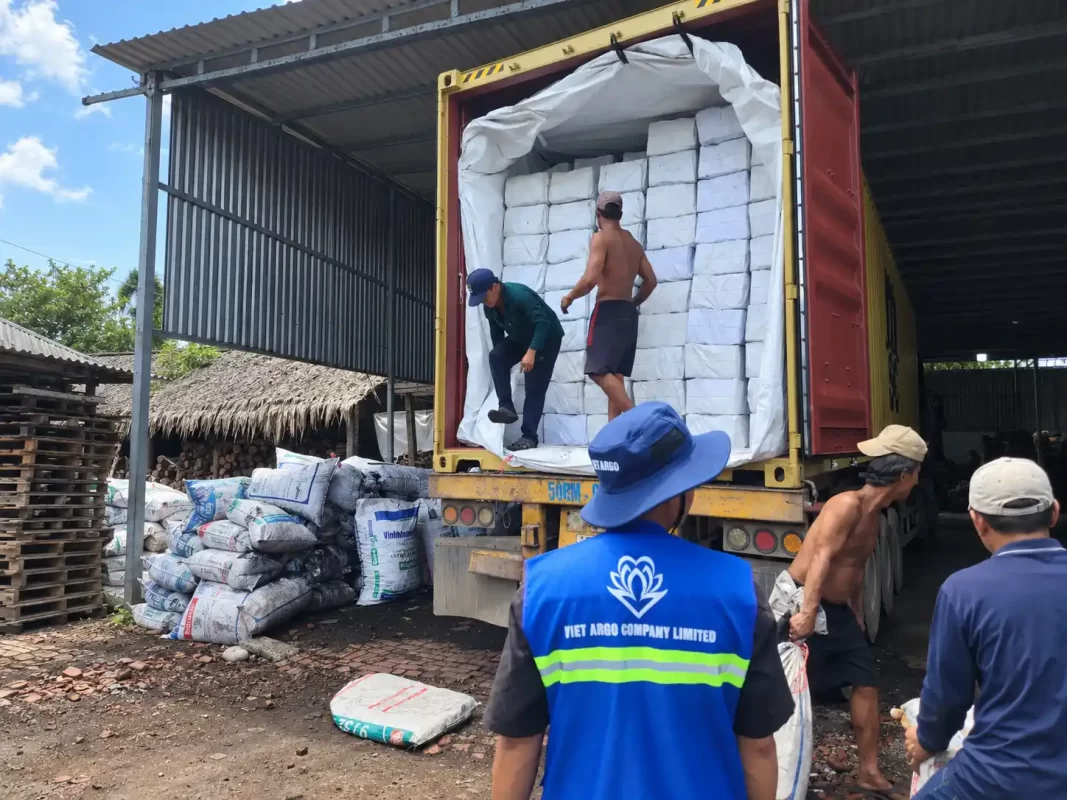
A supplier’s Charcoal Export Price Vietnam quotation does not necessarily represent the amount an importer will ultimately spend.
International freight, insurance, destination charges, customs duties and inland transportation can influence the final purchasing budget.
The appropriate comparison depends on the delivery term and the costs included in each quotation.
Consider a hypothetical order of 20 metric tons of charcoal.
| Cost component | Illustrative amount |
|---|---|
| FOB charcoal price | $750/MT |
| FOB shipment value | $15,000 |
| Ocean freight | $2,000 |
| Cargo insurance | $150 |
| Total before destination costs | $17,150 |
| Equivalent cost per MT | $857.50 |
Illustrative calculation only. These are not actual freight rates, port charges, confirmed supplier prices or Vietargo quotations. The example excludes destination handling, duties, taxes and inland transportation.
The example shows why a quoted price of USD 750 per metric ton does not mean the importer receives the charcoal at its destination warehouse for that amount.
Actual shipping expenses depend on the origin and destination, carrier arrangements, shipment characteristics and applicable requirements.
Charcoal transportation also presents specific regulatory considerations.
IMDG Code Amendment 42-24 became mandatory on January 1, 2026. Hapag-Lloyd confirms that charcoal covered by UN1361, Class 4.2, is subject to dangerous-goods declaration, packaging and documentation requirements.
Individual shipping lines may also apply additional charges or acceptance requirements.
For example, Hapag-Lloyd announced a dangerous-goods premium of USD 250 or EUR 210 per container under its published arrangements. This is a carrier-specific charge, not a universal fee for every charcoal shipment.
Such considerations should be included when evaluating Charcoal Import Costs.
What Do Trade Statistics Reveal About Wholesale Charcoal Prices?
Importers sometimes use international trade data to estimate the average value of charcoal exports.
These statistics can be useful, but they require careful interpretation.
A trade unit value is generally calculated using the reported trade value divided by the reported quantity.
However, this figure is not the same as an individual supplier quotation.
UN Comtrade explains that merchandise export statistics are generally recommended to be recorded on an FOB-type valuation basis, while imports are commonly recorded using CIF-type values. National practices can differ.
Therefore, export and import unit values may include different cost components.
Furthermore, trade data may aggregate charcoal products that differ in raw material, grade and commercial application.
A statistical value for a broad customs classification does not necessarily represent the price of restaurant-grade mangrove charcoal or hexagonal sawdust briquettes.
For procurement, trade statistics are better used to understand broad market patterns than to establish the price of a specific shipment.
Buyers should obtain current quotations for the precise product they intend to purchase.
How to Compare Charcoal Supplier Prices in Vietnam
A reliable Charcoal Supplier Price Vietnam comparison should use equivalent purchasing conditions.
Suppose two suppliers quote hardwood charcoal.
Supplier A offers a lower unit price but provides only a broad product description.
Supplier B provides a more detailed specification identifying charcoal type, size distribution, moisture and packaging.
The lower price may be commercially attractive, but the buyer does not yet have enough information to determine whether the products are equivalent.
The Food and Agriculture Organization explains that charcoal moisture affects its useful heating value and that quality should be evaluated using defined characteristics rather than appearance alone.
Importers should therefore compare product specifications alongside price.
The purchasing quantity, packaging format, delivery term and shipment period should also be aligned.
If one quotation includes custom retail packaging while another covers standard commercial sacks, the difference should be recognized rather than treated as a direct product-price comparison.
For buyers intending to make repeat purchases, clear quotation validity and consistent product descriptions are especially useful.
A published supplier price range is only a starting point. The final commercial terms must be confirmed for the actual transaction.
Can Importers Expect Lower Charcoal Prices for Larger Orders?
Larger purchasing quantities may offer opportunities to negotiate different commercial terms.
However, there is no universal volume discount applicable to all Vietnamese charcoal suppliers.
The price offered for one container can differ from a quotation for multiple containers, depending on production requirements and available capacity.
Packaging customization may create additional minimum order quantities.
A supplier may also price a repeat-order arrangement differently from a one-time purchase.
Nevertheless, larger orders can increase the buyer’s inventory commitment and financial exposure.
Importers should evaluate whether the proposed quantity matches expected sales and storage capacity.
A lower Charcoal Price per Metric Ton does not automatically make a larger order the better business decision.
The complete agreement should reflect the buyer’s purchasing requirements, product specifications and acceptable commercial risk.
Vietargo and Wholesale Charcoal Sourcing from Vietnam
Vietargo operates in Vietnam’s charcoal export industry.
For international buyers researching the Charcoal Price per Ton in Vietnam, publicly available supplier listings can provide preliminary context about product categories and advertised price differences.
However, published ranges cannot establish the current selling price of a particular Vietargo product.
Buyers considering Vietargo should identify the intended charcoal type, technical specifications, order quantity, packaging requirements and destination market.
These details provide a clearer basis for discussing product availability and commercial quotations.
Any specific pricing, product grades, minimum order quantities and delivery arrangements must be confirmed directly with Vietargo.
For B2B buyers, a detailed product-specific quotation is more useful than a broad market estimate.
Conclusion: How Much Does Wholesale Charcoal Cost in Vietnam?
The Charcoal Price per Ton in Vietnam varies substantially according to product type, specifications and commercial terms.
Public supplier listings from October 2026 illustrate this diversity, with selected natural hardwood charcoal products advertised at several hundred US dollars per metric ton and specialized coconut charcoal products listed at considerably higher prices.
However, these are supplier asking prices rather than independently verified market averages.
Importers should distinguish natural wood charcoal, sawdust briquettes and coconut shell charcoal before comparing quotations.
They should also evaluate packaging, product quality, order quantity, delivery terms and shipping costs.
A low FOB quotation may not produce the lowest final import cost, while a higher quotation does not automatically indicate superior quality.
For international buyers, the most useful charcoal price is not the lowest number found online. It is a current, verifiable quotation for the exact product and commercial conditions required.
VIETARGO – THE BEST CHARCOAL OF THE WORLD TO YOUR SHELF
Website : https://vietargo.com/
Facebook : Vietargo
địa chỉ : 10 Nguyen Hien Street, 91B Residential Area, Can Tho, Vietnam
☎: 0939364888