

Vietnam Charcoal Export Market 2026: Trends and Growth Opportunities
The Vietnam Charcoal Export Market 2026 is facing notable changes in international demand, quality standards, raw material sourcing, and trade regulations. Amid competition among exporting countries, Vietnam has opportunities to develop charcoal product lines for various markets while facing increasingly stringent requirements for quality and supply chain transparency.
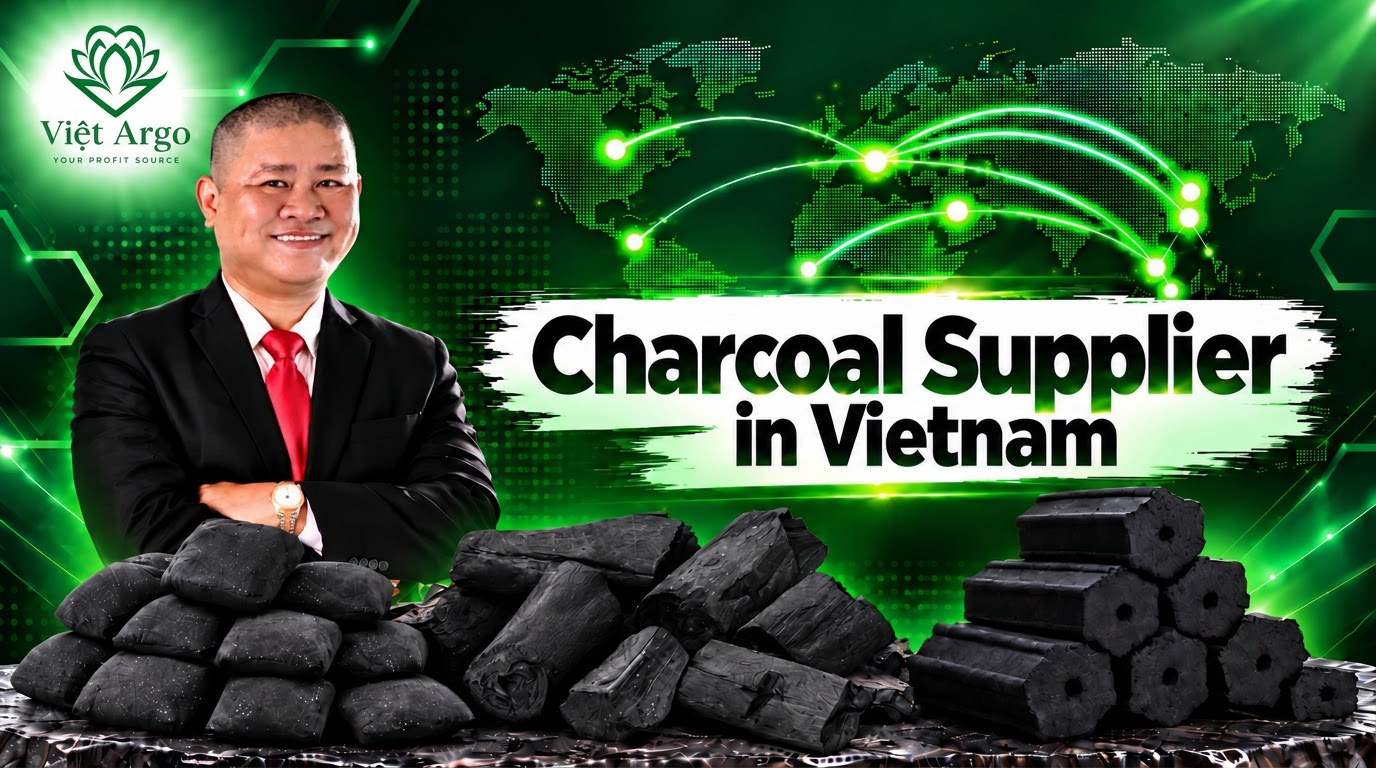
Products such as mangrove charcoal, natural wood charcoal, coconut shell charcoal, and sawdust charcoal briquettes are traded internationally, serving restaurants, food grilling operations, and certain specialized applications.

Overview of Vietnam’s Charcoal Export Market
Charcoal is produced by carbonizing biomass feedstock, whereas coal is extracted from mineral deposits.
In international trade, charcoal is primarily recorded under HS heading 4402, which covers wood charcoal and certain charcoal products made from nut shells.
According to World Bank WITS data based on UN Comtrade, Vietnam exported approximately 114,284 tonnes of charcoal in 2023, with an export value of USD 84.78 million.
South Korea was the largest export destination, accounting for approximately USD 29.16 million, followed by Saudi Arabia at USD 13.33 million, China at USD 11.87 million, Japan at USD 7.94 million, and the UAE at USD 4.35 million.

These figures indicate that Vietnam has established charcoal trading networks across multiple Asian and Middle Eastern markets. They provide a basis for assessing export prospects in 2026, although historical data cannot establish growth in the current year.
Key Charcoal Market Trends in 2026
Notable Vietnam Charcoal Export Trends center on shifts in import demand, quality standards, and requirements related to raw material sourcing.
Import Markets Have Different Requirements
South Korea, Japan, and Middle Eastern countries import charcoal from Vietnam.
However, requirements vary across markets. Some segments prioritize natural wood charcoal, while others seek uniformly sized charcoal briquettes or products for specialized applications.
Import demand should therefore be assessed by product category, technical specifications, and intended use rather than total trade value alone.
Increasing Emphasis on Product Quality
For bulk imports, price is not the only factor influencing purchasing decisions.
Parameters such as Fixed Carbon, Moisture Content, Ash Content, and Volatile Matter help assess product characteristics.
Consistency in size and shape, along with quality stability across shipments, also plays an important role.
Quality testing and clearly defined assessment criteria can help reduce risks in international trade.
Traceability Is Becoming an Important Requirement
One notable policy development in 2026 is the implementation timeline for the European Union Deforestation Regulation (EUDR).
The regulation covers wood products within its scope, including charcoal.
According to the European Commission, the EUDR applies from 30/12/2026 to large and medium-sized enterprises, while most small and micro-enterprises have until 30/06/2027. Certain cases covered by the previous timber regulation have different deadlines.
These changes introduce requirements for legally sourced raw materials, traceability, and documentation demonstrating compliance for transactions within the regulation’s scope.
Growth Opportunities for Vietnam’s Charcoal Export Industry

Charcoal Export Opportunities in Vietnam may arise from product diversity, quality improvements, and expansion into market segments with specific requirements.
Diversifying Export Product Lines
Vietnam offers various charcoal products with different feedstock characteristics and applications.
Mangrove Charcoal is a natural wood charcoal used in certain restaurant and food grilling segments. Legal wood sourcing and raw material management are important considerations for this product.
Sawdust Charcoal Briquettes are produced from sawdust or suitable wood by-products. Their relatively uniform shape meets specific requirements for size and performance characteristics.

Coconut Shell Charcoal is produced from coconut shells and may serve certain fuel applications or be used as a feedstock for further processing.
Natural Lump Charcoal is distributed in various sizes and types to meet the specific requirements of different commercial segments.
This diversity enables the export industry to reach multiple customer groups rather than depend on a single product line.
Developing Products with Consistent Quality
An important opportunity lies in improving quality control across shipments.
For importers, products with clear technical specifications, appropriate test documentation, and a high degree of uniformity can help reduce distribution risks.
This creates opportunities to compete on quality and reliability rather than price alone.
Expanding Access to International Markets
Established trade routes with South Korea, Japan, Saudi Arabia, and the UAE provide a foundation for further exploration of export opportunities.
However, market expansion should be assessed based on actual demand, import standards, logistics costs, and the ability of each product line to meet market requirements.
Challenges Facing the Charcoal Export Industry
Alongside growth opportunities, Vietnam’s charcoal exports continue to face challenges related to international competition, freight costs, and quality management requirements.
Competition from Major Exporting Countries
According to World Bank WITS, Indonesia exported approximately USD 388.97 million worth of charcoal in 2023, while China recorded USD 147.35 million and Poland USD 93.31 million.
During the same period, Vietnam recorded approximately USD 84.78 million, placing it among the countries with notable export values under HS heading 4402.
The availability of multiple supply sources means that international competition involves not only pricing but also quality, delivery capabilities, and transparency in raw material sourcing.
Logistics Costs and International Shipping
Charcoal exports may be affected by fluctuations in container freight rates, port surcharges, vessel schedules, and delivery lead times.
Charcoal also has characteristics that require consideration for transport safety, including the risk of self-heating under certain conditions.
Appropriate cargo classification, quality checks, and shipping documentation play an important role in reducing risks.
Documentation Requirements and Import Standards
For international transactions, commercial documents and test reports provide an important basis for verifying product information.
Documents such as a Certificate of Analysis (COA), commercial invoice, packing list, and records related to raw material sourcing may be required depending on the import market.
Inconsistencies in product specifications or documentation can cause delays and additional costs during shipping and delivery.
The Role of Vietnamese Charcoal Suppliers and Exporters
Within the international supply chain, Vietnam Charcoal Suppliers and Exporters connect raw material sources, production operations, and import markets.
The competitiveness of Vietnamese supply depends on multiple factors, including raw material quality, production management, testing, and the ability to meet commercial requirements.
International buyers should assess product quality, documentation reliability, consistency across shipments, and the clarity of transaction terms when evaluating suppliers.
These factors help establish sustainable trading relationships and improve supply chain responsiveness.
Outlook for Vietnam’s Charcoal Export Market
Vietnam’s charcoal export market in 2026 has opportunities for growth based on established trade routes, product diversity, and the potential to improve supply quality.
However, actual prospects depend on demand from importing countries, fluctuations in logistics costs, international competition, and changes in trade policy.
Monitoring the latest import and export data, traceability requirements, and changes in technical standards will be important for assessing industry trends.
Conclusion
Vietnam’s charcoal export market in 2026 faces growth opportunities alongside challenges involving competition, quality, and raw material management.
The diversity of charcoal products and established international trading networks provide a foundation for the industry to expand its market access.
Over the long term, consistent quality, legally sourced raw materials, traceability, and adaptation to international trade requirements will be important factors shaping the industry’s growth prospects.
References
- World Bank WITS – Vietnam Wood Charcoal Exports 2023
- World Bank WITS – Global Wood Charcoal Exports 2023
- European Commission – EUDR Roles and Responsibilities
VIETARGO – THE BEST CHARCOAL OF THE WORLD TO YOUR SHELF
Website : https://vietargo.com/
Facebook : Vietargo
Address : 10 Nguyen Hien Street, 91B Residential Area, Can Tho, Vietnam
☎: 093 980 22 00